Gloria Steinem, as herself
The only play about Gloria Steinem that I know of is Emily Mann’s Gloria: A Life. It was the last show at the A.R.T. in Cambridge before the pandemic shutdown, so those posters were in shop windows for a while. The image the A.R.T. chose for the poster was a little more iconic late-60’s than iconic Gloria. You know, goat fur and leather fringe, beads and a big medallion belt on an actor. This 2nd poster used a production still from this show’s photo call with A.R.T.’s dominant style choices—bouncy, fun, campy cos-play.
I imagine this play will get some remounts in 2027, so I‘m going to dust off my dramaturgy packet from a few years ago and turn it into a production manual.
What is the better first step for working on a play?
Or,
Which is the best first step for working on this play?
- Read the play without looking at any images. Let your mind make some stuff up as you read. Pull from the mental archive.
Or,
- Look at a limited and curated archive that you trust for images that resemble essence and reality?
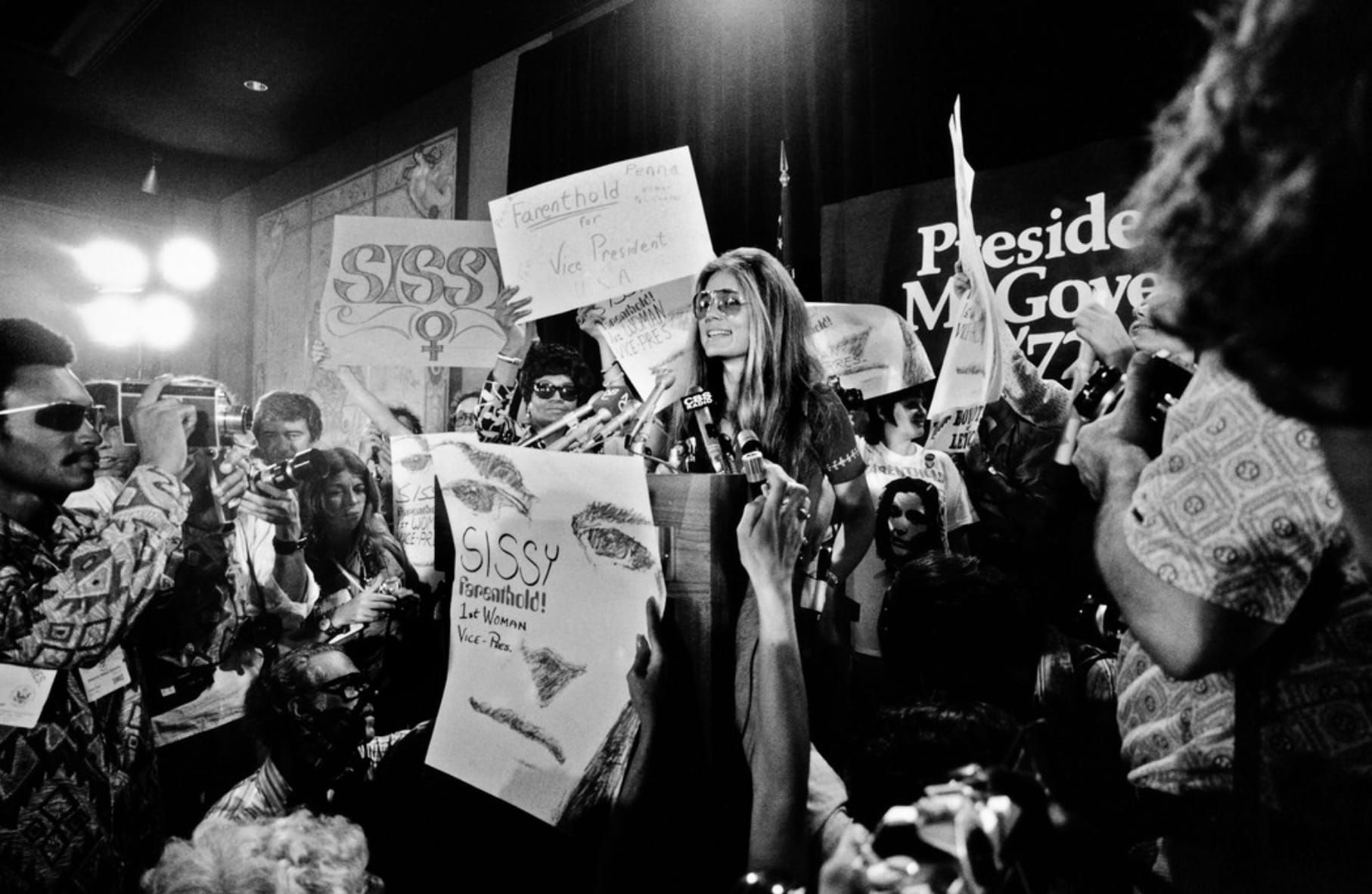
In this case, I had seen the play years ago, and it has faded … but, if I did read the play without a dip into my preferred photo archive, Magnum, I would be referencing my 2nd and 3rd-hand images of Ms. Steinem and her compatriots. Mostly, I would have that beaded and fringed Gloria from the A.R.T. poster swishing and clicking away on the stage in my mind.
Totally verboten: a Google, Bing, or even Getty images search. Too many, ordered by the internet — which has an awful stereotype howl-around stereo effect. Even an archive like Getty, which I use as a second source to flesh out a character, leans too hard on publicity photos.
Blessed Magnum had just two photos from the same event.
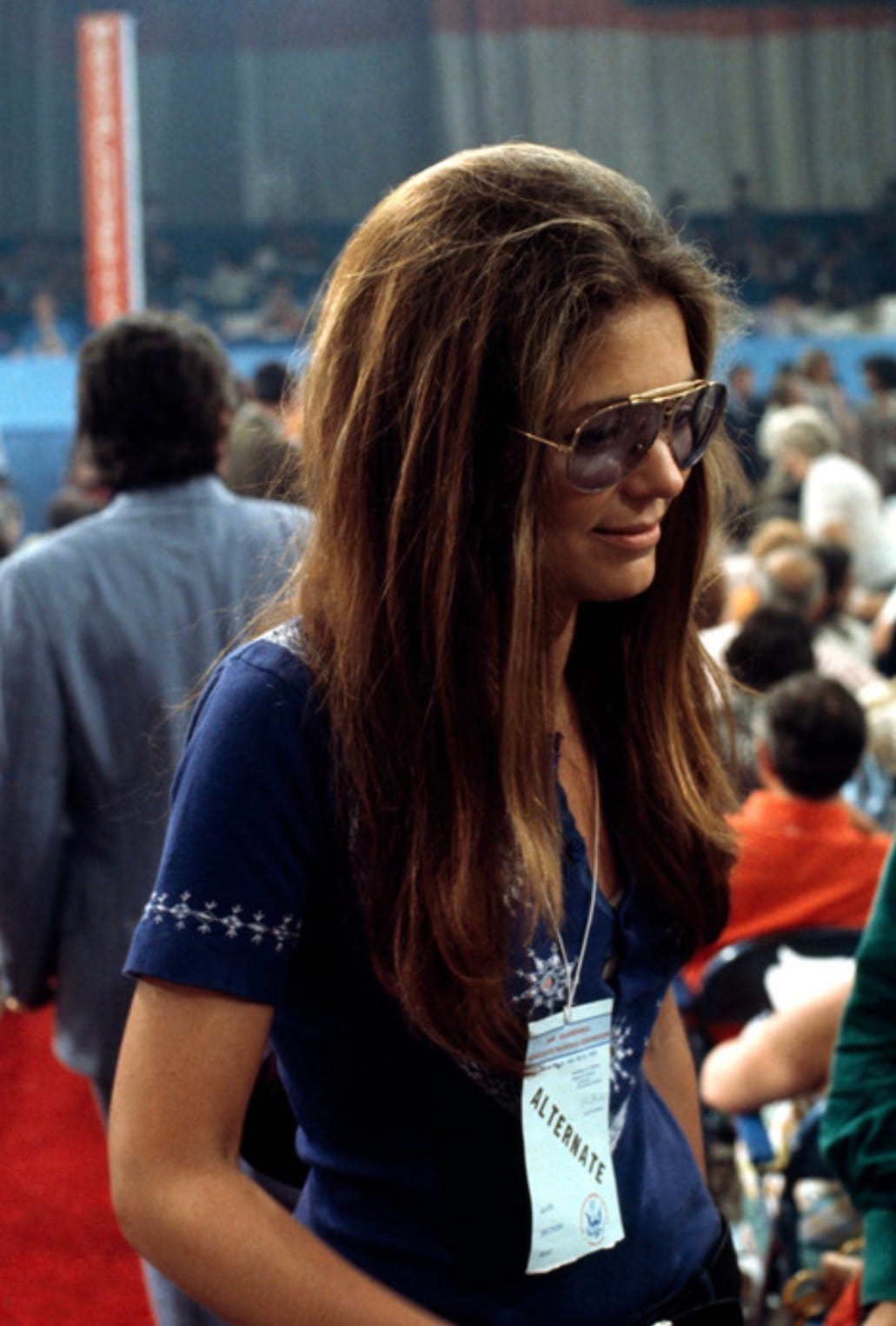
The term ’humanist’ will get a few eye rolls; however, I need a term that direct to dissuade me from looking to the vast internet to give me so many angles of a person’s face on so many days that I can construct a real “human” in my head and onstage. A ‘Humanist photographer’ watches a person for a while. They select the moments at which their posture and expression and the light that they have stepped into best reflect that person’s own experience of that moment in time. Burt Glinn probably took many photos of her that day, but this is the only photo from the whole day that he shared.
This photo looks like the A.R.T.’s first artwork poster for the play—a 60’s/70’s-style off-set color grainy newsprint-like portrait of Gloria Steinem’s face with that hair and glasses. Of the time, and iconic, like her; but, a quiet smile, like the above shot.
Did the theater agree with Burt Glinn that this quiet vibe is the one that endures? Would people seeing that poster feel satisfied that their version of Gloria Steinem matched the poster? Or, did that poster complicate the dominant impression? It is quieter and there is no podium in front of her, no fist raised. The play is about a human, not an icon.
Many of you have a real Gloria Steinem living in your heads now. I wonder if that blue Gloria above matches the one in your head?
If you read Emily Mann’s Gloria: A Life that she wrote in collaboration with Ms. Steinem herself in 2019, please tell me all of your first thoughts. What can you tell me about the Gloria saying the lines in your head?
WorldCat says that 136 libraries have a physical edition available to borrow, mostly university libraries. My library has a digital edition available through Hoopla…and if you want fast satisfaction…but don’t want to pay for it…you can read the transcript to the filmed production on PBS. Just be sure to squint if you see any production images…don’t let theater folks tint or taint your inner Gloria. At least for this first read.