King of Queens
This essay started as a not-Baltimore essay; as in, Death of a Salesman is not a Baltimore show. I will explain why we might think it is tomorrow. But! I found a particularly poignant insight on our current country while I was comparing NYC to Baltimore. So, this essay is instead a not-Brooklyn but Queens essay. And, oh. My. goodness. Faith in American theater renewed!
In Death of a Salesman the contrast between real life and the imagined life of Willy, the protagonist, is explained to us as soon as the curtain goes up. Beautiful bucolic flute music vs. crowded crumbling city life. Willy wills glory into being with words. All through the first scene Willy re-writes the past and assigns qualities to the present — both to better understand how the world he is experiencing match what he imagines for himself. The contrasts! “The trouble is he’s lazy. Goddammit! … Biff is a lazy bum!” and then four lines later, “… and such a hard worker. There’s one thing about Biff, he’s not lazy.” He is mining for motivation to push into a glorious future. His rightfully glorious future.
How many Willy Loman’s have you met in life? I do that life re-write. Probably all of us Americans have some of this anti-hero in us. But! Some of us have Willy as our dominant-mode. I think there are many many Willy’s per capita in that city where this show is set, New York.
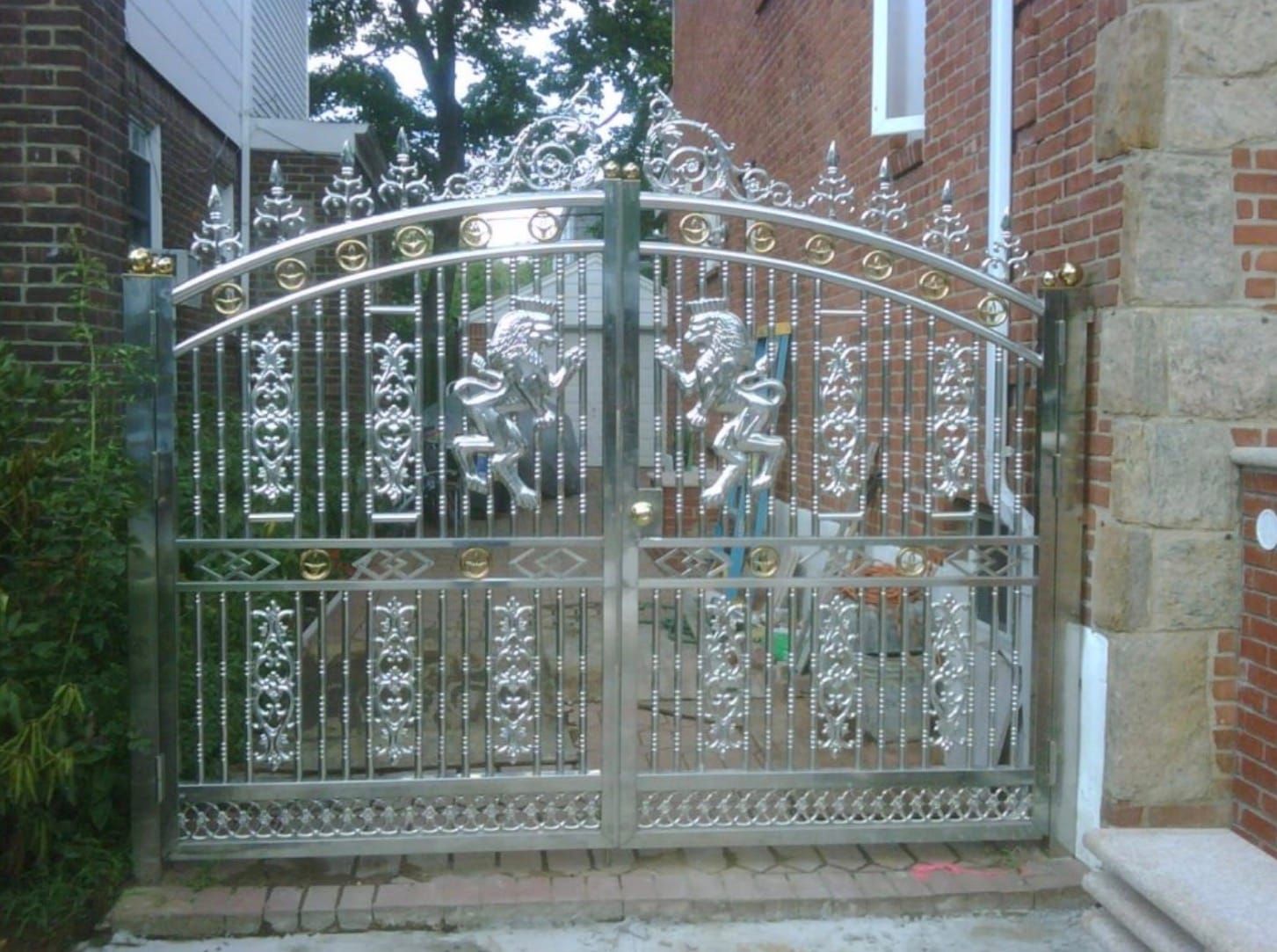
I would like to quote for you in its entirety a conversation I had with a new-to-me New Yorker last night. But, without the gestures, the volume, and the you-only-live-once orange and blue outfit, I would not be able to convey in words the lively braggadocio that equates to Willy-level big dreams. I’m no Arthur Miller. So, as a visual explainer may I offer you these mini-landmarks in Queens:
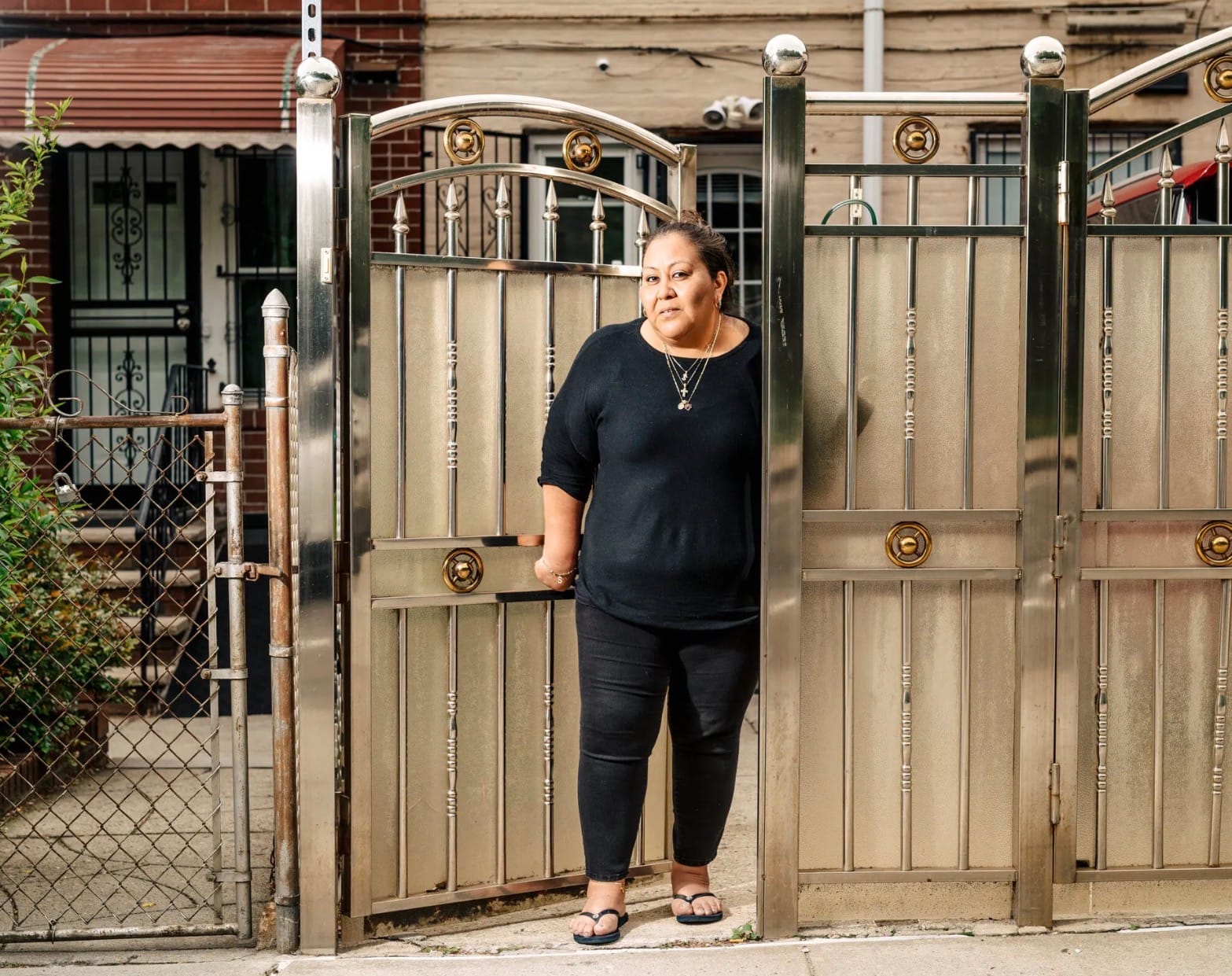
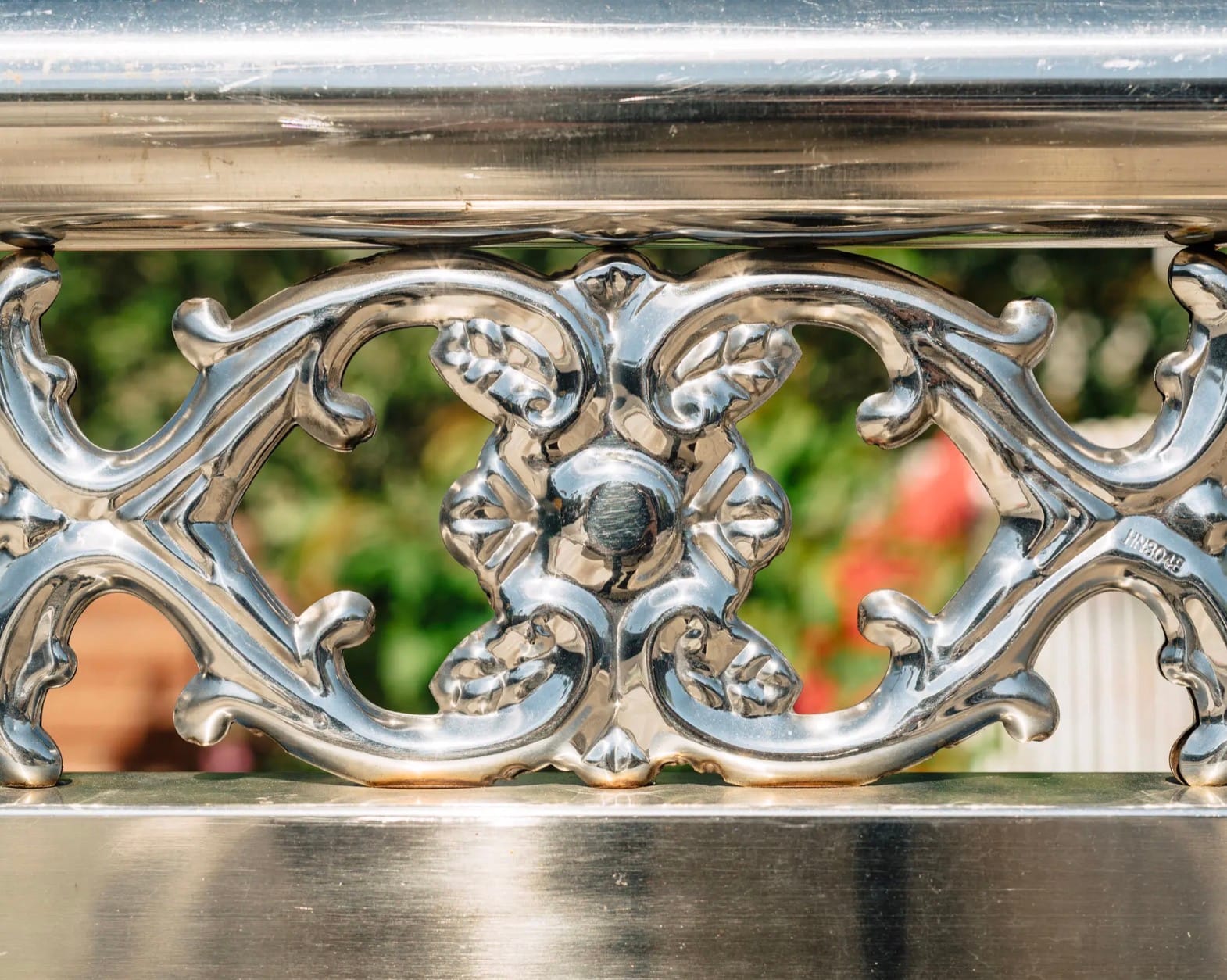
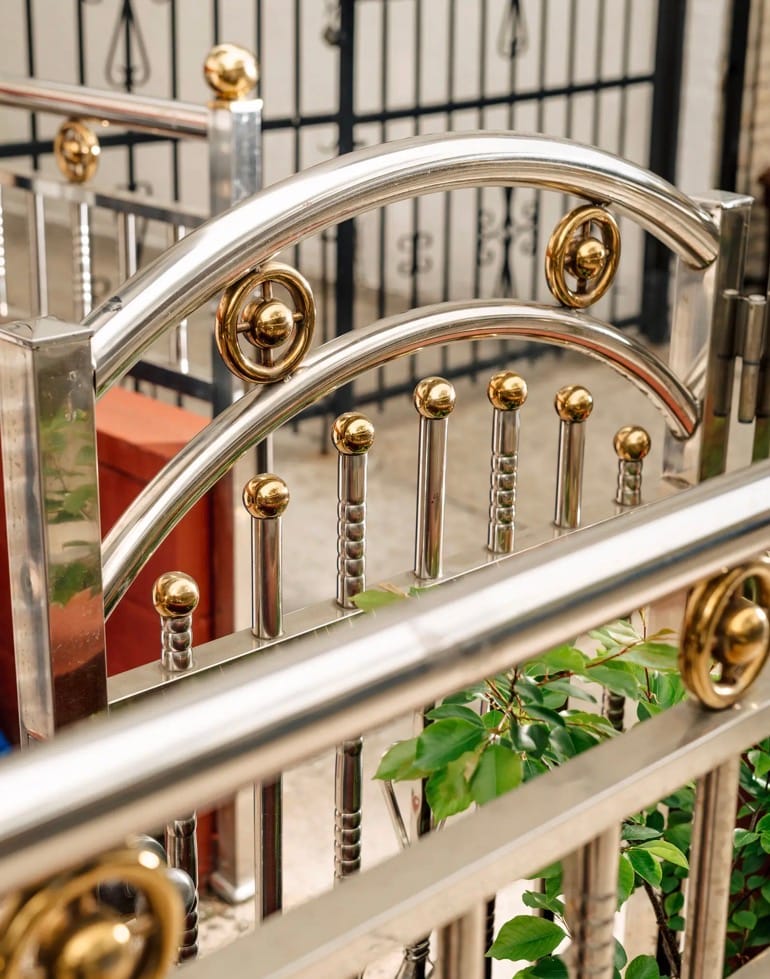

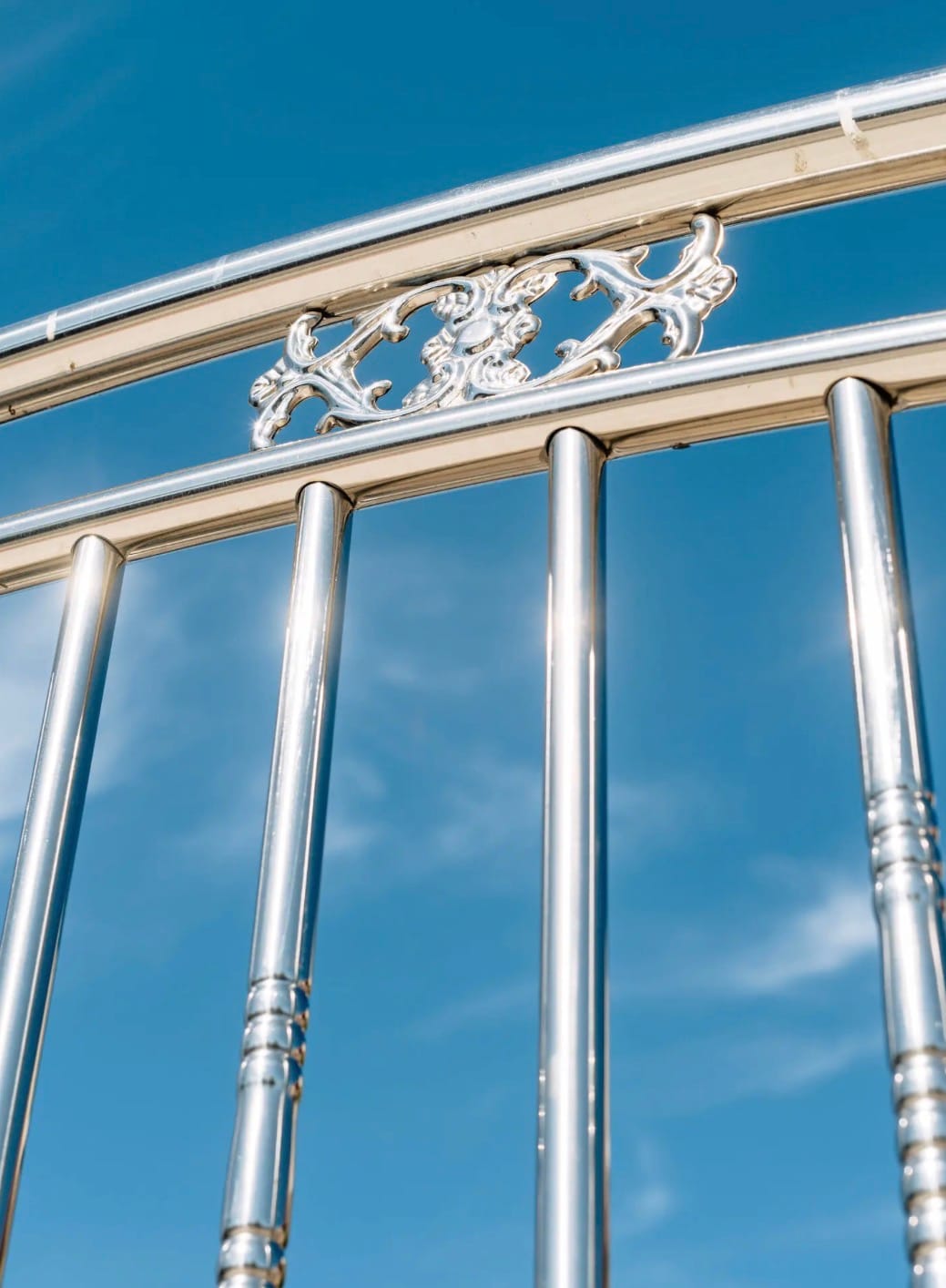

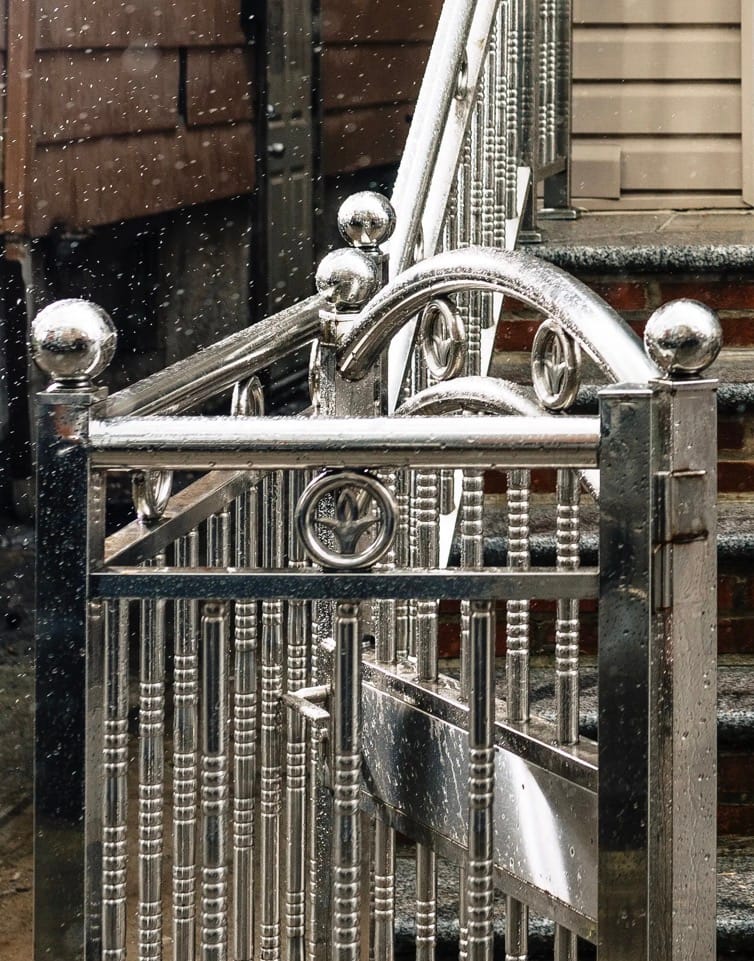
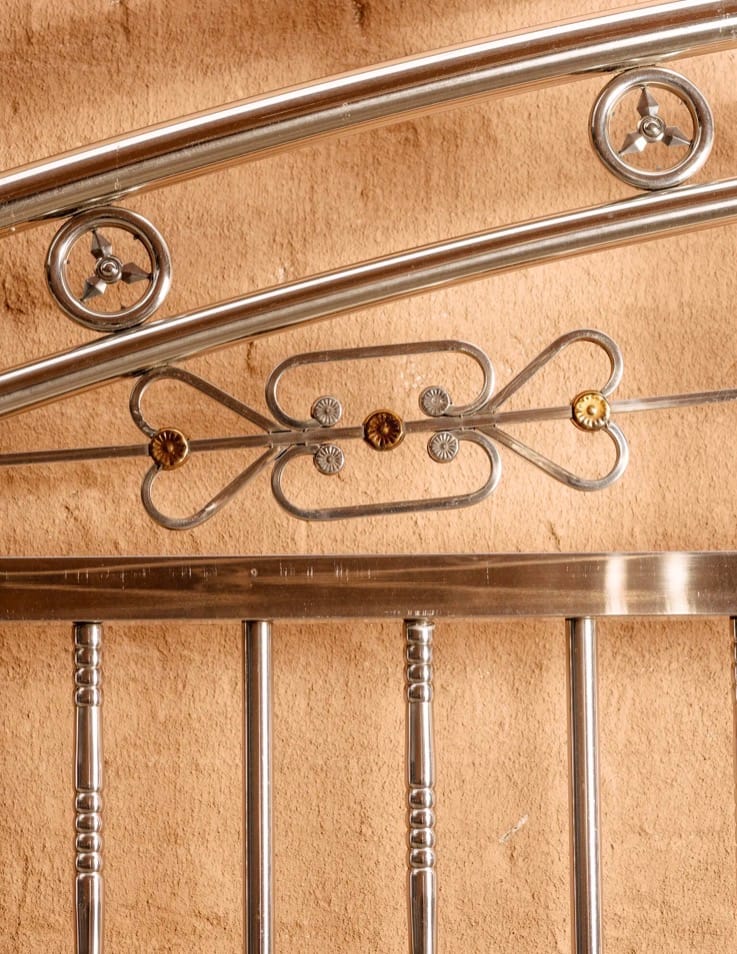

From an NY Times article explaining the “Stainless Steel Status Symbols”
With no mention of gates, the Times has the guy in the photo above explain his $2,300 protective and princely polished portal to his Everyman home: “my parents never drove a good car and I drive a Mercedes.”
The reigning queen of my Boston-adjacent neighborhood wears giant lavender sunglasses, yells “hello, darling!” from a block away and calls her granddaughter princess. She exits the driveway with a stroller every morning flanked by two concrete lions she painted gold. In our neighborhood she is one of a kind, and the only house with a regal gate. In Queens she is one of several million of a kind. Are most New Yorkers monarchs? The New York Times photos from that article do not explain the ubiquity of these gates.
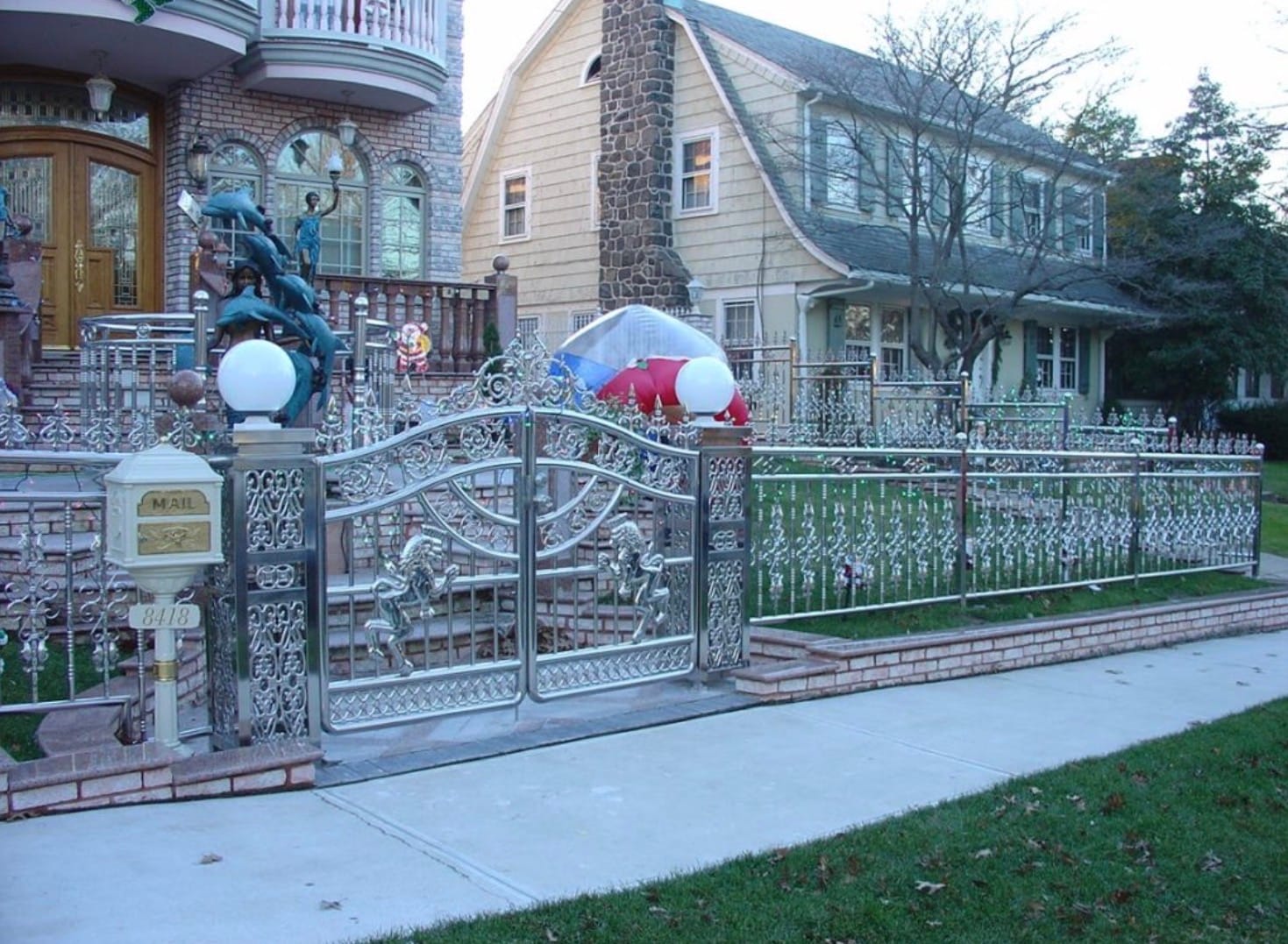
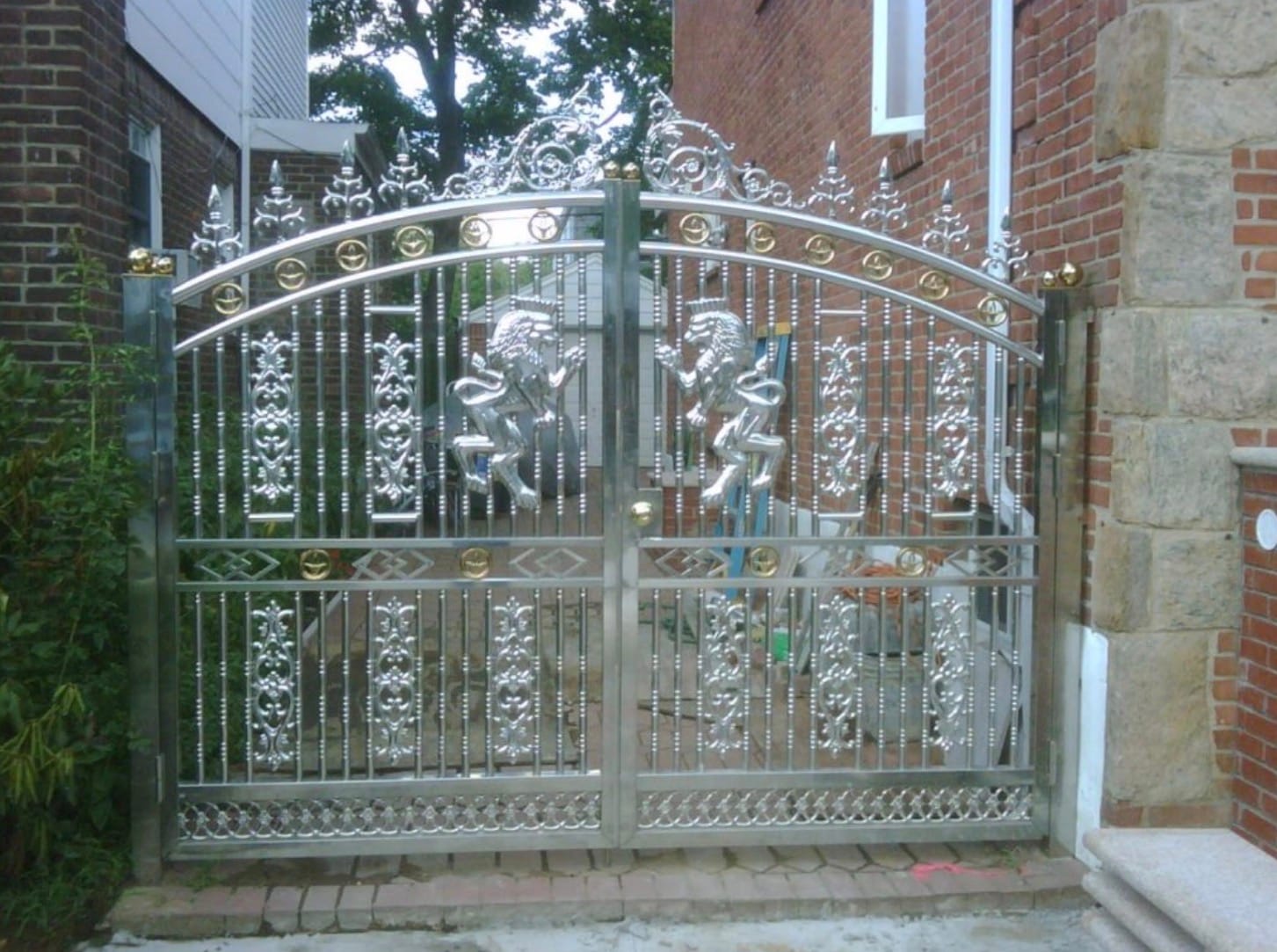
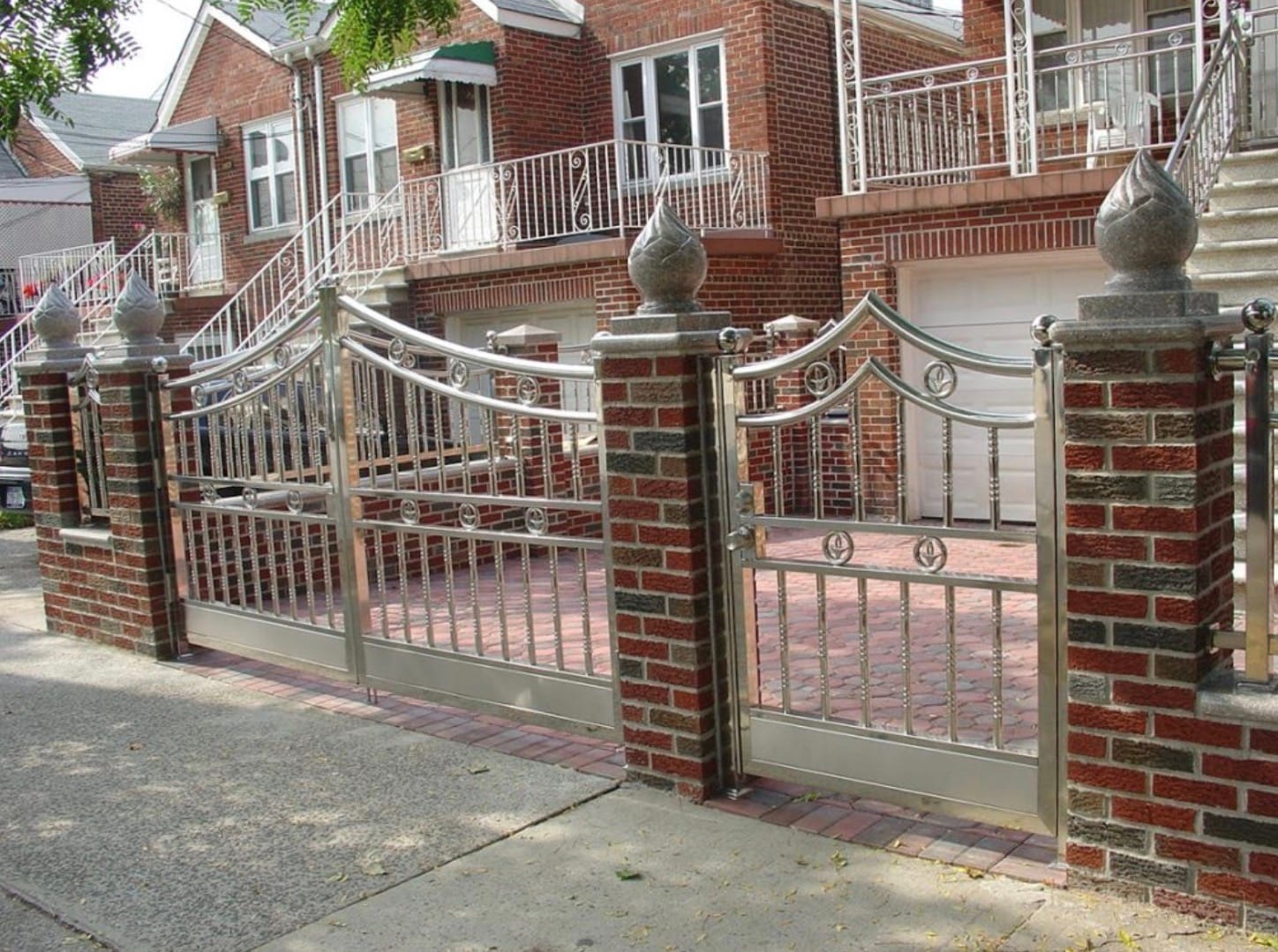
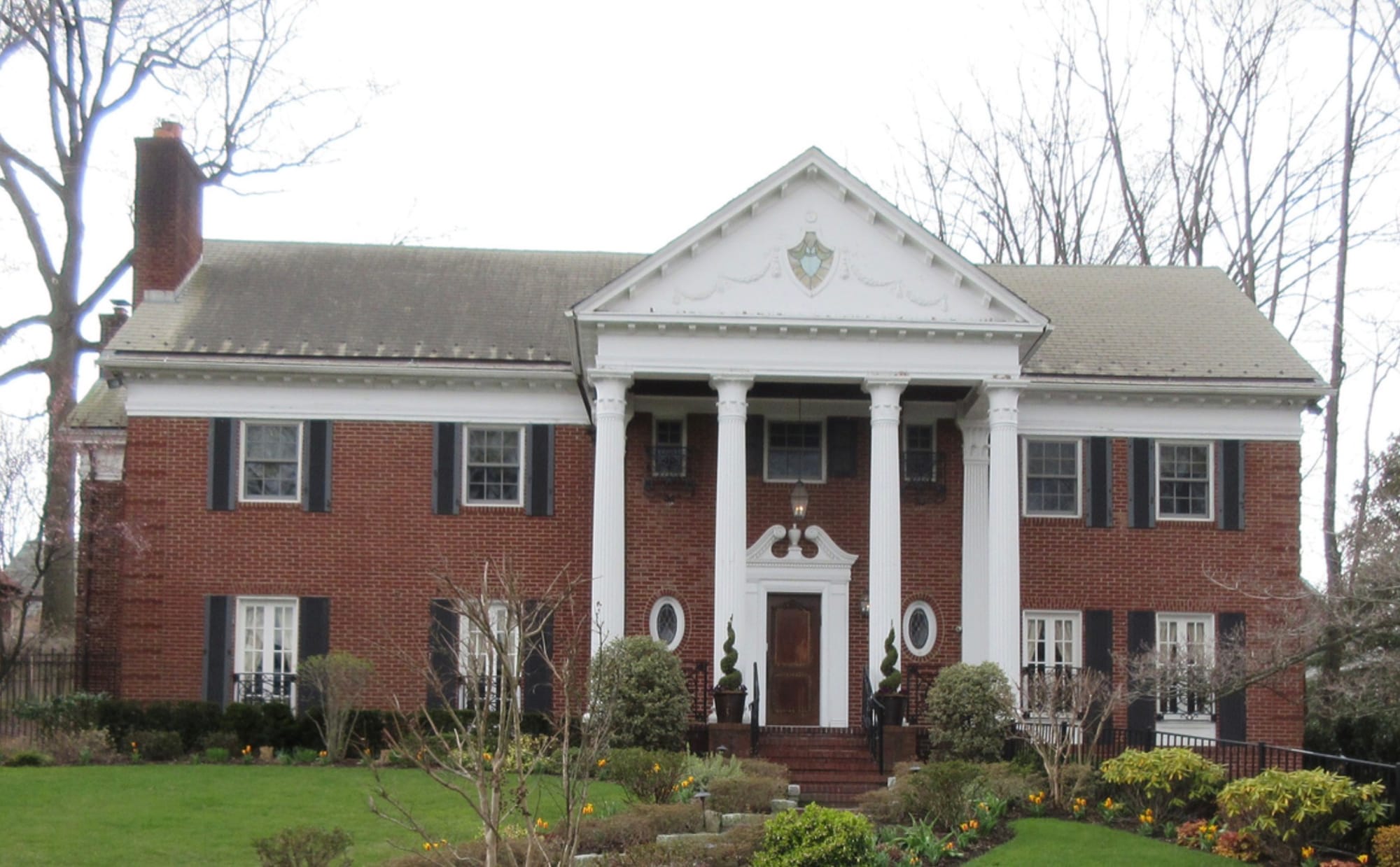
The house can be grandiose like the one on the left, or a pretty brick row home like the one on the right. What’s the rate of gate? Maybe one in three? But! the other homes are being rented, so maybe if given the choice the renters would lionize their driveways, too.
Would Willy have a stainless steel gate with a lion on it? …maybe not. His dream of dominion is more about land and sky. His journey to a paid off mortgage is a distinctly early 20th century one. Do you know what a neighborhood like his looked like in 1915? A year before he got married and bought his house?
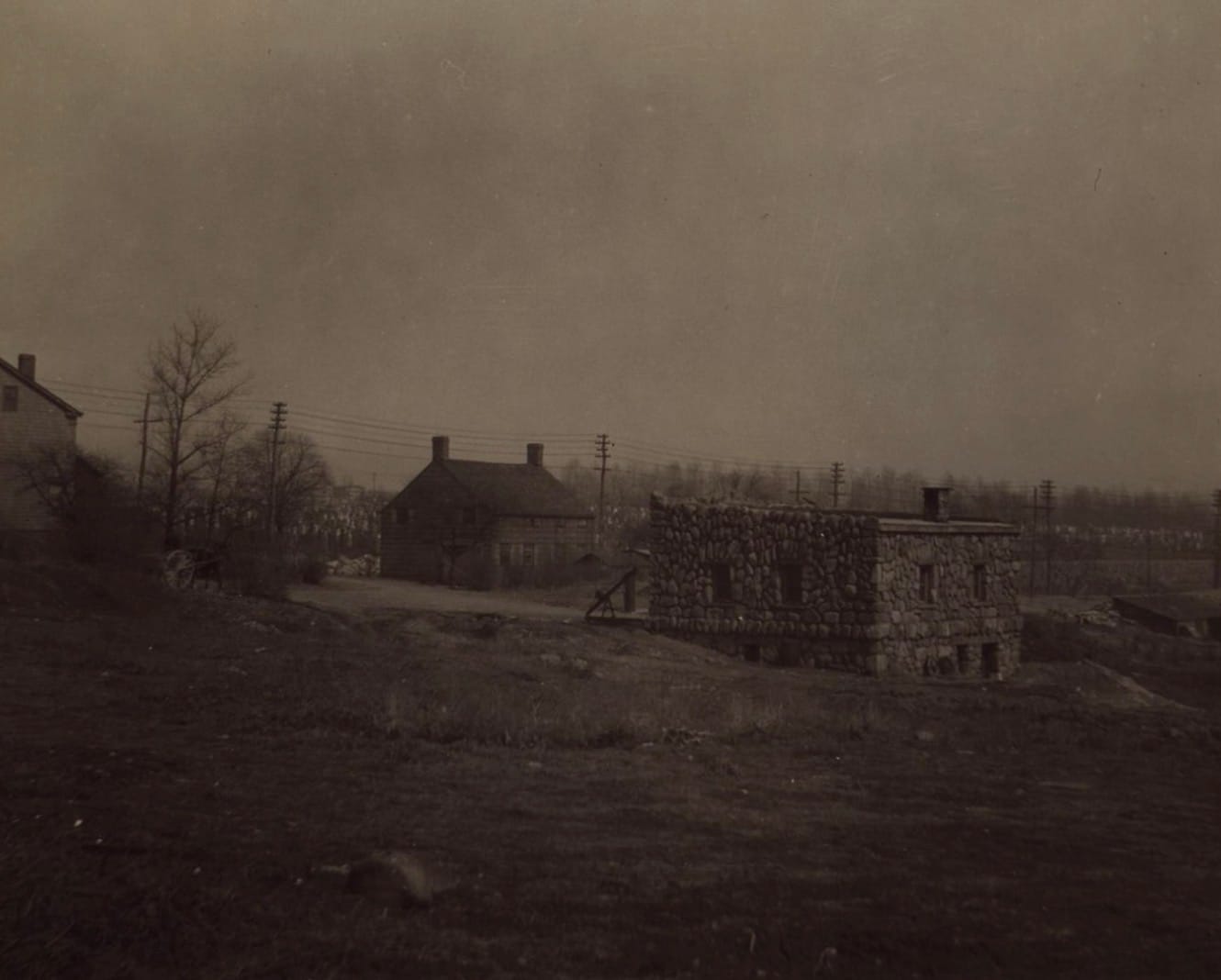
Really. That is ”Queens Village” now. Denser than any other neighborhood in the US.
While looking up Brooklyn and Queens 1940’s homes…I stumbled upon something so beautiful huge that it restored my faith in set design. ‘The set designer is the smartest person in the room.’ Have you heard anyone say that? I have heard that sentence said by a few famous directors. I logically understood, but now I know it.
Evidence, the original set design for Death of a Salesman and this strikingly similar New York outer borough mini manor. Do you recognize it?
Umm…has anyone pointed this out before….I feel like I just stumbled onto the great American explainer:
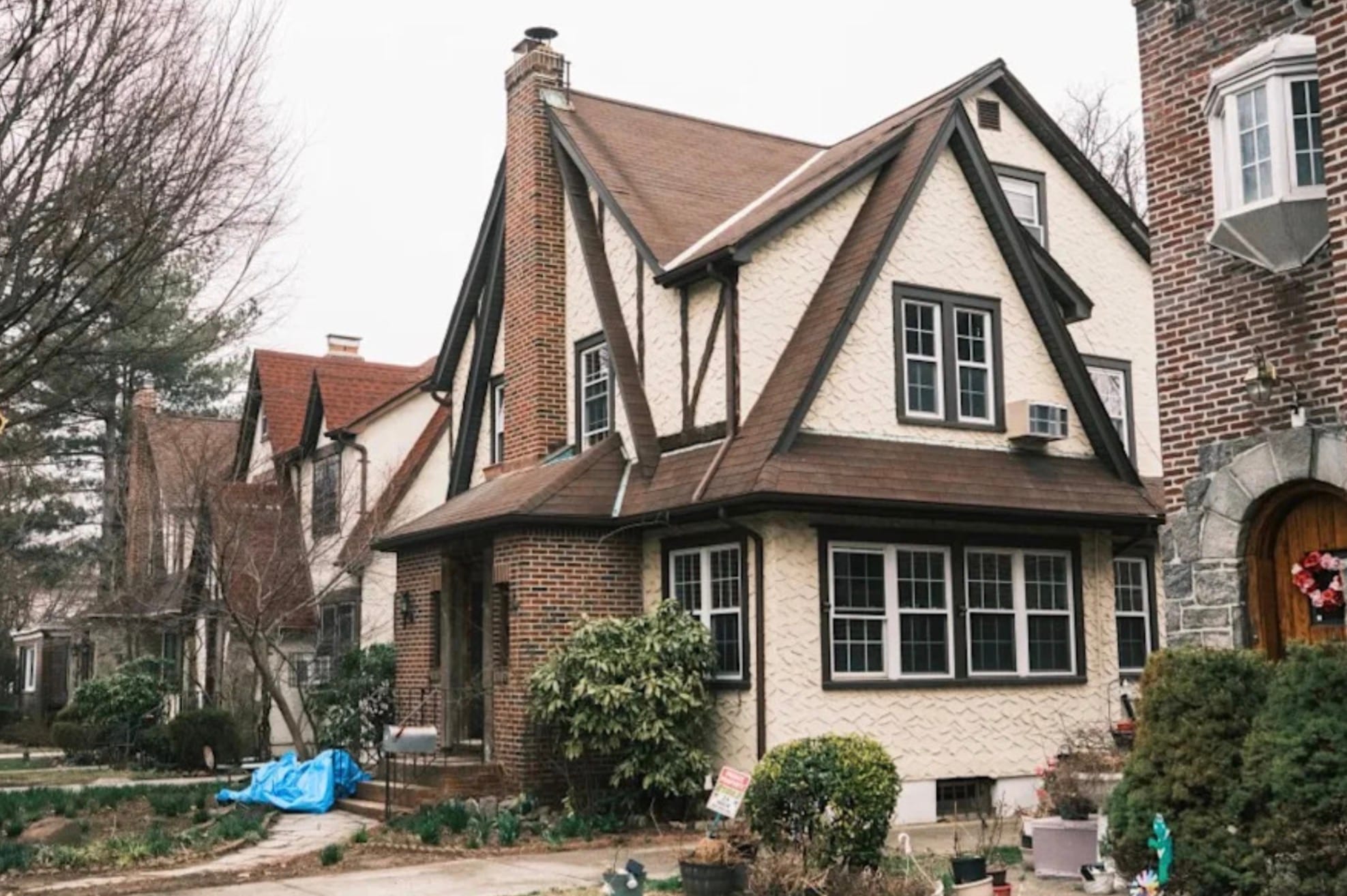
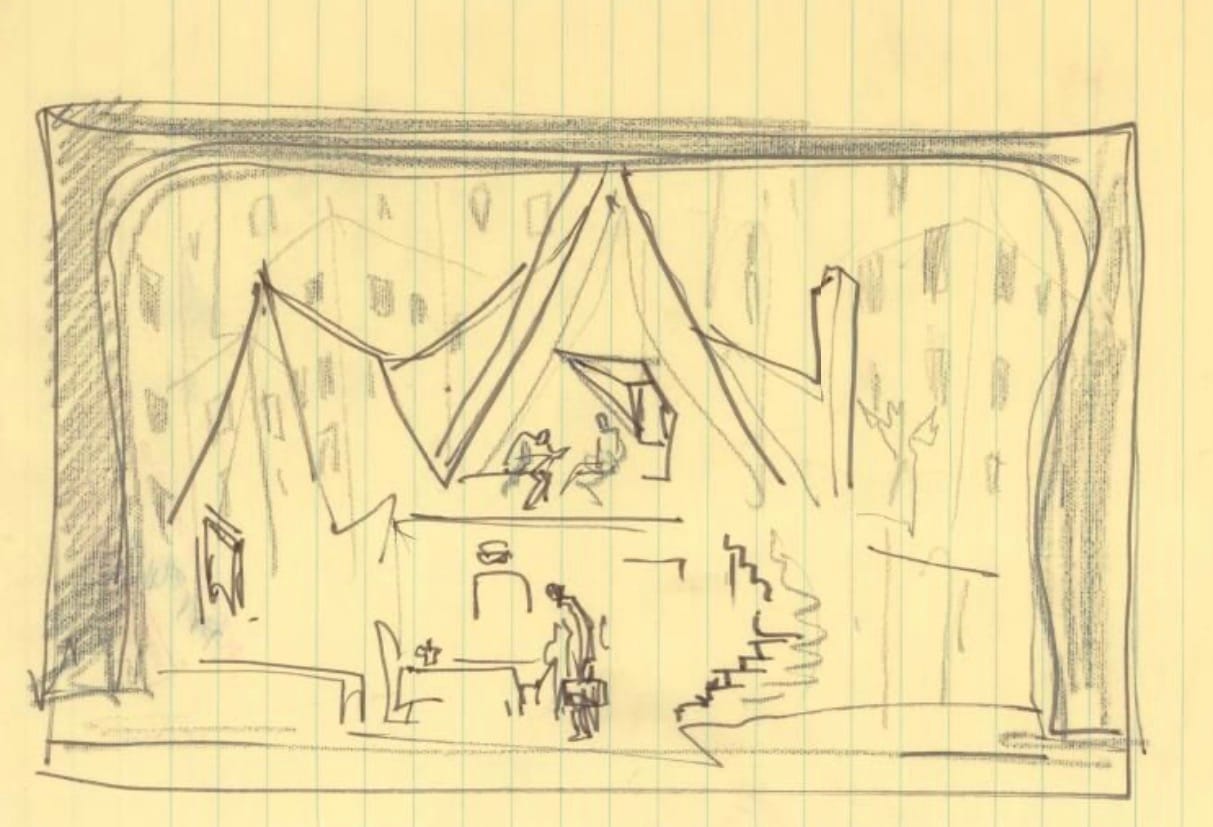
A single family home in Queens and the first sketch for the original Death of a Salesman…guess whose childhood home that is? I’ll give you a clue, his father’s construction company built it.
I don’t think that this triangular Tudor single family was what Arthur Miller had in mind when he first described the set for the play. I think he was thinking something a little more … Little House.
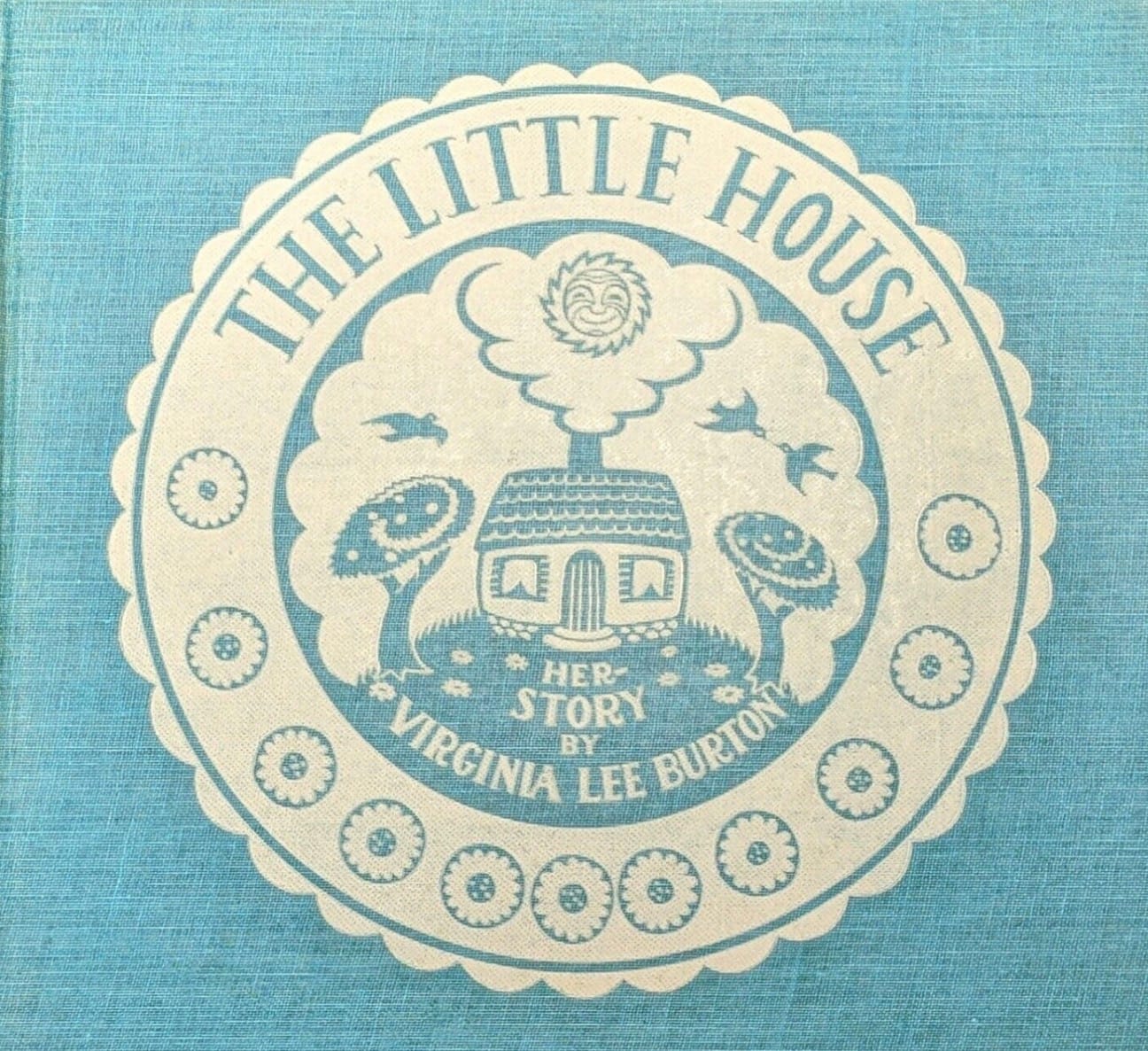
The set designer and I drove around Brooklyn where it abuts Queens to try and find a single family home with a driveway or a garage that looked like it had been encroached upon like Virginia Lee Burton’s Little House. I am sure I was looking for a small rectangle of a home…maybe in my heart of hearts I knew it would be pink like Ms. Burton drew and re-drew for this children’s book I read and re-read as a kid.
The first lines of stage directions for Death of a Salesman read, “A melody is heard, played upon a flute. It is small and fine, telling of grass and trees and the horizon. The curtain rises.”
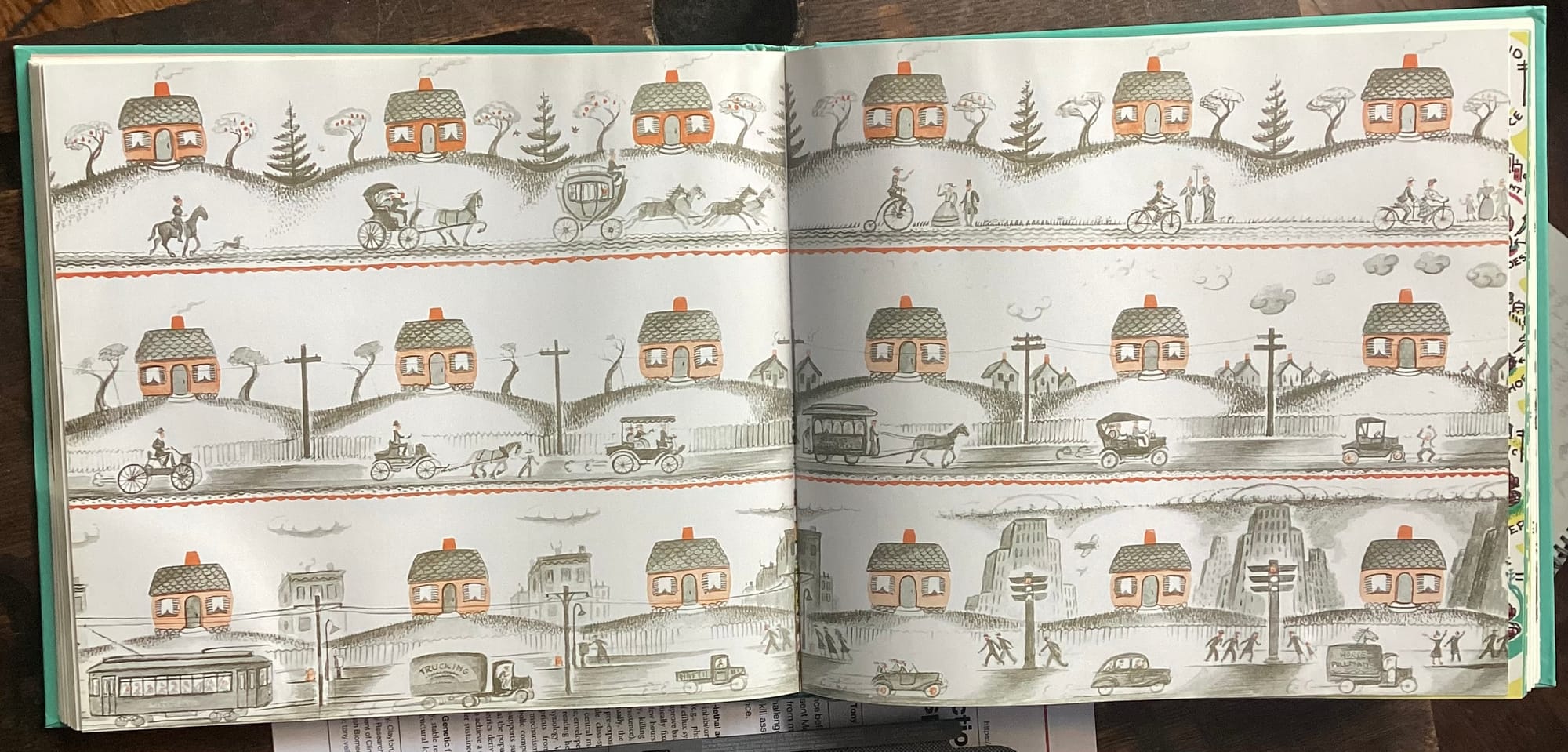
Paragraph 2 of the stage directions introduce the scene to us: “Before us is the Salesman’s house. We are aware of towering, angular shapes behind it, surrounding on all sides.” So, the flute gives us the top left first image, and the curtain comes up on the bottom right image. Hmm…that pink house progression still looks cheerful. The book is a little more explicit than the above endpaper:
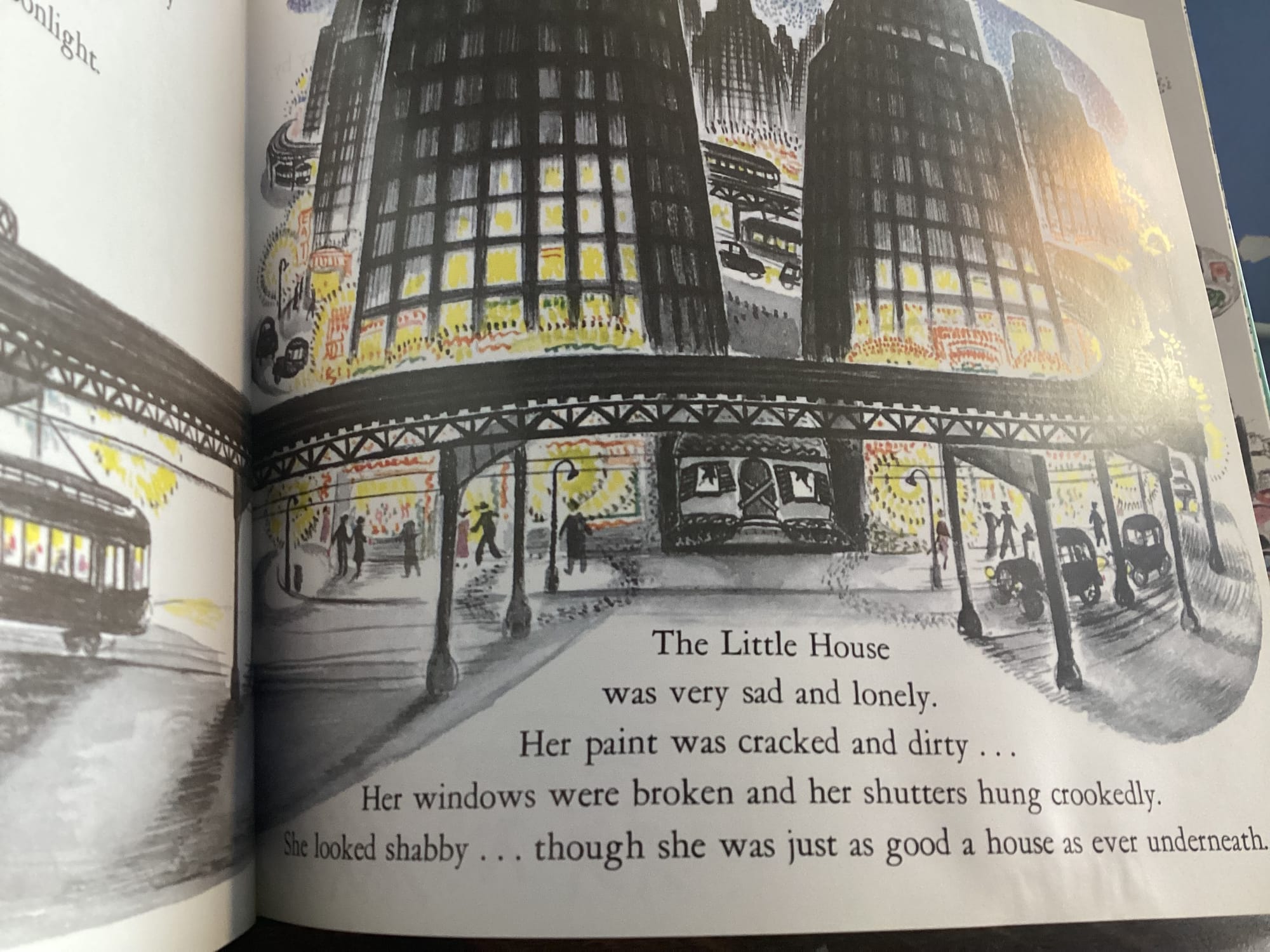
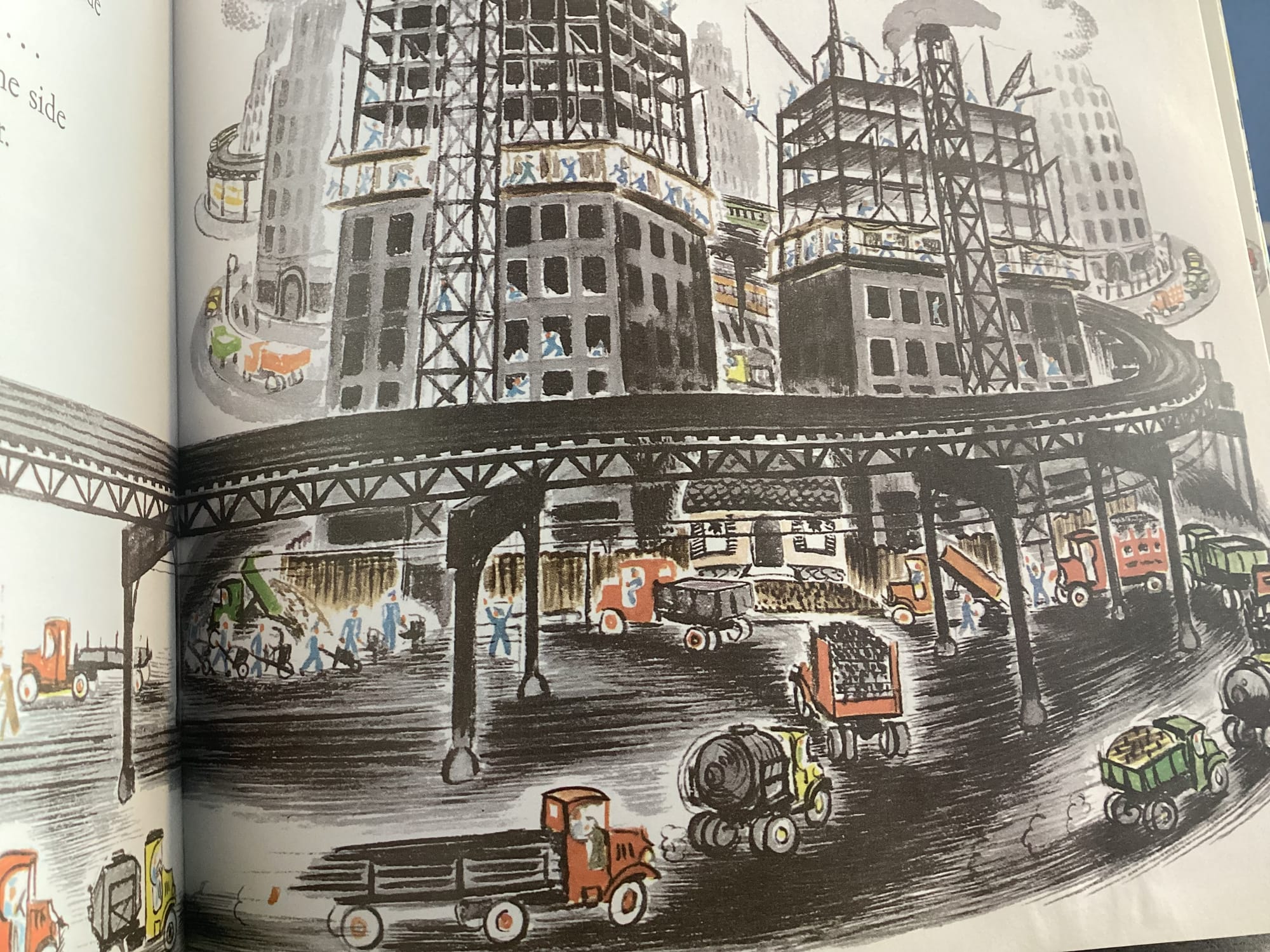
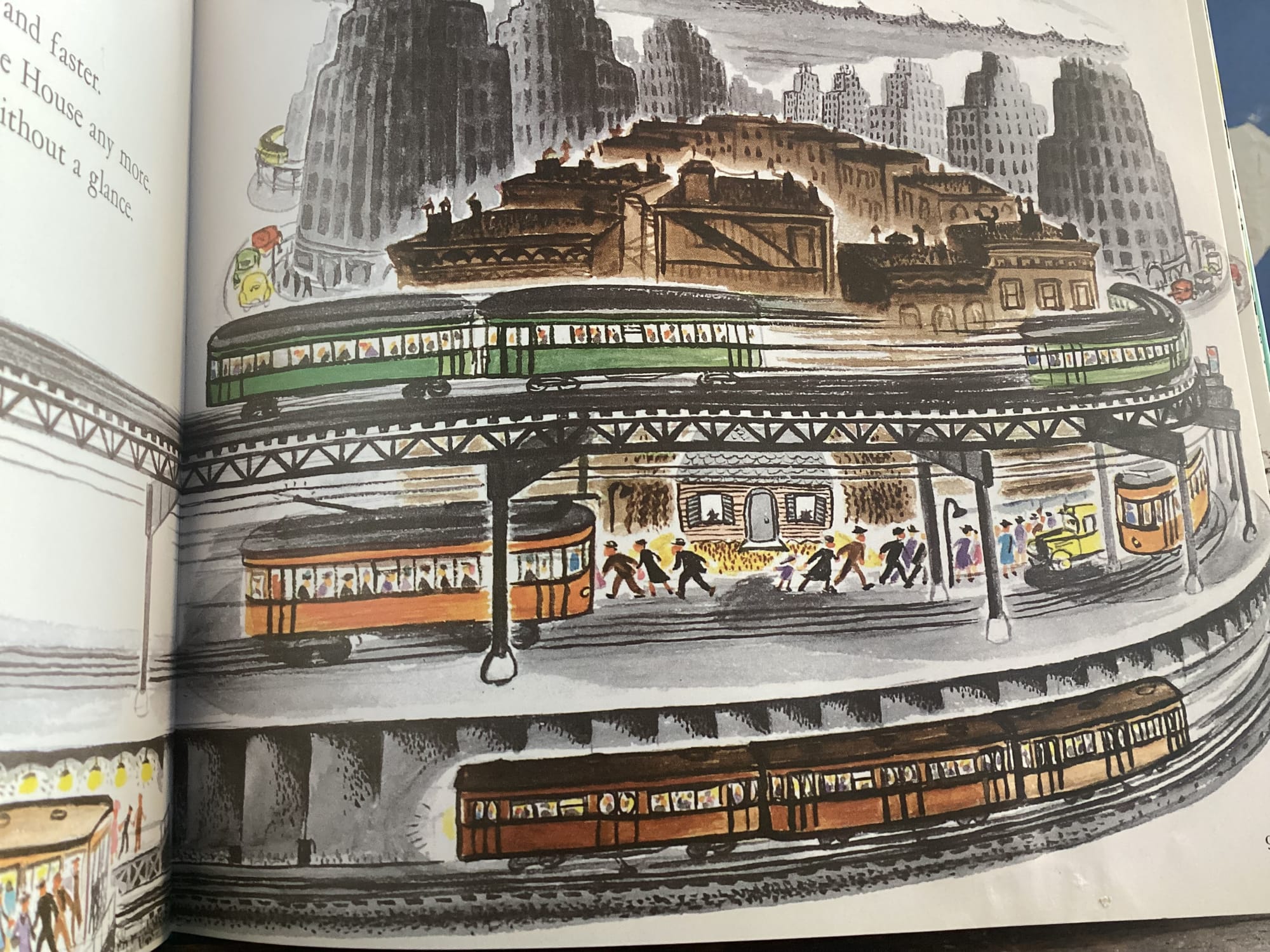
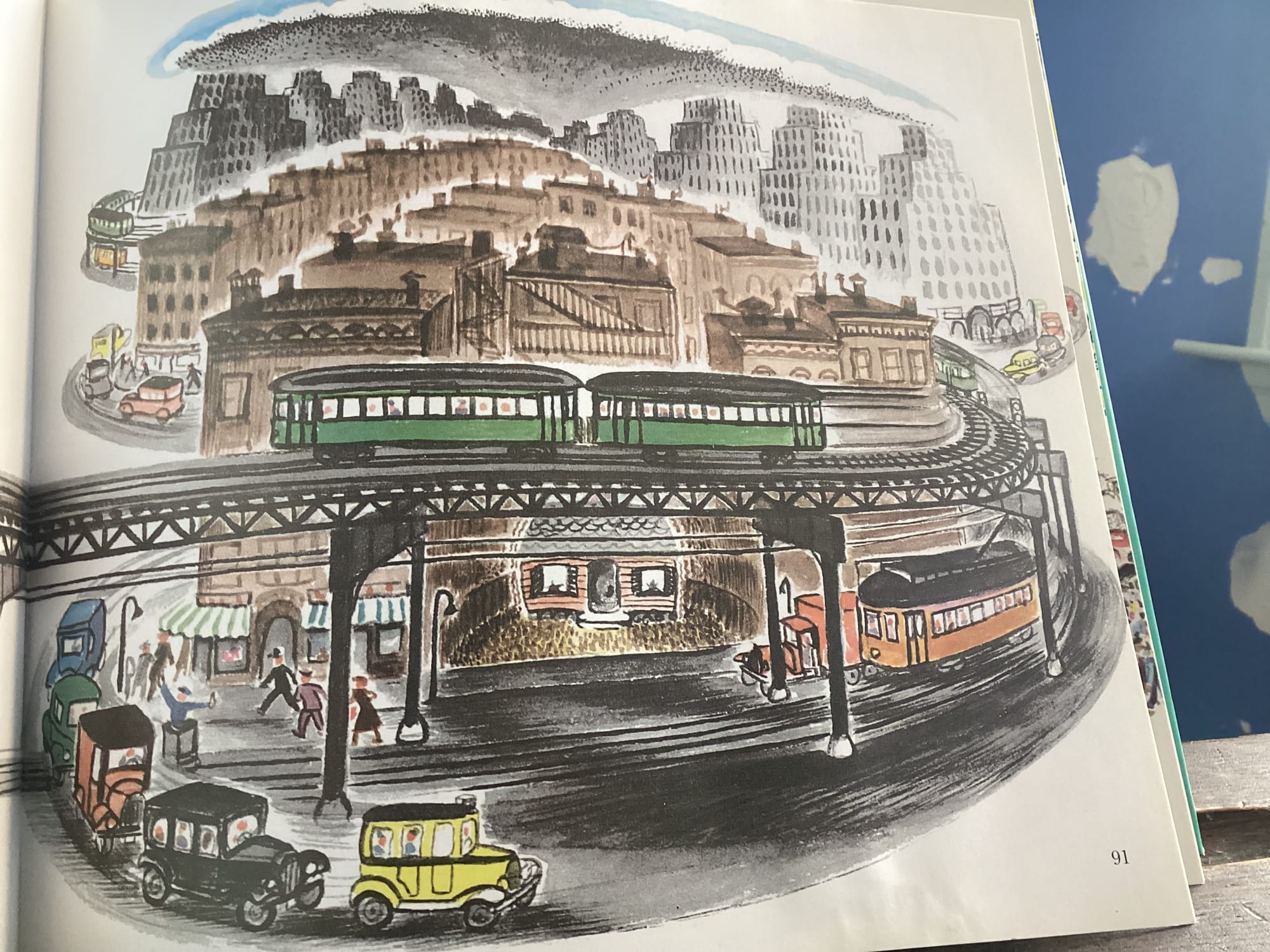
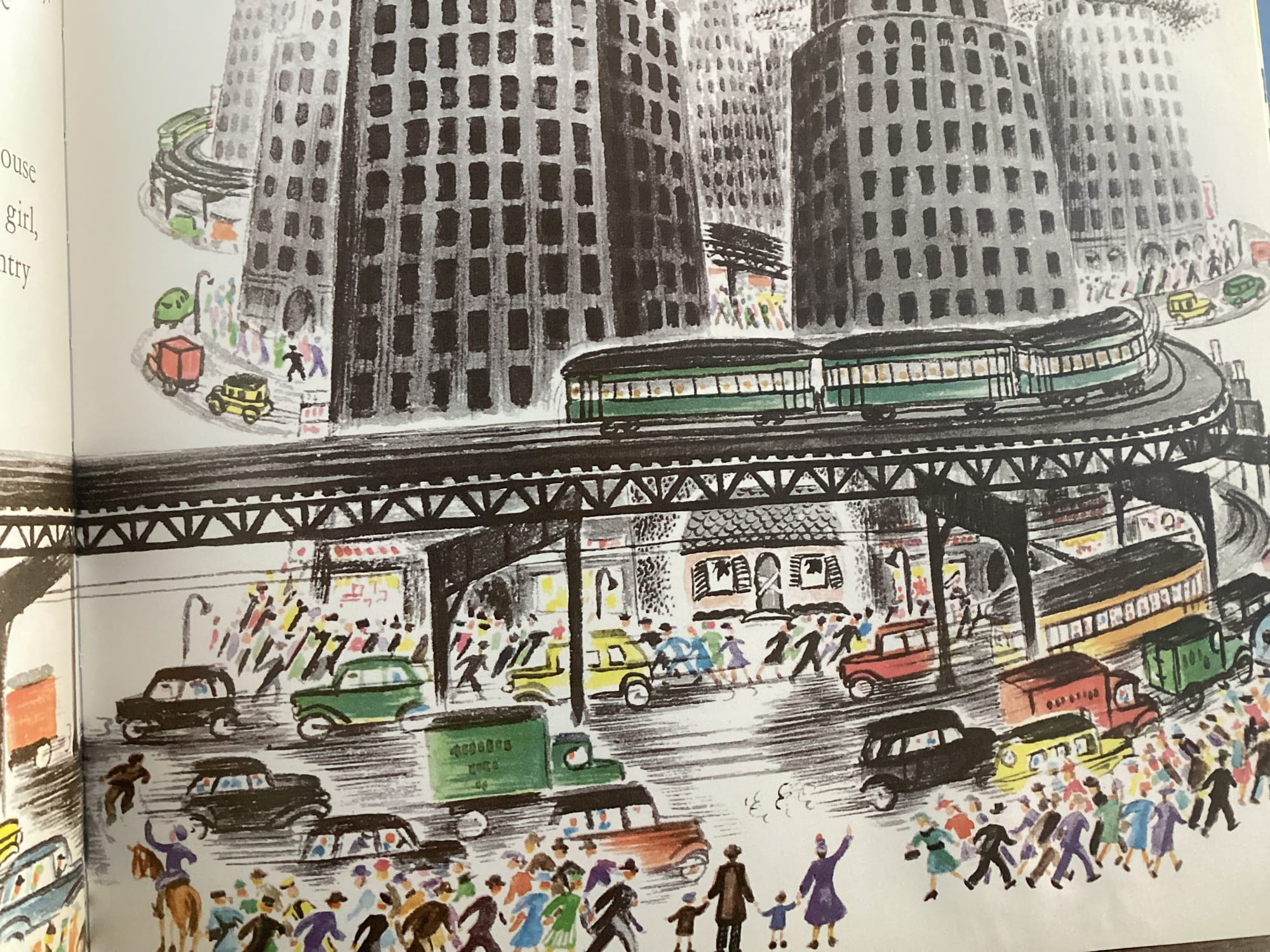
If you needed Ms. Burton to clarify that the house ”was very sad and lonely” by that first page, you didn’t need those words by the last one. Yeesh y‘ins. Beat up! Opportunity lost here, Ms. Burton. Upon her rescue she could have been smiling with some bricks missing on that front grill. That’s the little house at the end of the book, on her way back out to the country to live another hundred years happily.
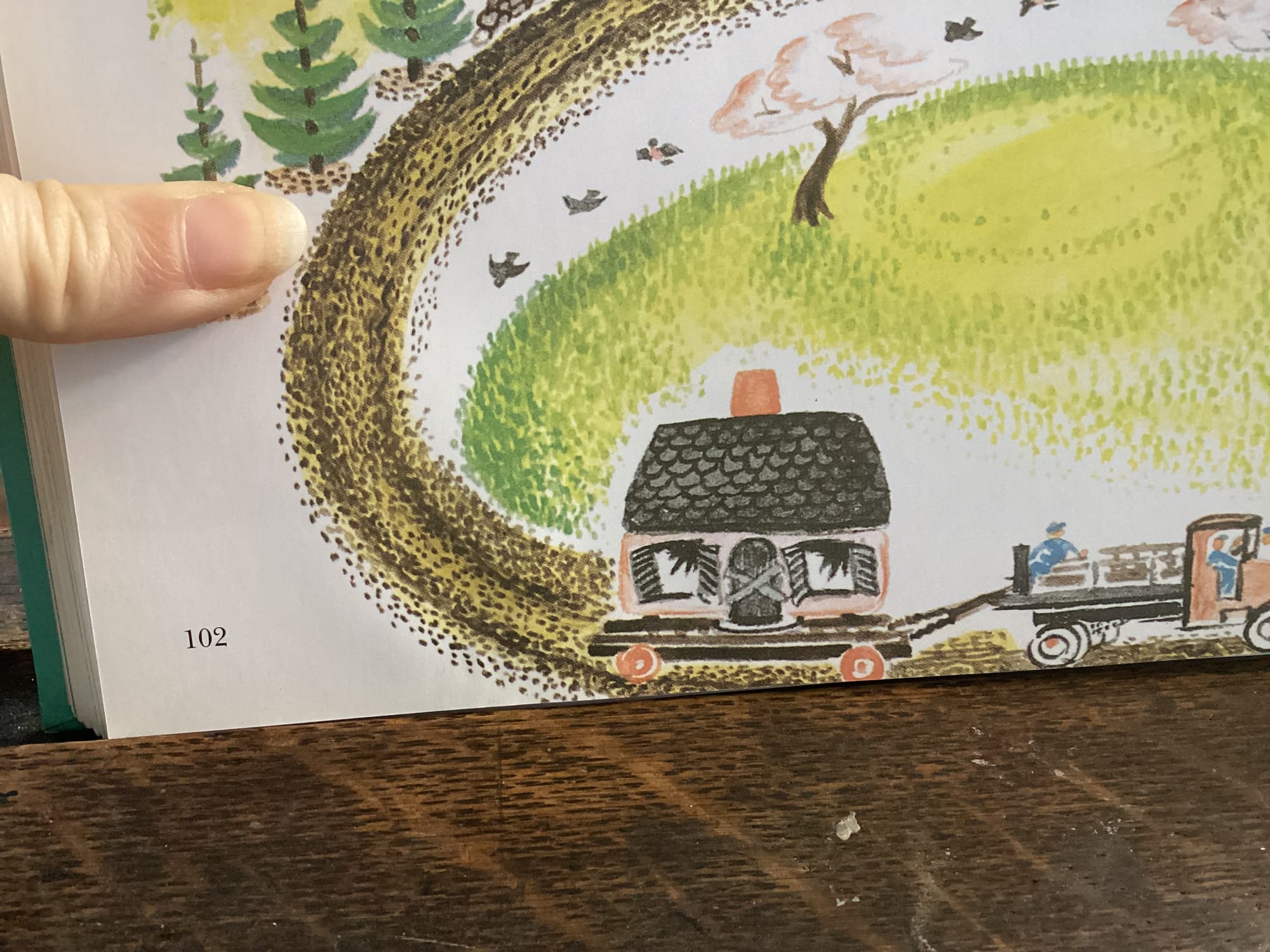
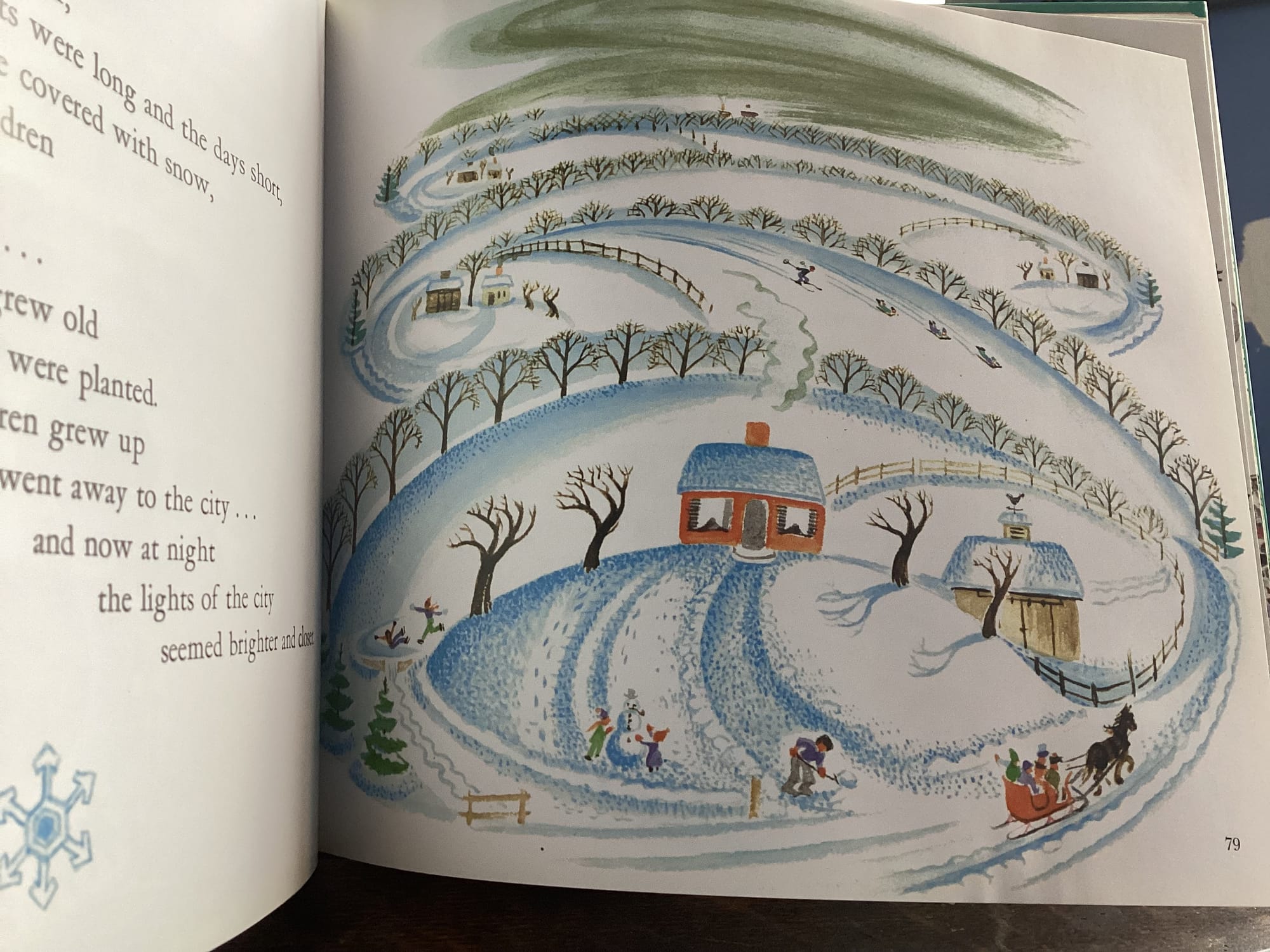
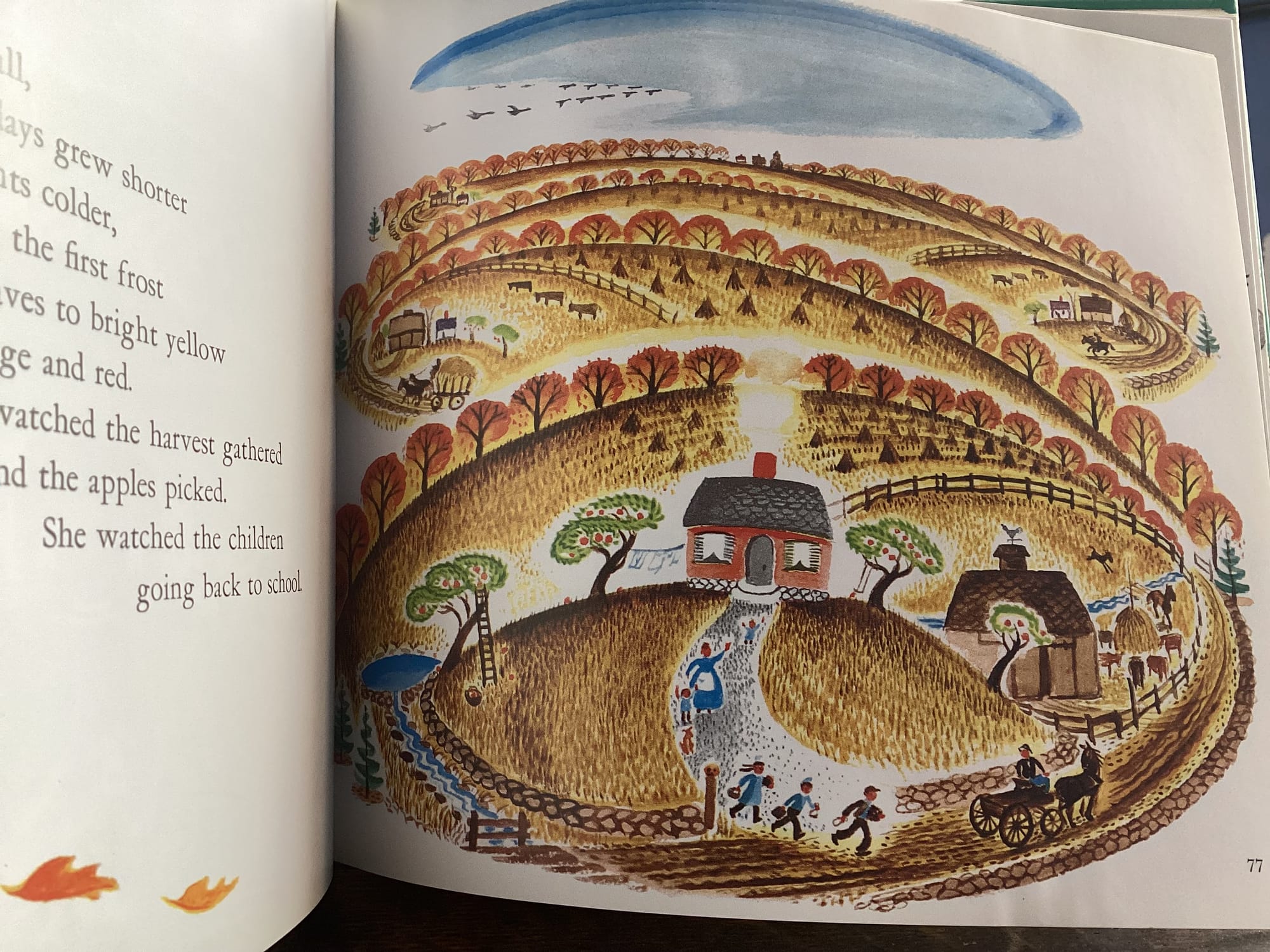
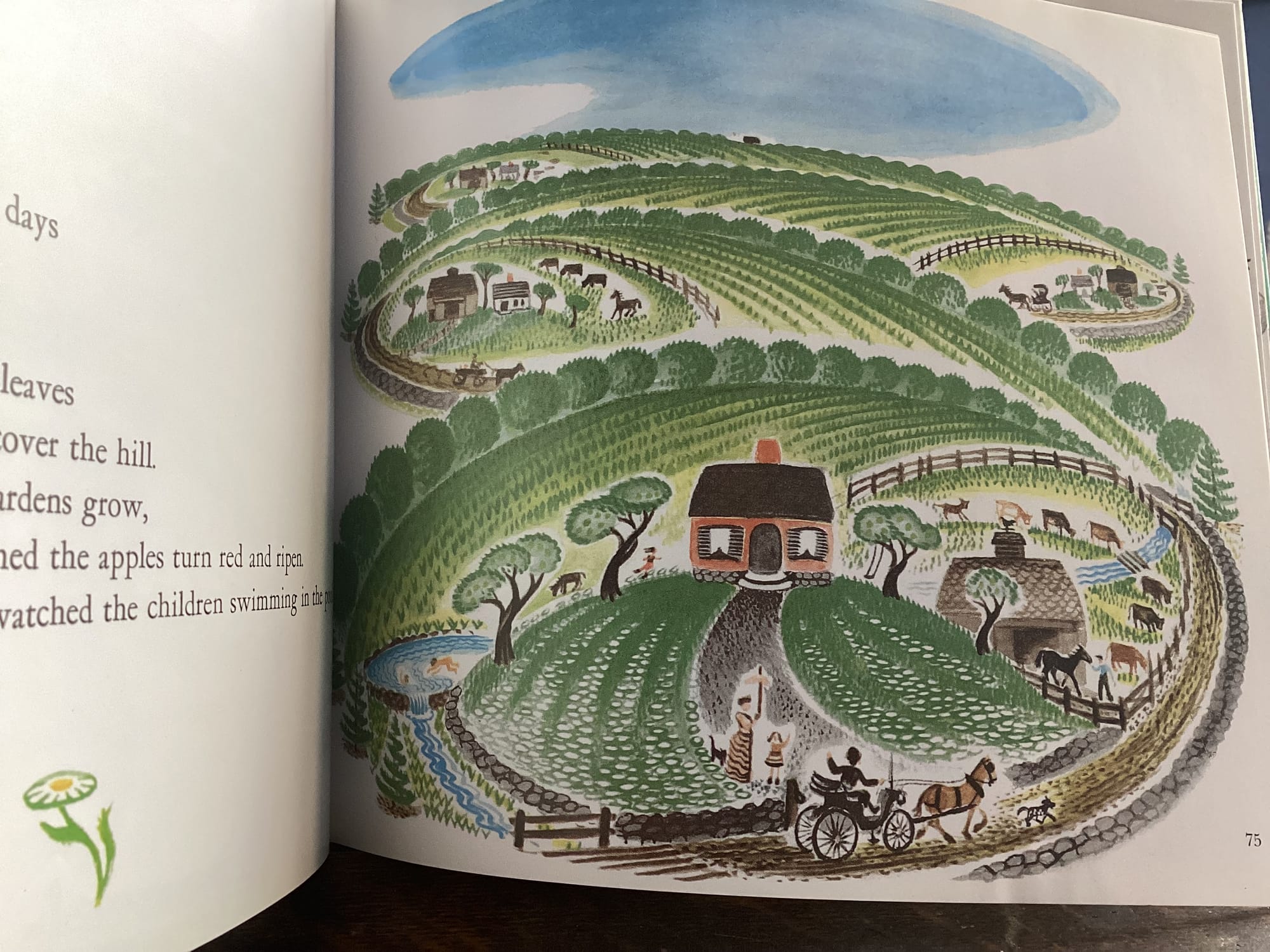
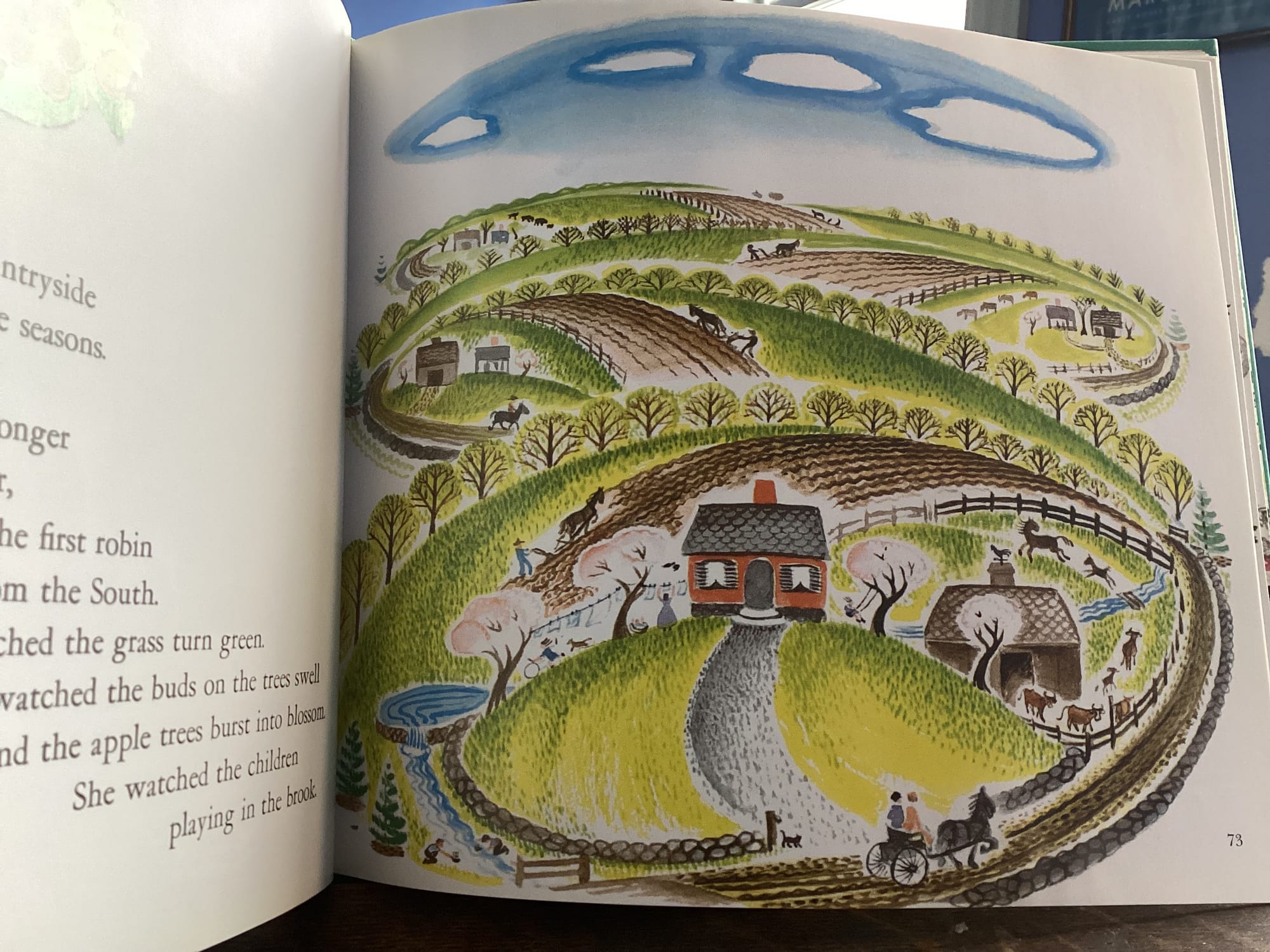
So Salesman-esque. However, the beat up house being towed back to its rightful home is the unlikely happy ending that Death of a Salesman reverses on us. Arthur Miller’s version of this story opens with Willy towing himself back to Brooklyn after only getting a little past Yonkers on his way to New England:
WILLY [with wonder]: I was driving along, you understand? And I was fine. I was even observing the scenery. You can imagine, me looking at scenery, on the road every week of my life. But it’s so beautiful up there, Linda, the trees are so thick, and the sun is warm. I opened the windshield and and just let the warm air bathe over me. And then all of a sudden I’m goin‘ off the road! I’m tellin’ ya, I absolutely forgot I was driving. If I’d’ve gone the other way over the white line I might’ve killed somebody. So I went on again—and five minutes later I’m dreamin’ again, and I nearly—[he presses two fingers against his eyes] I have such thoughts, I have such strange thoughts.
That country imagery is like the flute before the rise of the curtain. Those pretty fresh sunlit air images and sounds are very different from what Arthur Miller tells us we are looking at: “Only the blue light of the sky falls upon the house and forestage: the surrounding area shows an angry glow of orange. As more light appears, we see a solid vault of apartment houses around the small, fragile-seeming home. An air of the dream clings to the place, a dream rising out of reality.” We get details of the home space told to us, and then, as the flute plays on Willy Loman’s entrance is described as a simple cross stage walk with his breifcases, “his exhaustion [] apparent.” So, the flute with Willy, in contrast to the scenery and his exhaustion…I don’t think flutes ever sound exhausted. I wonder when the flute cut out in the original.
Willy follows that first description of his drive through the country with a description of the contrast to current surroundings:
WILLY: The way they boxed us in here. Bricks and windows, windows and bricks. The street is lined with cars. There’s not a breath of fresh air in the neighborhood. The grass don’t grow any more, you can’t raise a carrot in the backyard. They should’ve had a law against apartment houses. Remember those two beautiful elm trees out there? When I and Biff hung the swing between them?
LINDA: Yeah, like being a million miles from the city.
WILLY: They should’ve arrested the builder for cutting those down. They massacred the neighborhood. [Lost] More and more I think of those days, Linda. This time of year it was lilac and wisteria. And then the peonies would come out, and the daffodils. What fragrance in this room!
LINDA: Well, after all, people had to move somewhere.
WILLY: No, there’s more people now.
LINDA: I don’t think there’s more people. I think —
WILLY: There’s more people! That’s what’s ruining this country! Population is out of control. The competition is maddening! Smell the stink from that apartment house! And another one on the other side . . .
This begs for a timeline in list form…
- 1942: Virginia Lee Burton publishes Little House.
- 1944: Arthur Miller’s daughter Jane is born.
- 1947: Arthur Miller’s son is born.
- 1948: Arthur Miller write Death of a Salesman in one 6-week stint….in a little house in the country in Connecticut.
I am sure I am not the first to point this out. Actually, being new to the connect-the-dots lit-crit game when I first researched and read this play I think I approached my The Little House references with oblivious certainty. Like, because The Little House was such a fixture of my household growing up, I think I was just sure that the values being sold to me in The Little House were really really right. Grass and countryside are ‘right’ and apartment buildings and dense city are bad. Willy is right. It was all wisteria and lilac breezes before.
Did Arthur Miller see this right away? I wonder if he saw a sadness in that American dream that Little House is peddling a little better each night he read it to his kids. Like Virginia Lee Burton put her finger on what we want in this country and Arthur Miller saw how that little dream destroys the dreamers.
No one ever moves houses out to the country! Builders knock them down!
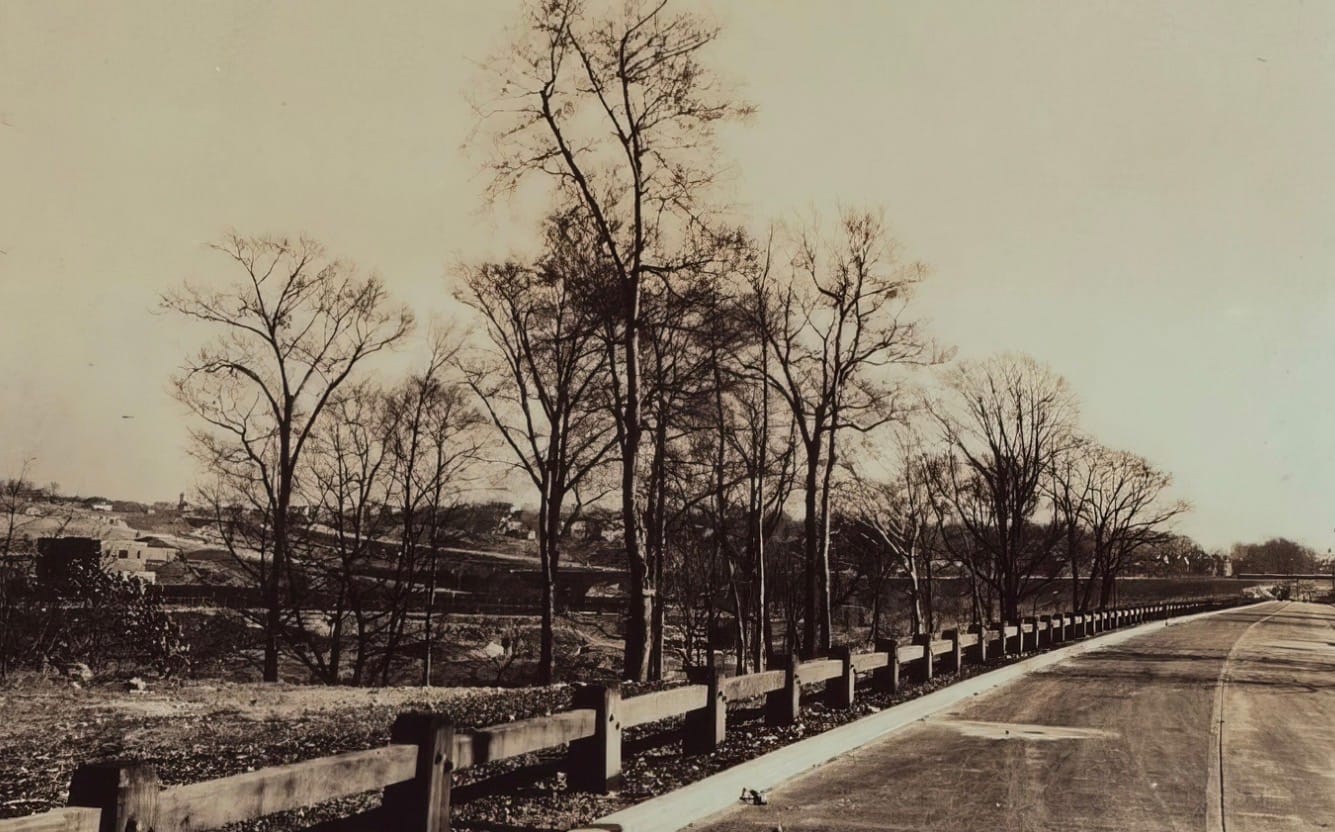
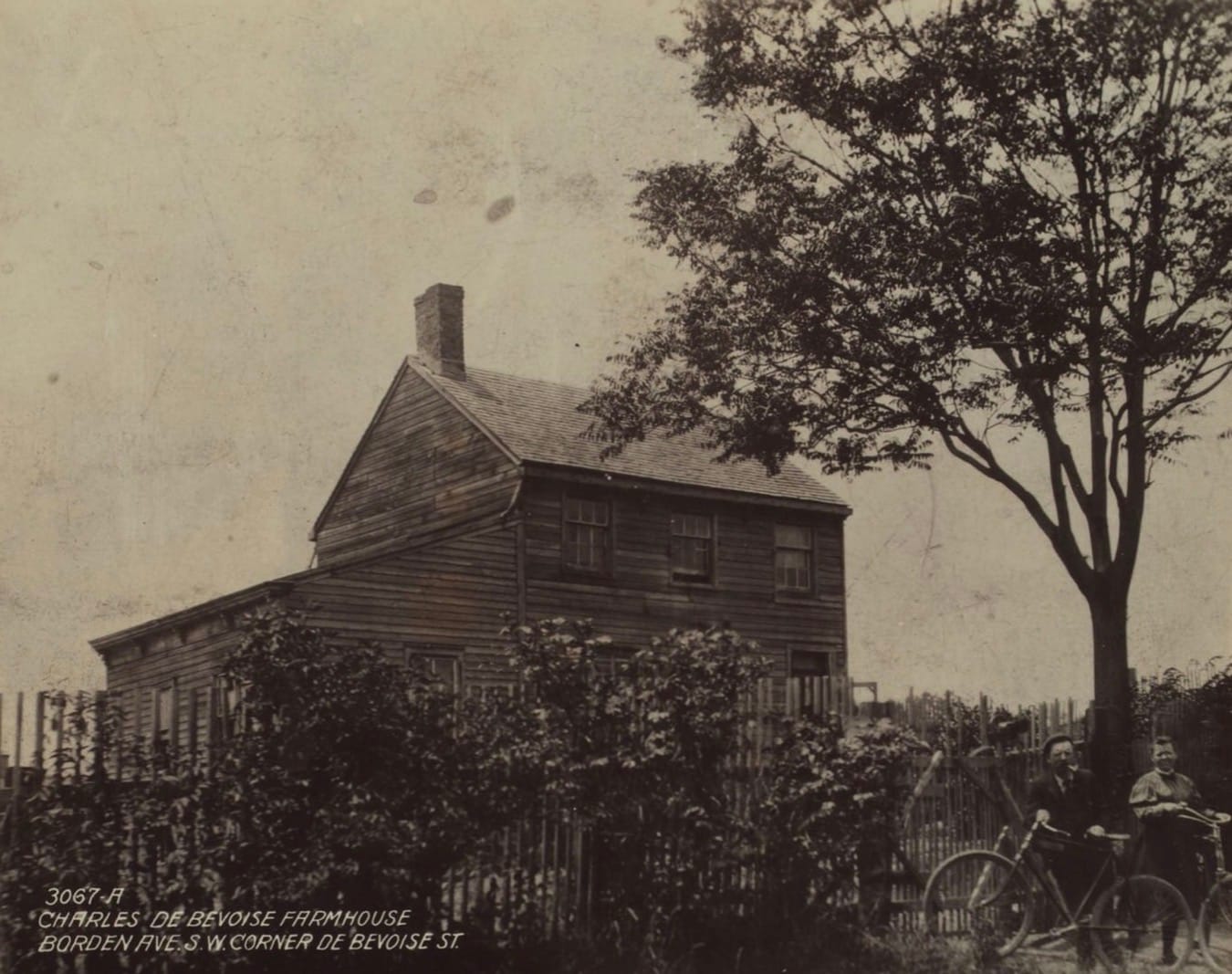
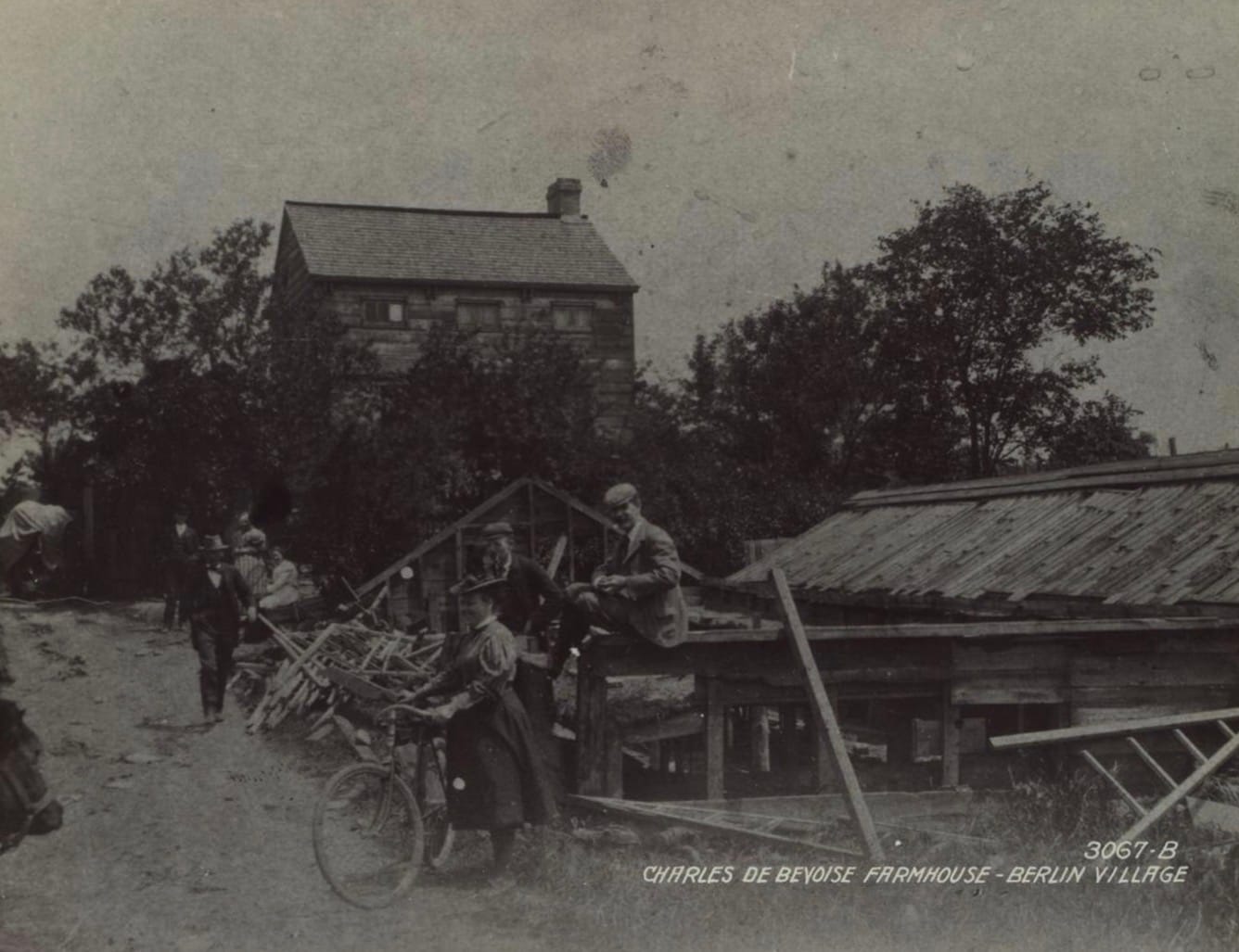
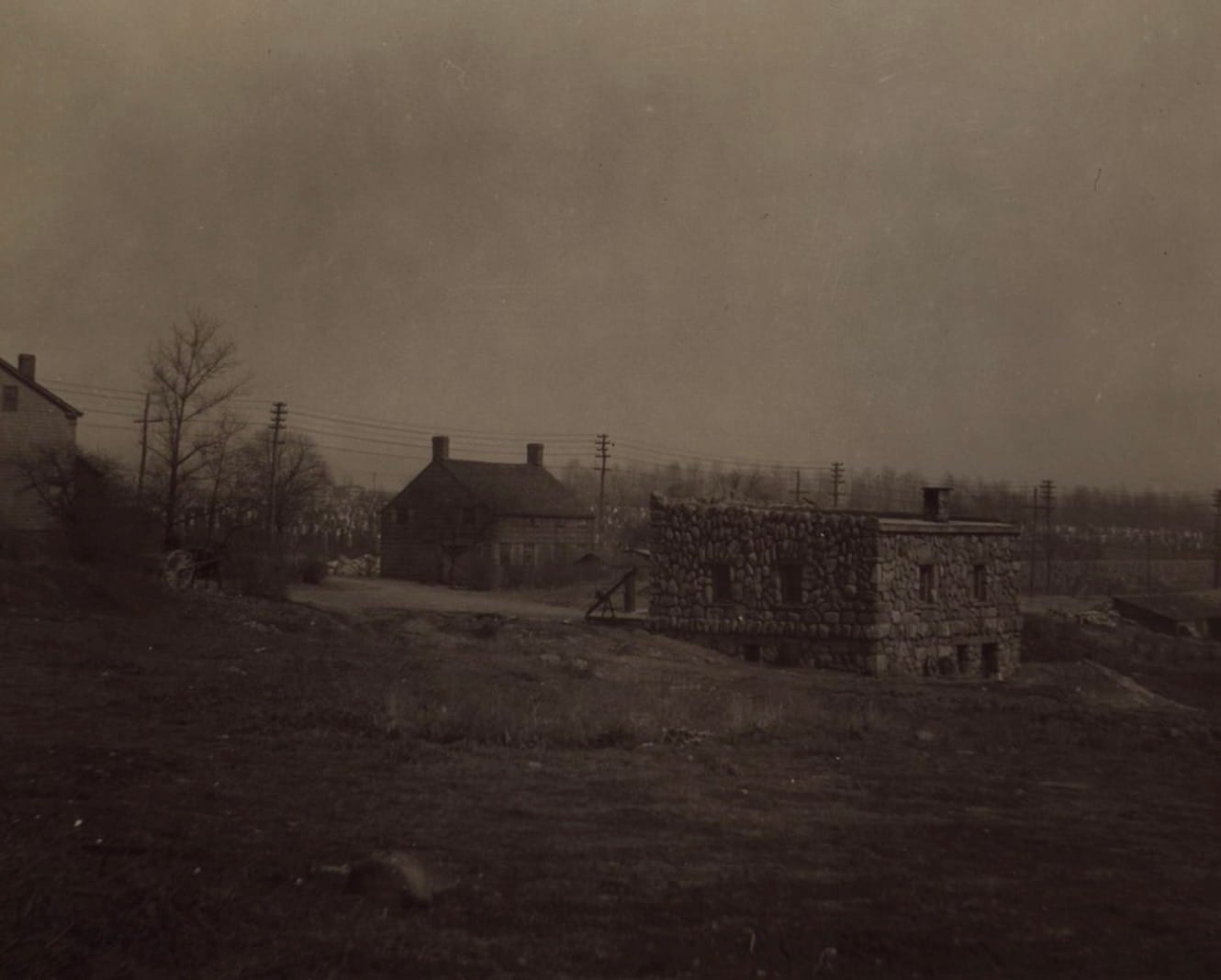
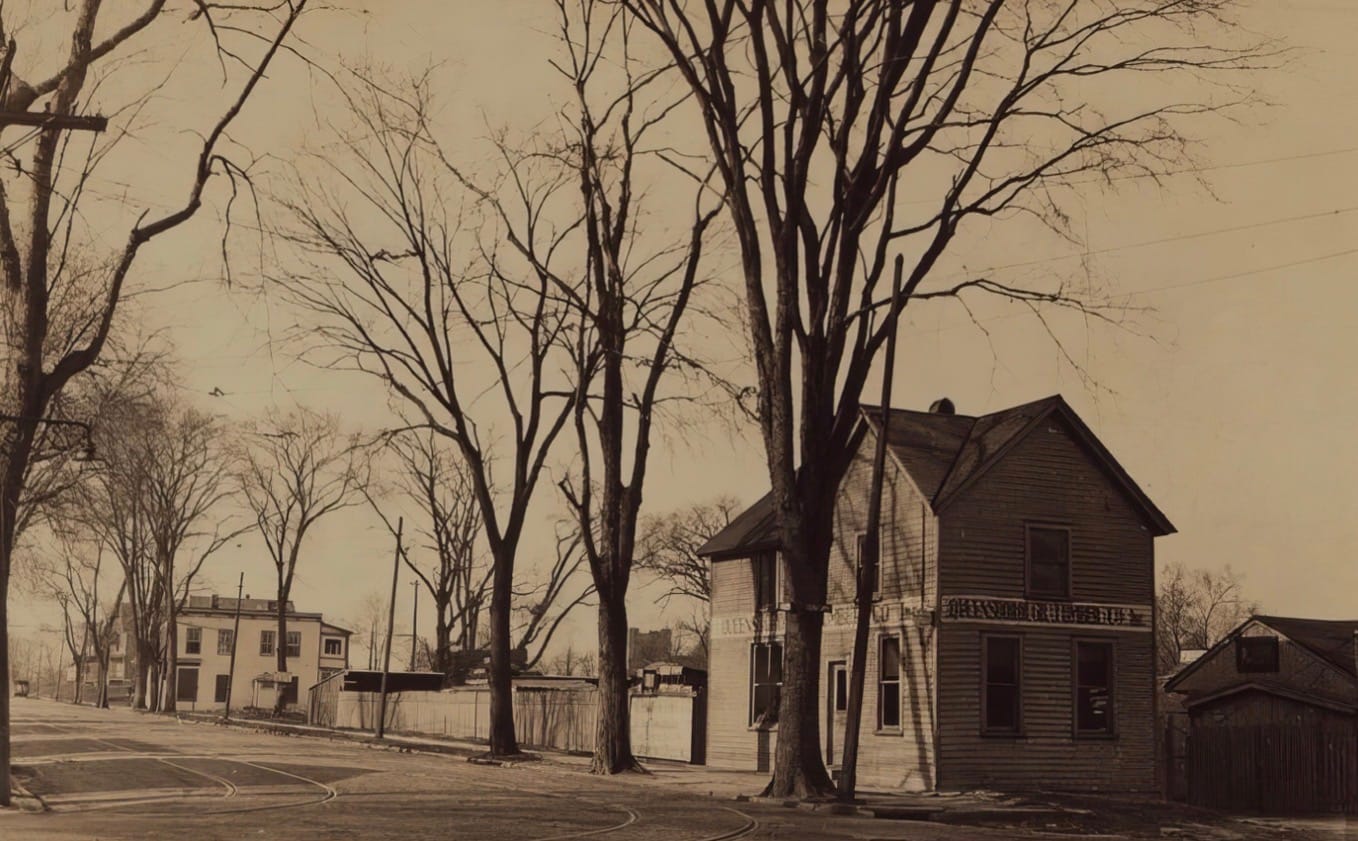
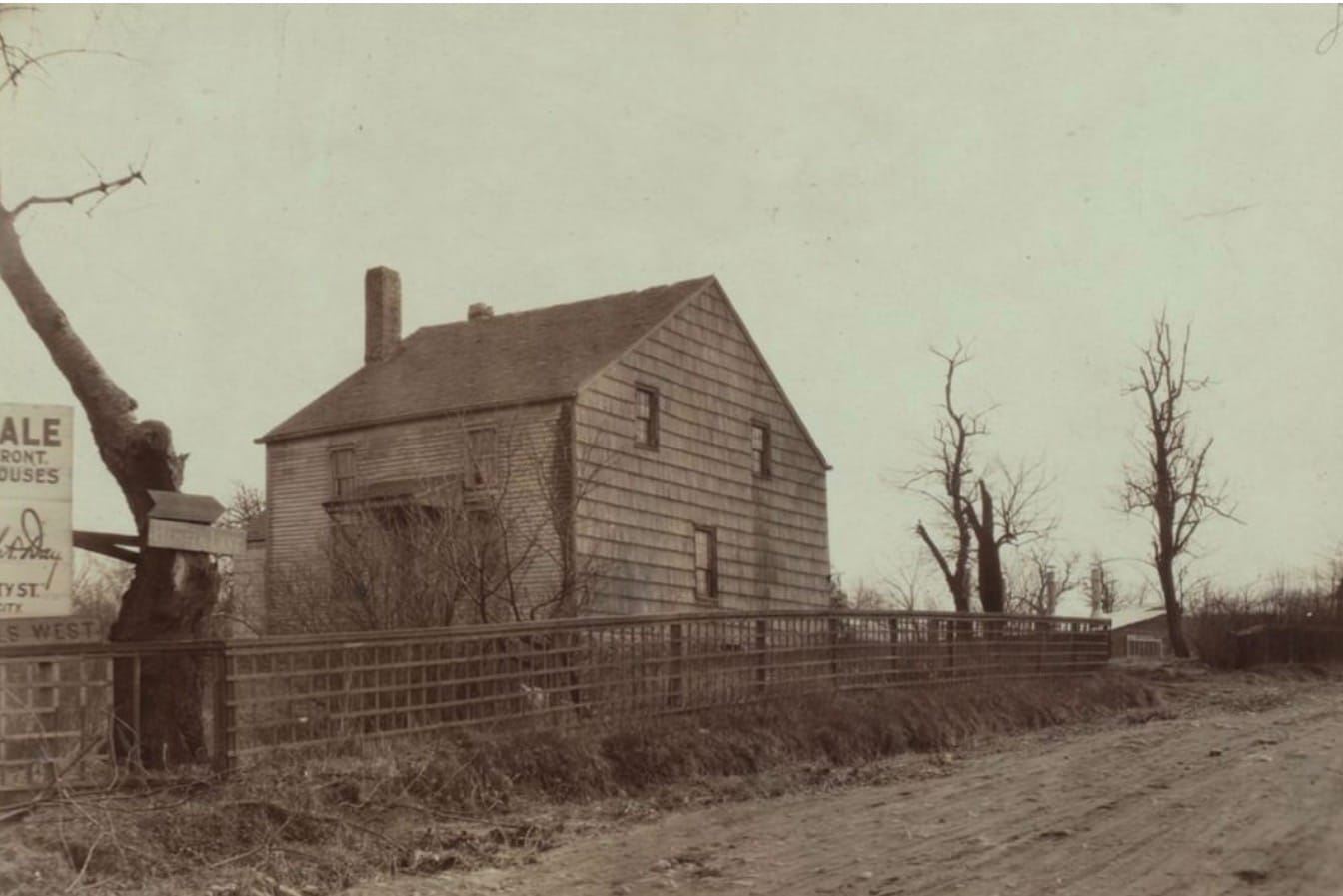
That is Queens in 1910ish. That is what Arthur Miller would have seen looking out of the car or the train on the way from Harlem to his family’s 2nd home in Far Rockaway Queens. When he was 14 Miller’s family lost almost everything in the stock market crash and they moved out to Brooklyn.
I trust that he had Brooklyn in mind…but, I think his images of country were informed by Queens…and there are so many more houses that fit that Willy world better in Queens. For example, the below homes are what Donald Trump’s dad built in place of “little houses” like the ones above.
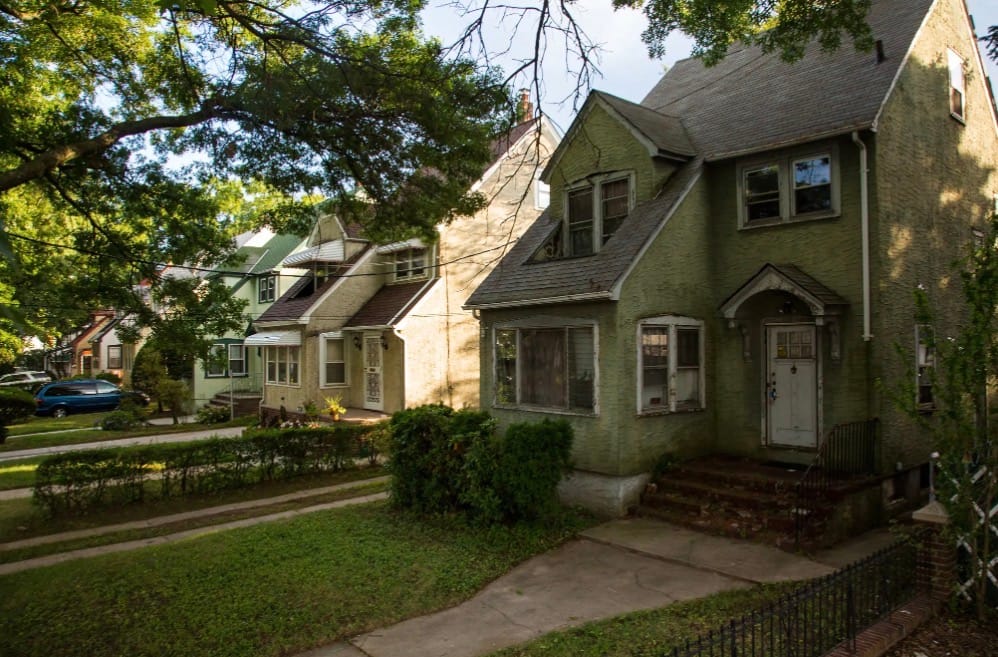
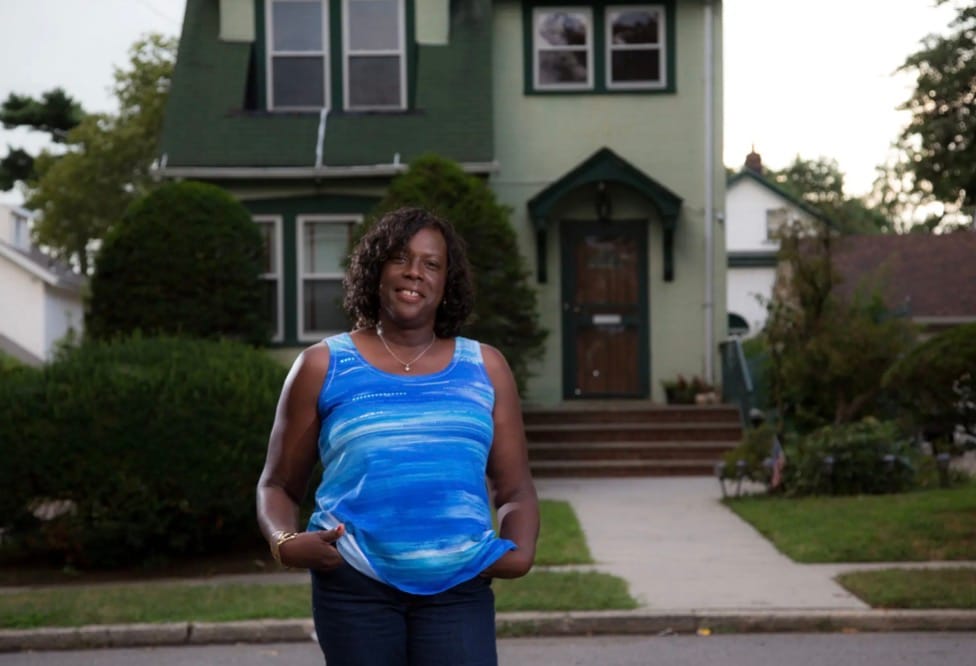

Early Fred Trump houses, built in the early 1930s. A little late for Death of a Salesman.
I think Arthur Miller was retelling the Virginia Lee Burton story visually with the pre-building boom houses in his head. Those small rectangular farm houses. We can’t find those in these Queens and Brooklyn neighborhoods any more because they did get knocked down to build rows of single family homes like the ones Fred Trump build with the money he earned from building garages for people.
This Times article tells us that Trump built those blocks in Hollis Queens in the 1920’s when the demand was so high you couldn’t build them fast enough.
That’s a different story than the one I think Willy bought into. The 1910’s outer-boroughs still visually give you a lot of that American open-road, manifest your destiny possibility. I think this is where a writer gets an image in their head, and a set designer goes out into the world to find that image…and realizes it does not quite exist.
I don’t think that there were single homes with space around them in Willy’s price range that weren’t Little-House-esque. My set designer partner and I did a thorough Brooklyn Historical Society survey. There were farms and little homes and stores from the late 1800’s or earlier. And then, there were bigger homes that you see in Ditmas Park, right next to Midwood, where Miller spent his teen years, those were more middle class, but still a little big for Willy. They simply have too many rooms for what this play implies.…though if you do click on that Ditmas Park photo essay from the NYTimes, photo #4 is pretty darn good…still a little big, though.
I think that a salesman who had a big year in the early twenties would get a beautiful single family, but that was one of many single families in a neighborhood like Queens Village, the one that Trump Sr. first started building in 1926:
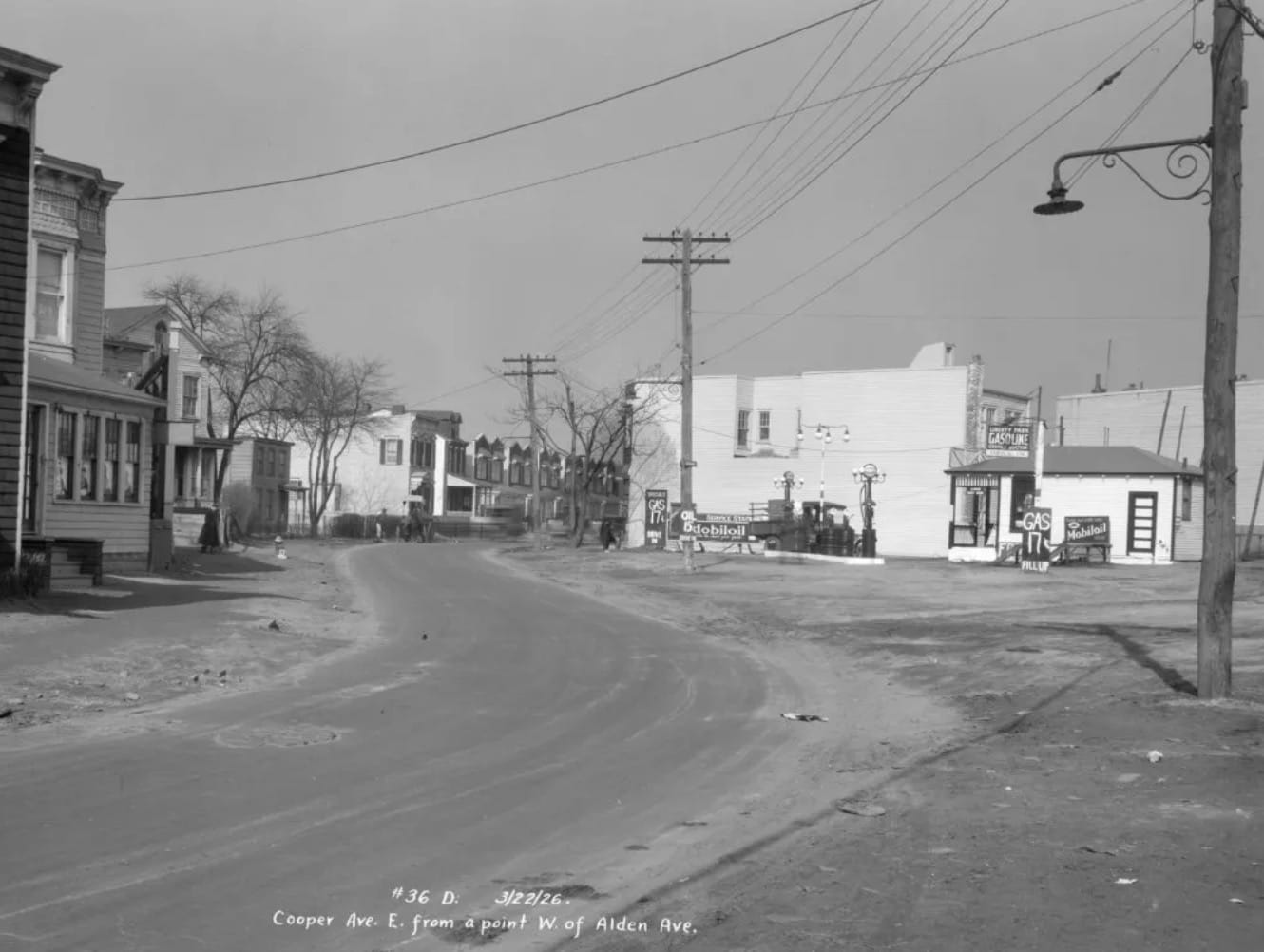
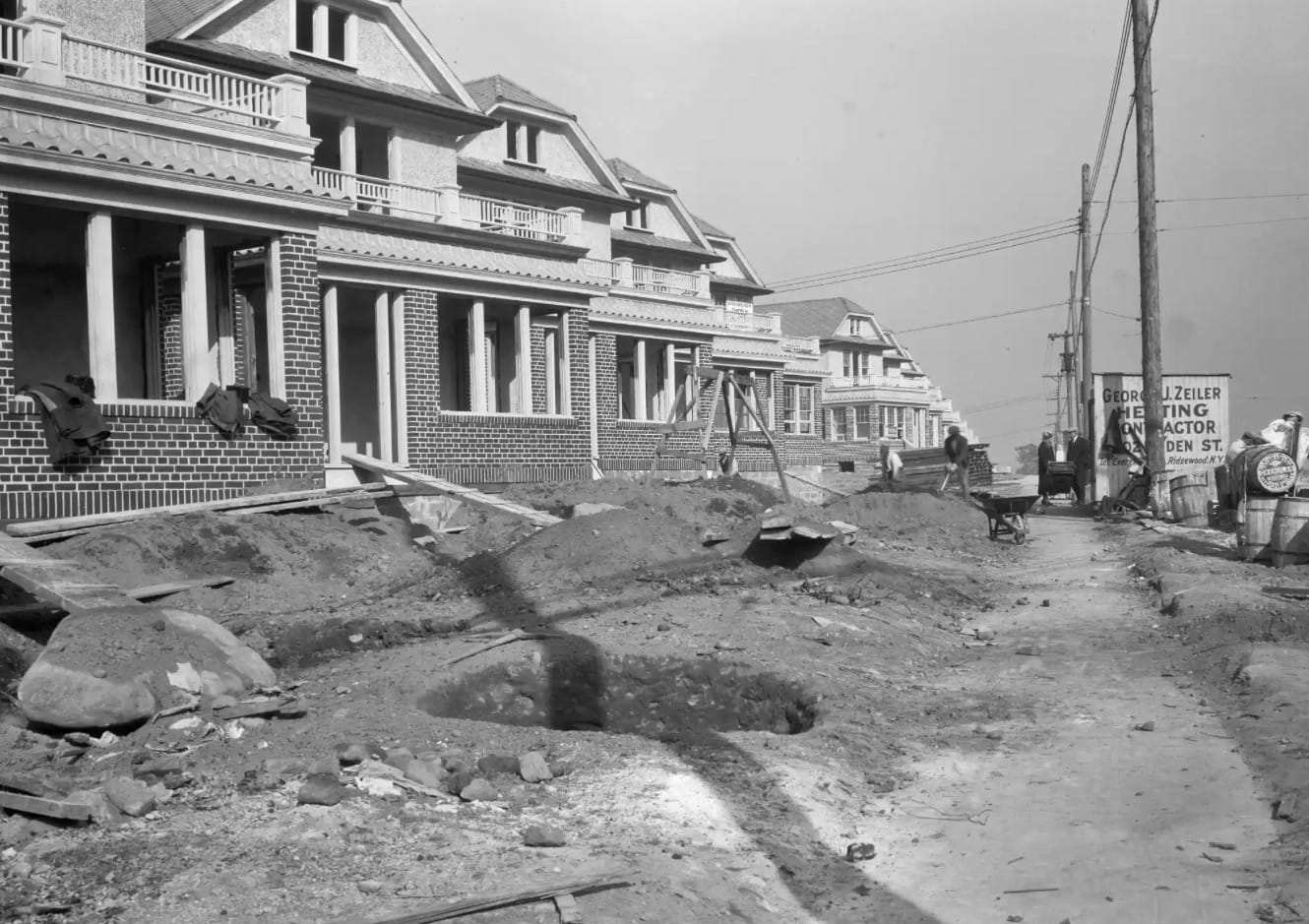
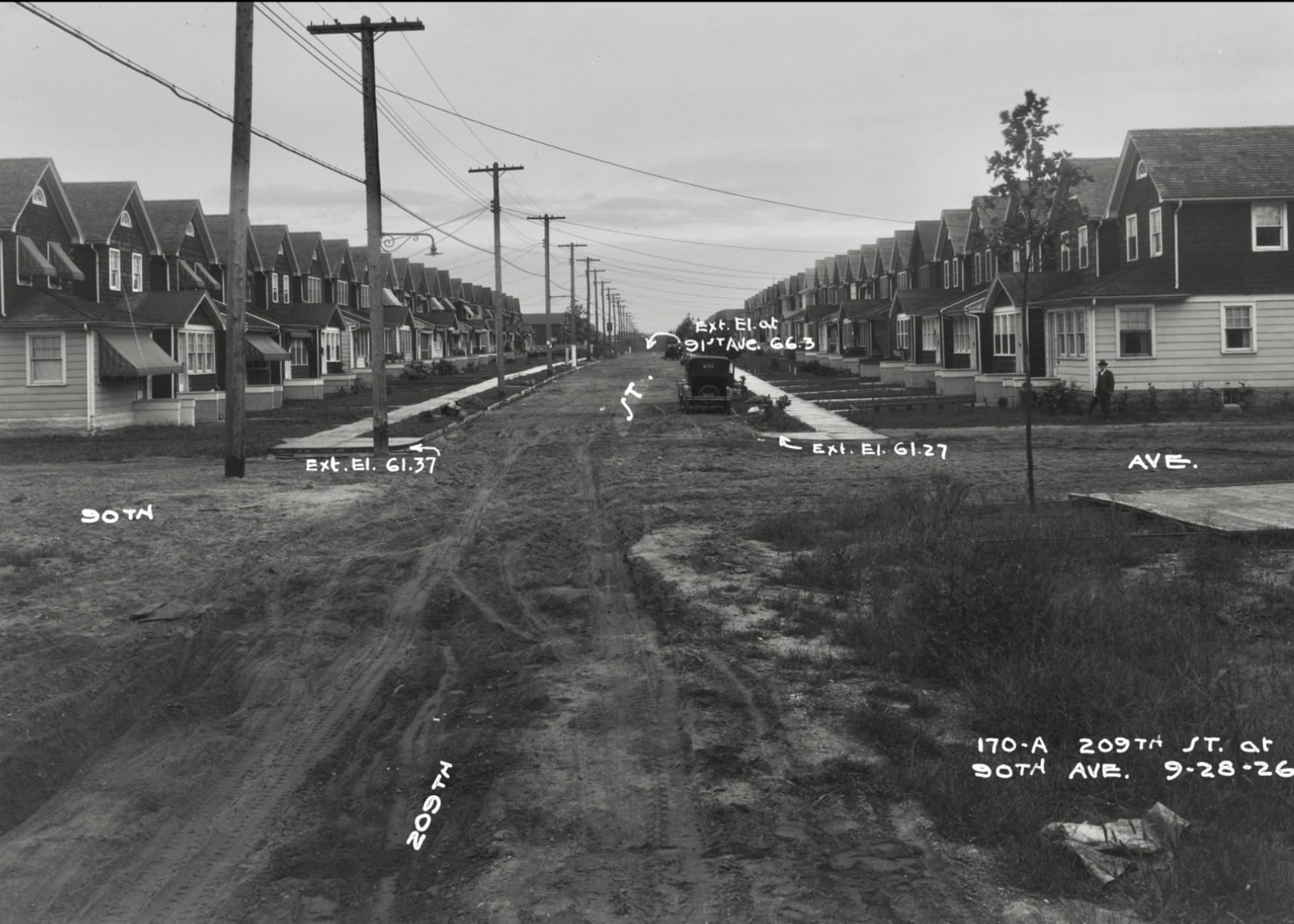
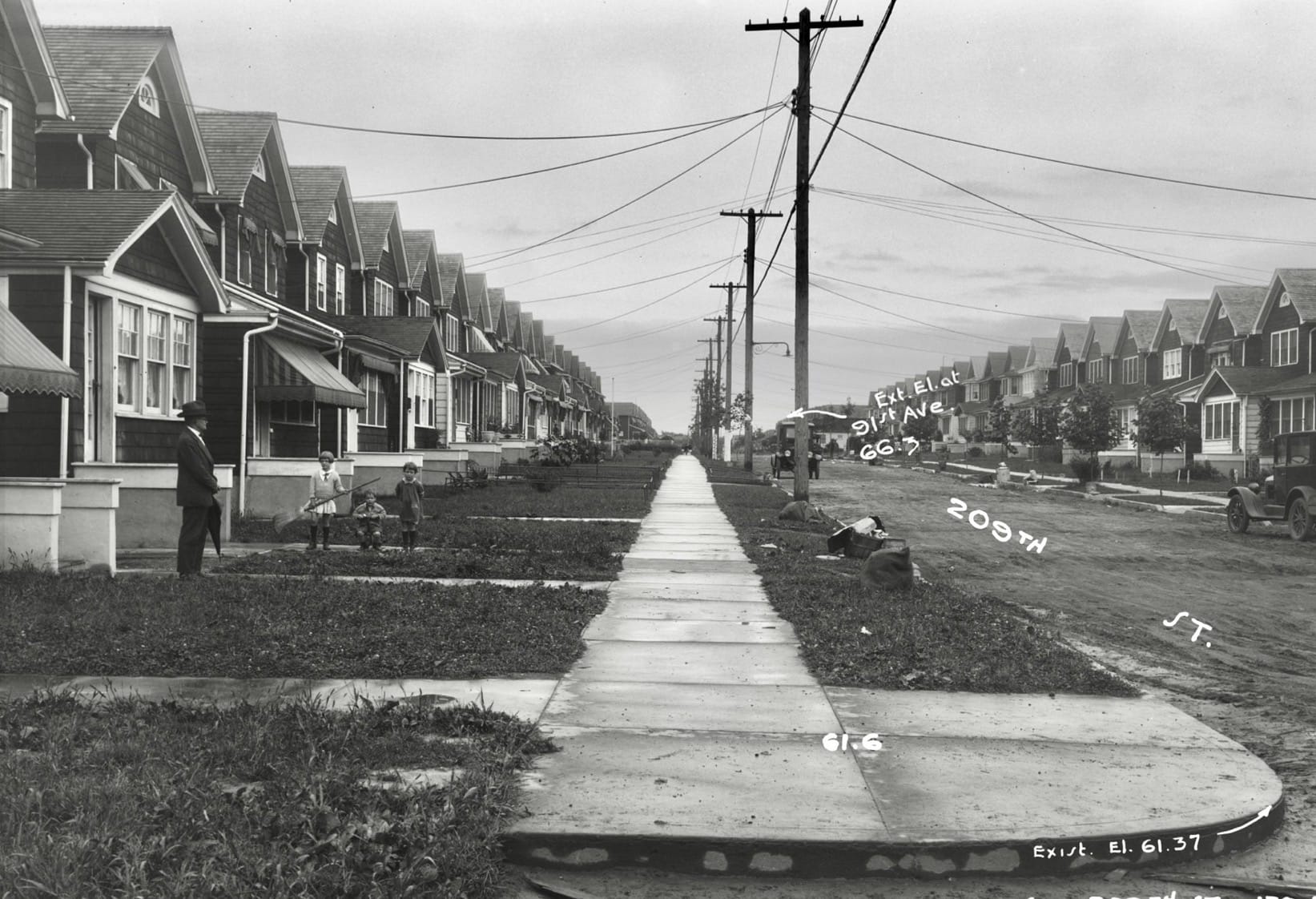
I just don’t know where you would find a house of this scale that had empty lots around it. Am I wrong? We drove up and down every street in Ditmas park, no small single families of this size; none with apartment buildings around them. I think Arthur Miller fuzed The Little House with the houses that matched it in far out Queens he saw as a kid. He shrunk some Brooklyn homes to match.
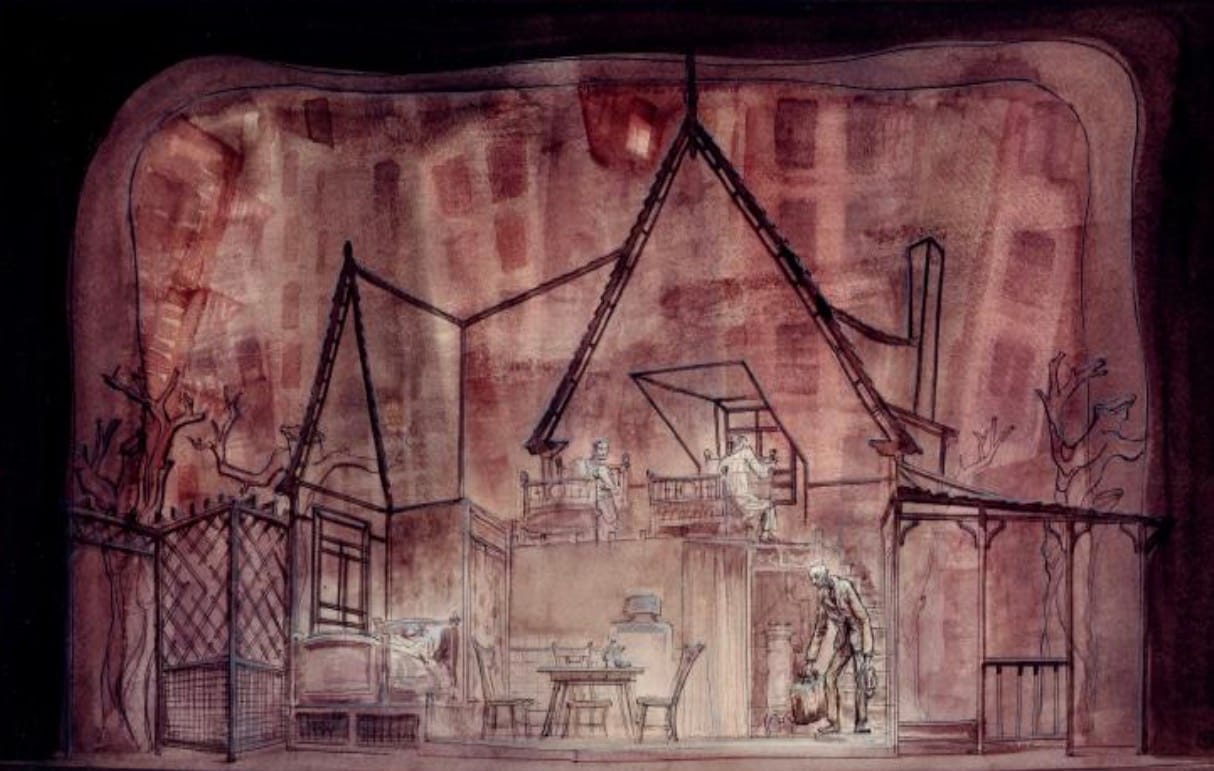
The house that the original set designer, Jo Mielziner chose was built too late for Willy to have paid it off on the day he passed in 1948. Fred Trump was making those American dream mini manors in the 1940’s. I am sure Mr. Mielziner knew that. I think he stopped in front of those homes that look like little English Tudor manor houses and understood something about American aspirations. He was raised in Paris and studied mostly in Philadelphia, but also in Berlin and London. He was an American with perspective.
He chose this house that is not a “well-built” stone farm house, like the Little House, but one that was more about imagination; playing lord of the land make-believe. Without the land that Willy originally had, now New Yorkers need filigreed gates to play make believe.
Jo Mielziner saw a pointy dramatic Tudor house just like the one that Donald Trump grew up in, just like the homes that Fred Trump built and said to himself, “that home belongs to a victim of the American dream; the American anti-hero lives there.”
After that, Trump’s dad built this brick home around the block from the English mini-manor, and the family moved into in the 1950’s. Manifest!