Pit Stop in Valparaiso
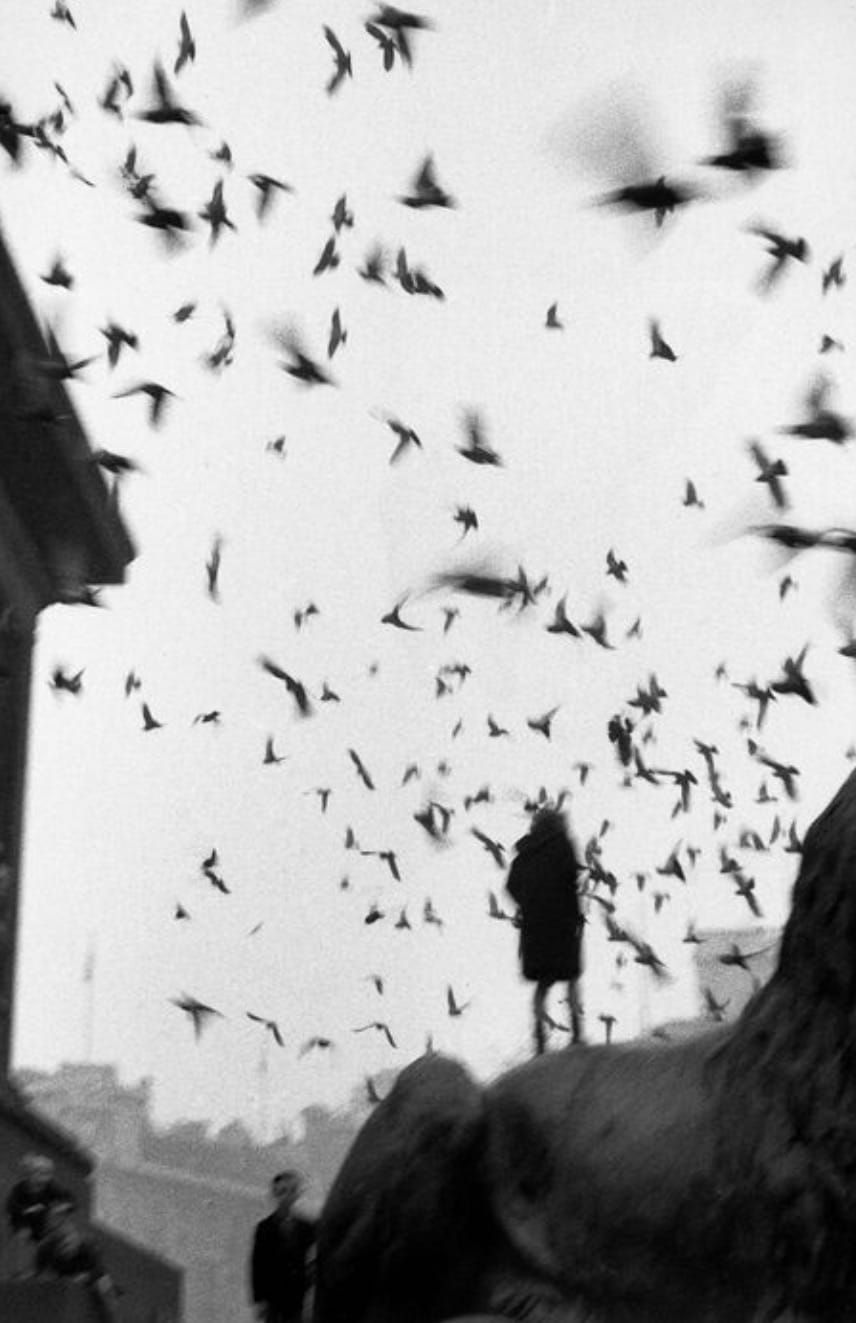
This essay began in London in 1957 where young Ms.Steinem spends 3 life-altering months:
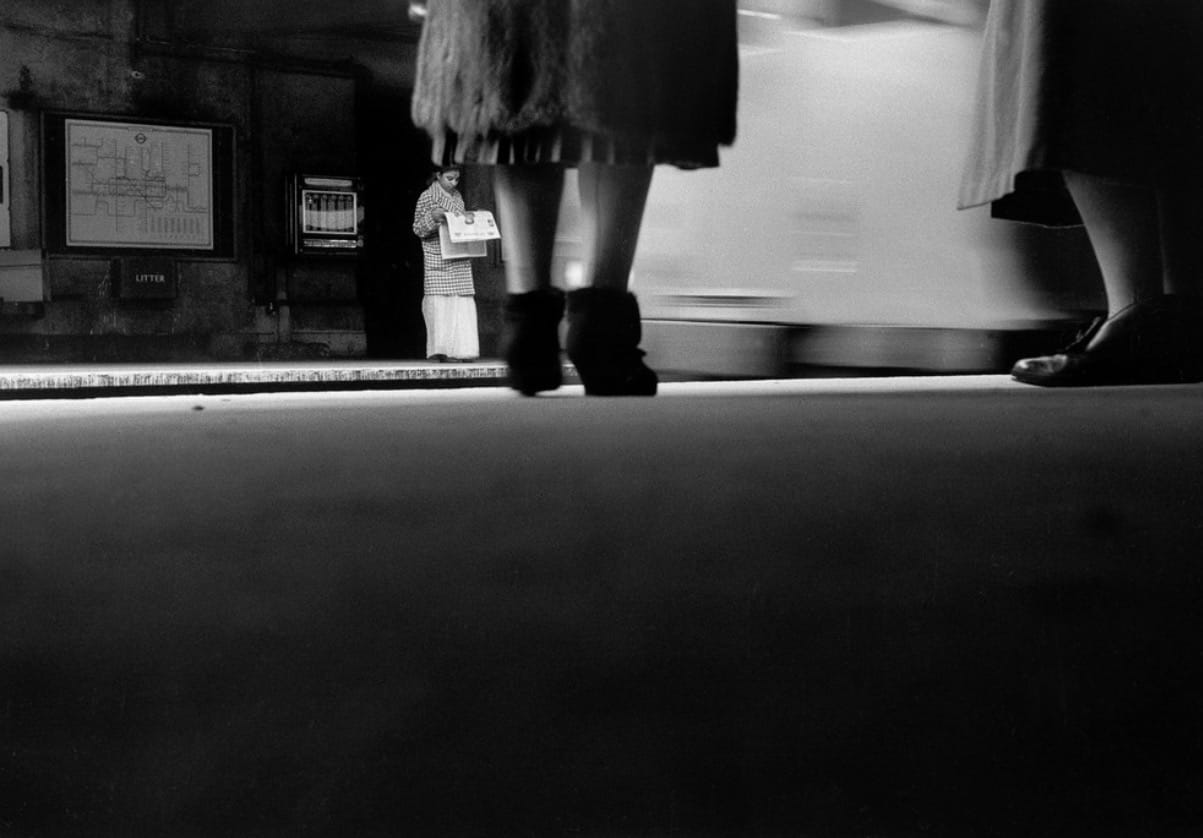
Right after college, I'm in London, working as a waitress, waiting for a visa to go to India where I have a fellowship.
India was newly independent…from England. Gloria Steinem mentions much about India in other writings, but little about England — the seat of that colonizing social structure — as her immediate point of departure from which she witnesses people throwing off said-patriarchy. I will spend my entire adult life blown away by the comprehensiveness of private college liberal arts educations; so, I am going to assume that Smith’s faculty and students mentioned England often and much when teaching Steinem about India’s independence struggle. Gandhi is why she applied for that fellowship...there was not yet a movie…how did she know?
I wonder why I haven’t yet read anything much about the English perspective on this change in status from Ms.Steinem. Was she unaware that such a shift in British identity was being felt on British home turf? Just like I have to teach myself to say and think CCP and not ’China’ which implies Chinese people, when talking about the actions of the Chinese government; maybe her awesome liberal arts education helped her to disassociate Londoners from Indian oppression.
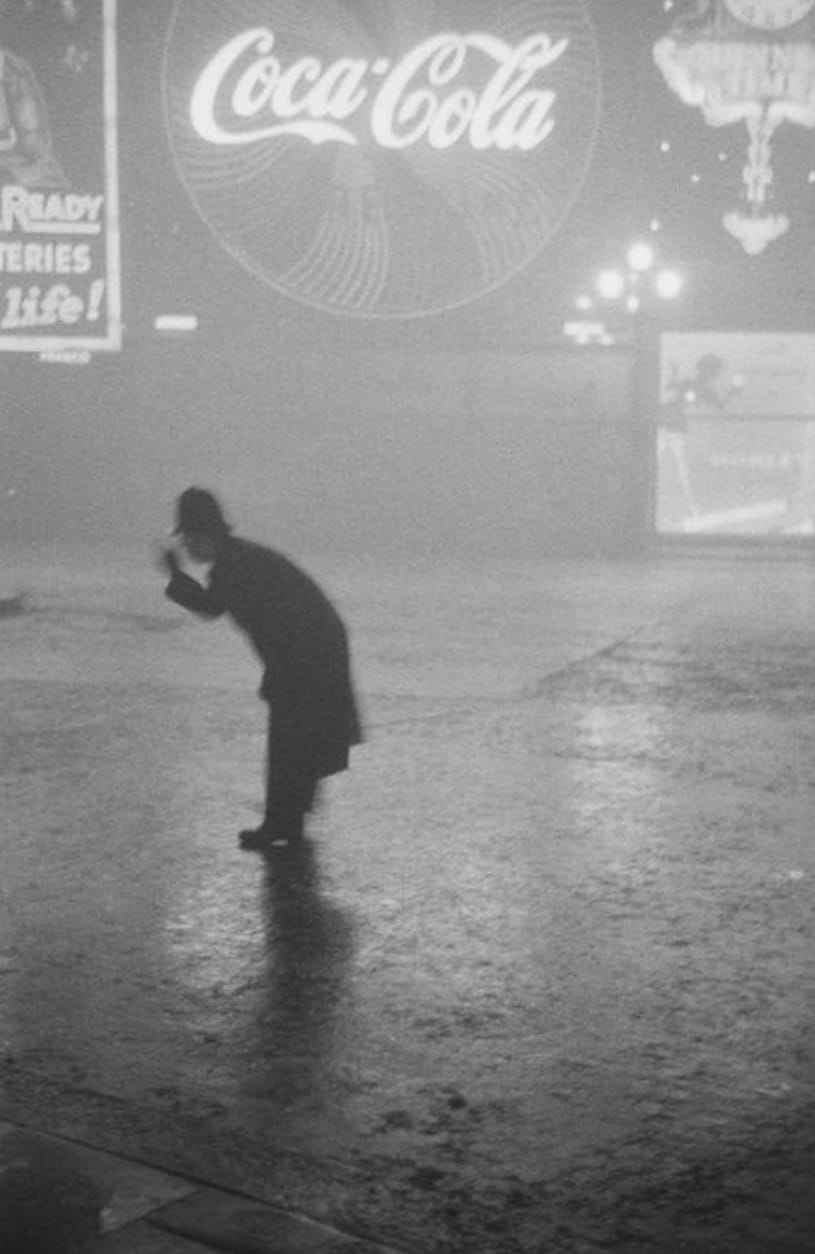
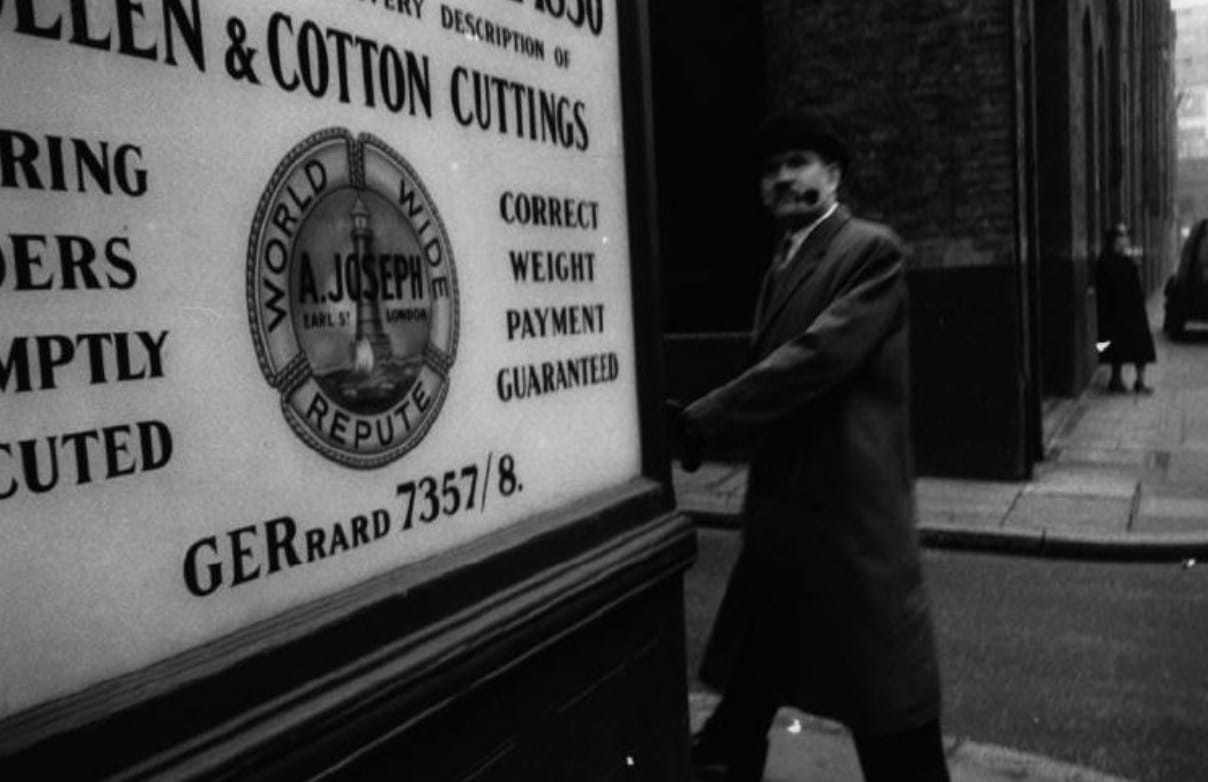
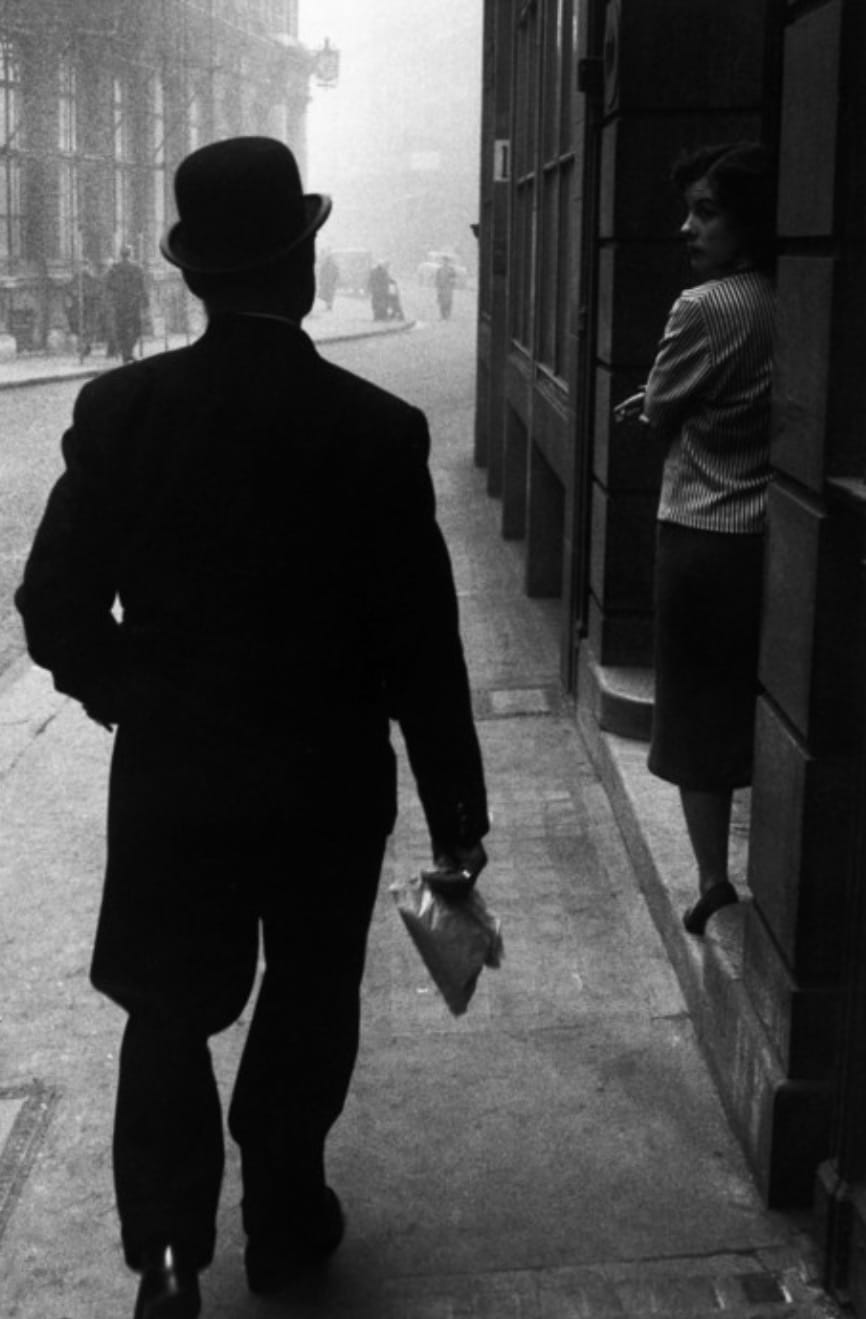
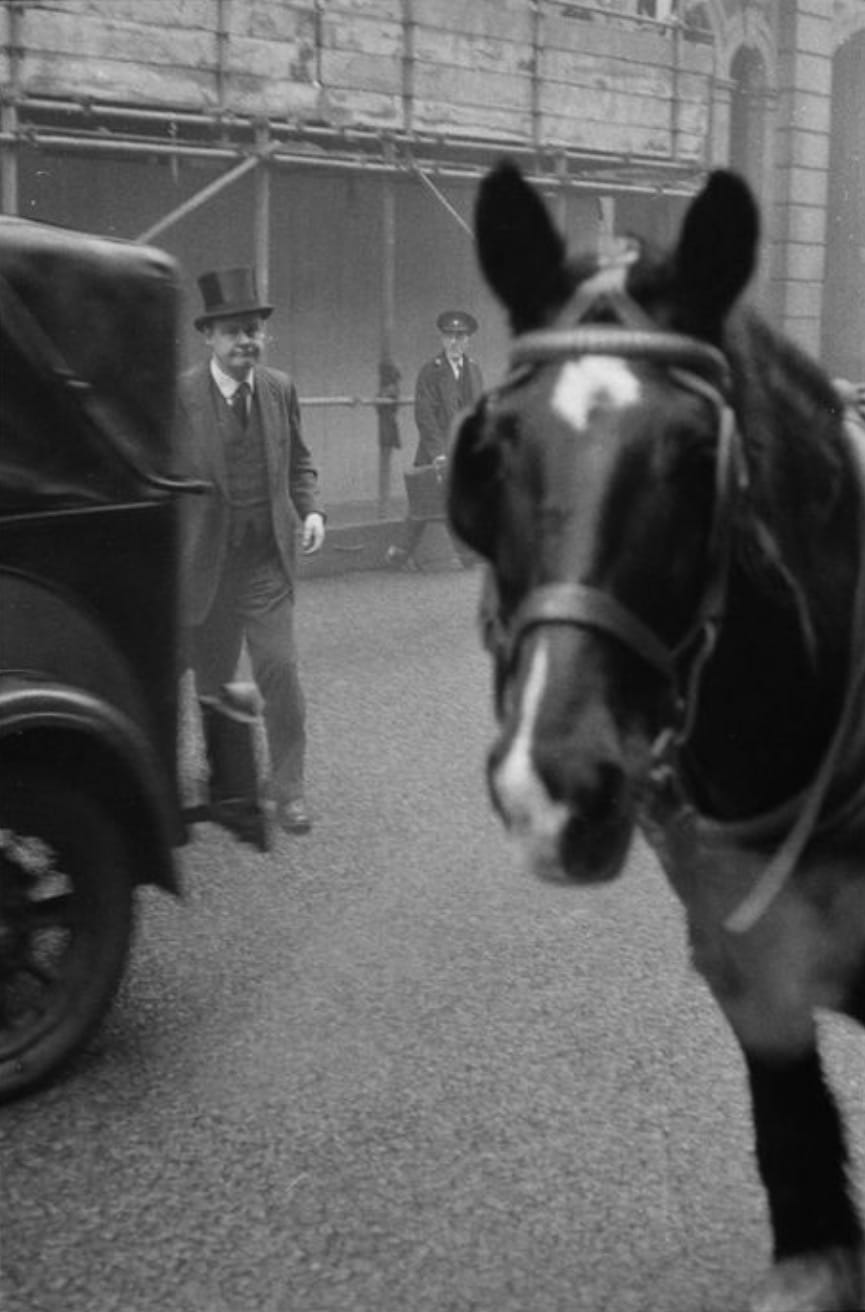
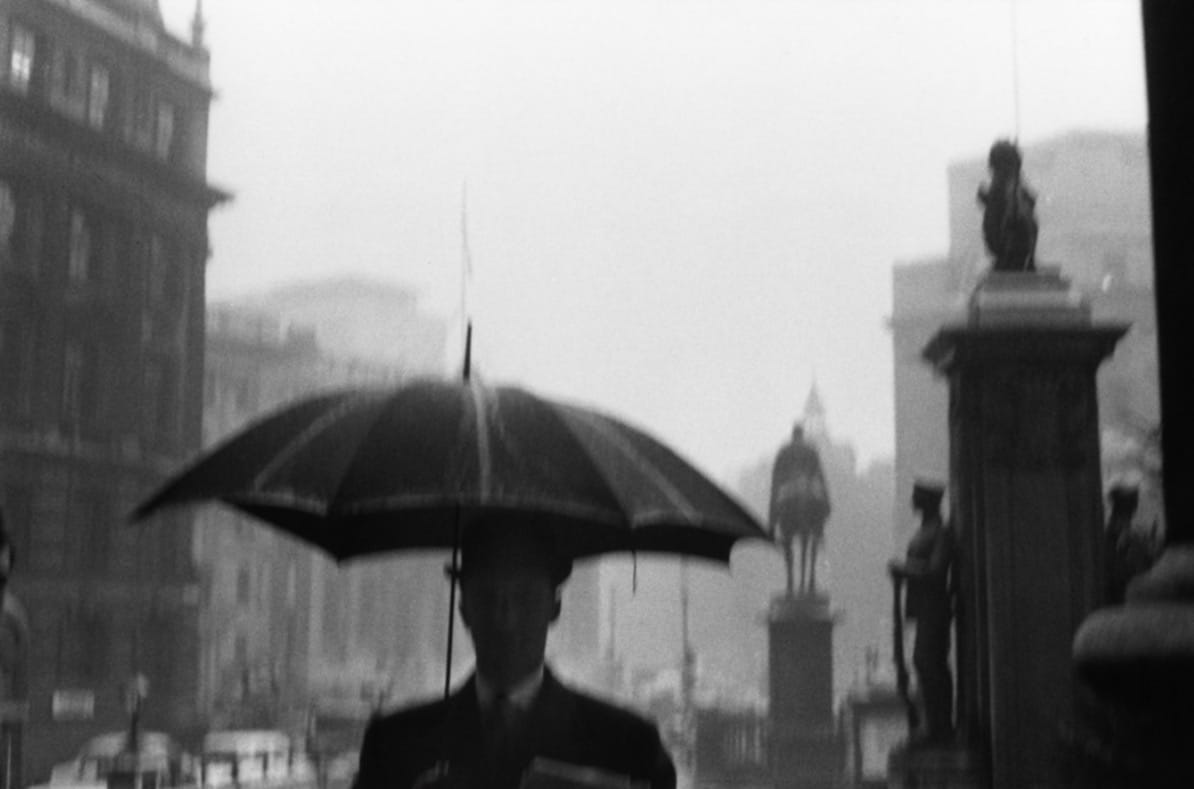
I wonder if she would have understood this moment like this photographer did:
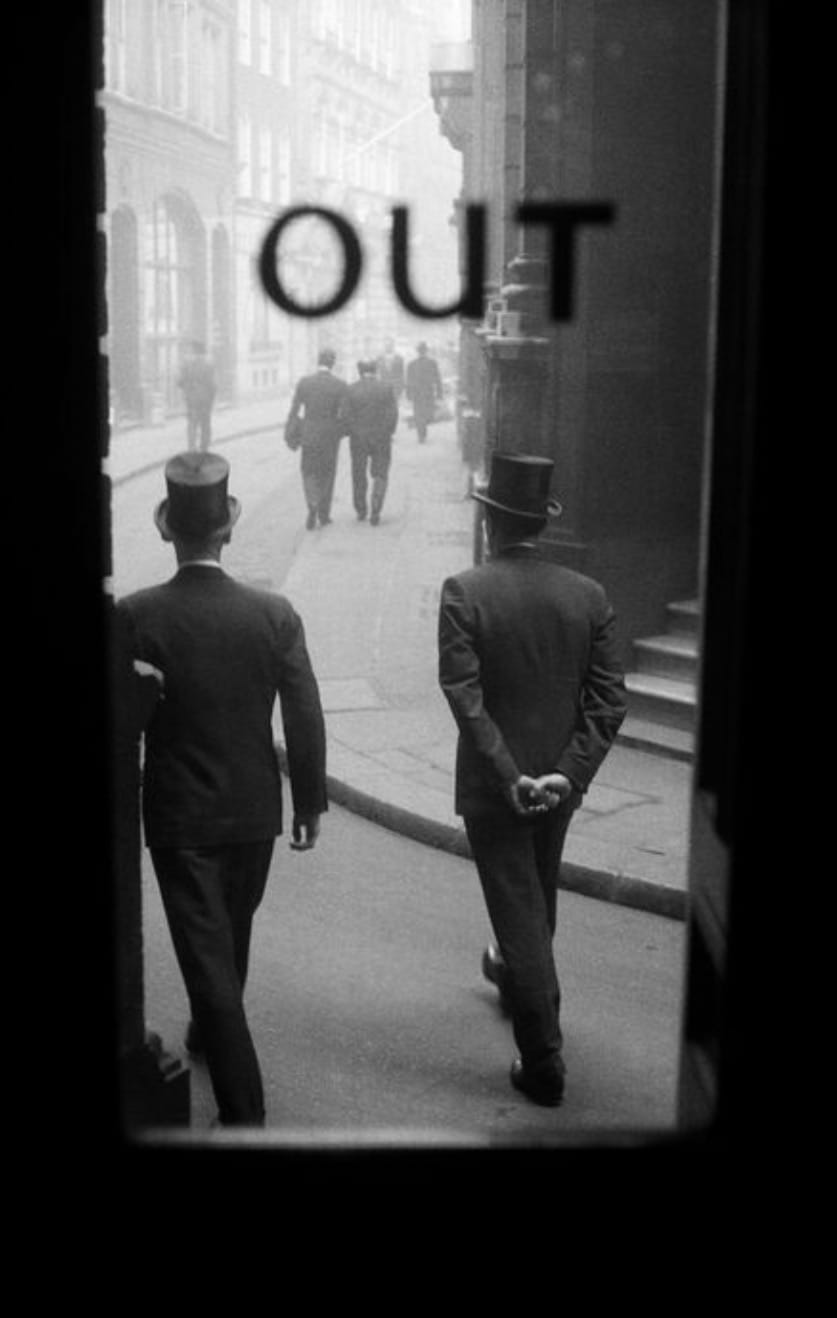
Those of us who do not live in England have an out-sized impression of the prevalence of those large hats because we like to photograph them so much. tp 2026-me they say London; but, in 1958 those hats perhaps gave off strong eau-de-Imperialism.
Boston has banks built on sugar. Then and now we knew what that meant in terms of complicity and support for the worst version of chattel slavery. Did this photographer see those hats and see the age of oppressors profiting finally be on its way ‘OUT’?
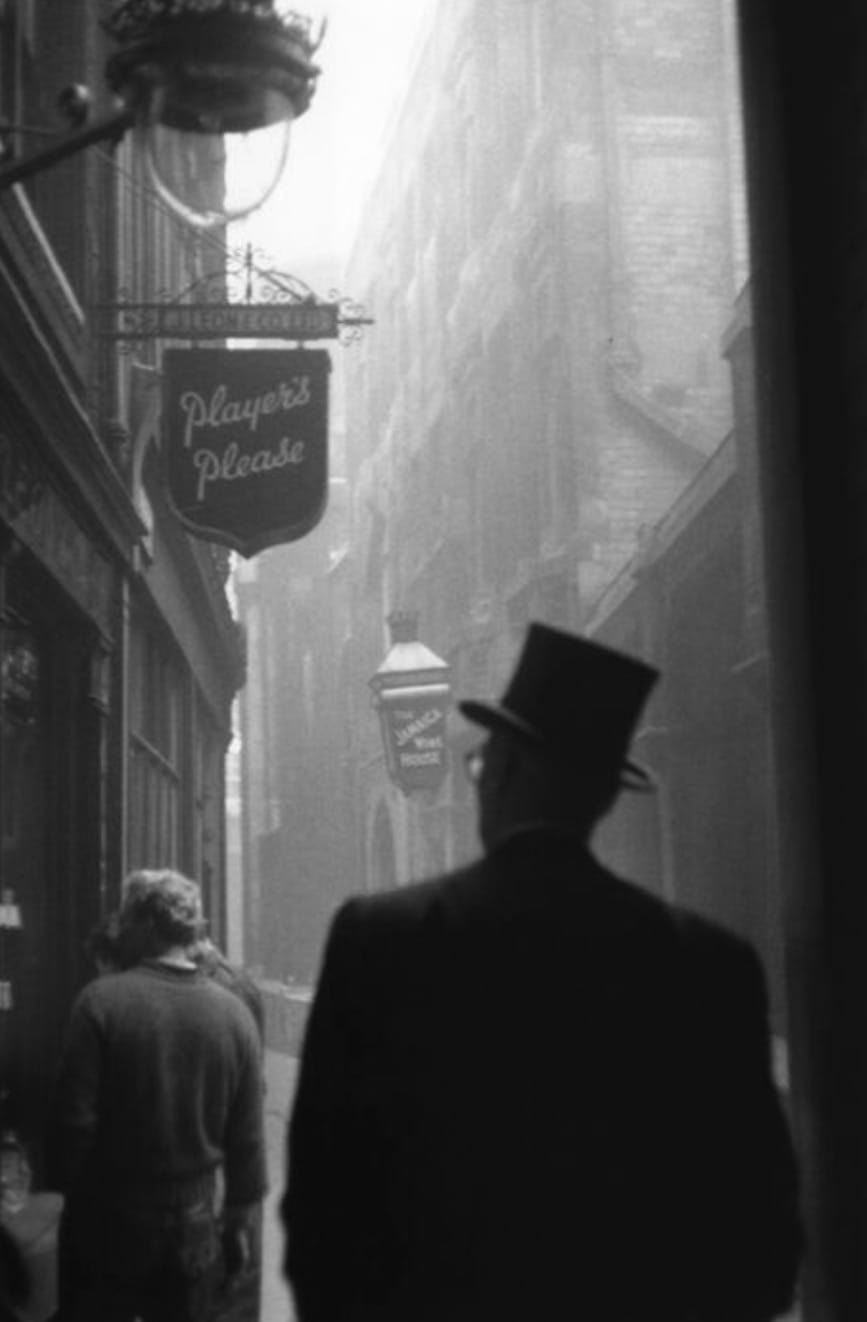
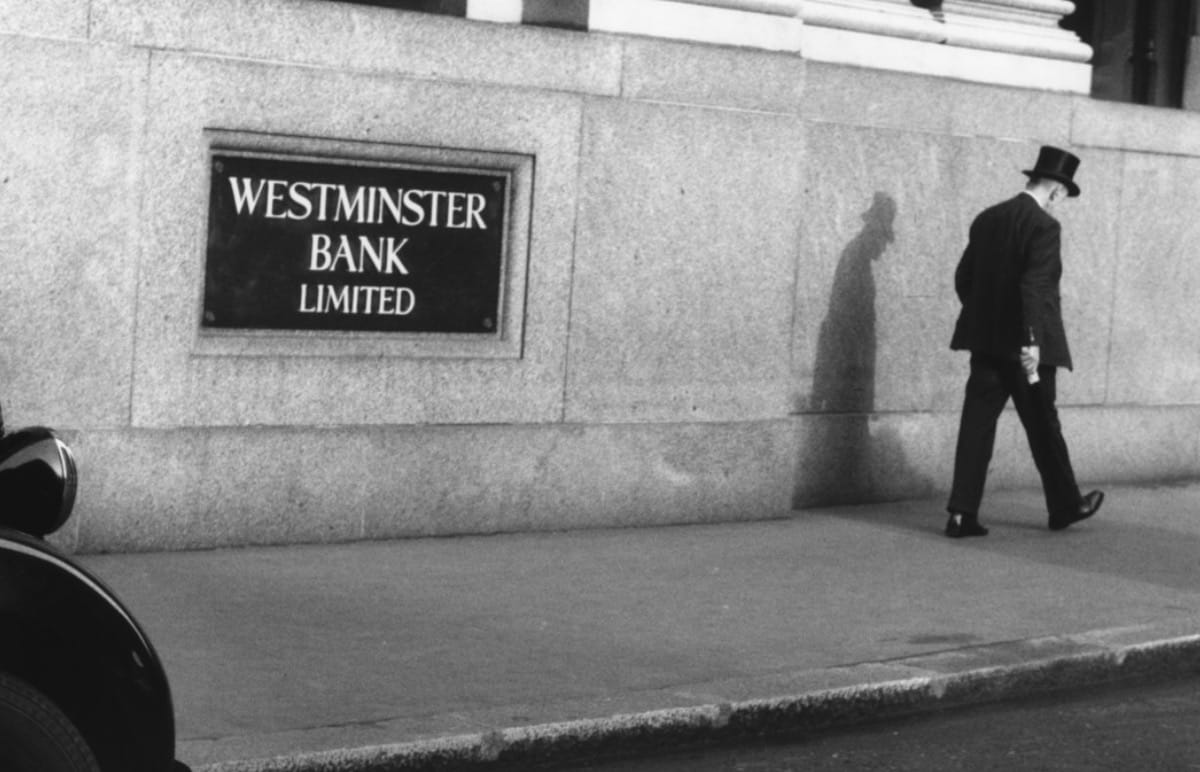
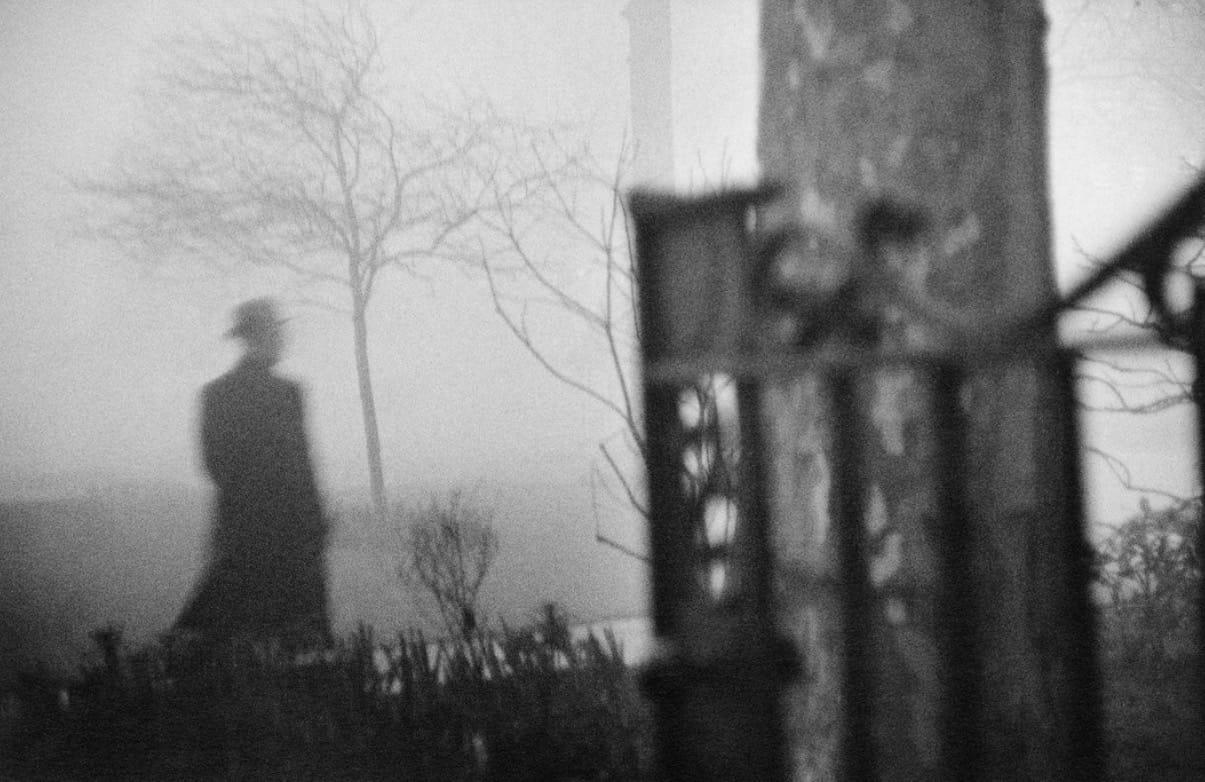
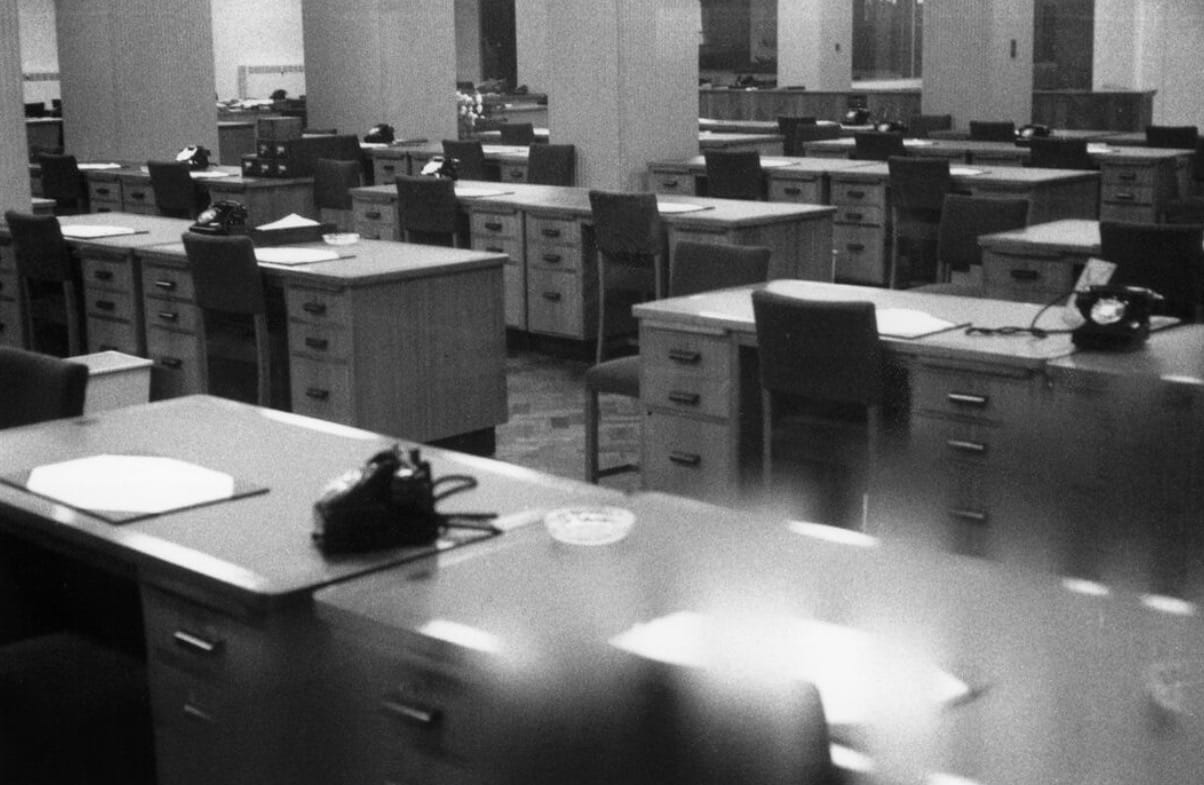
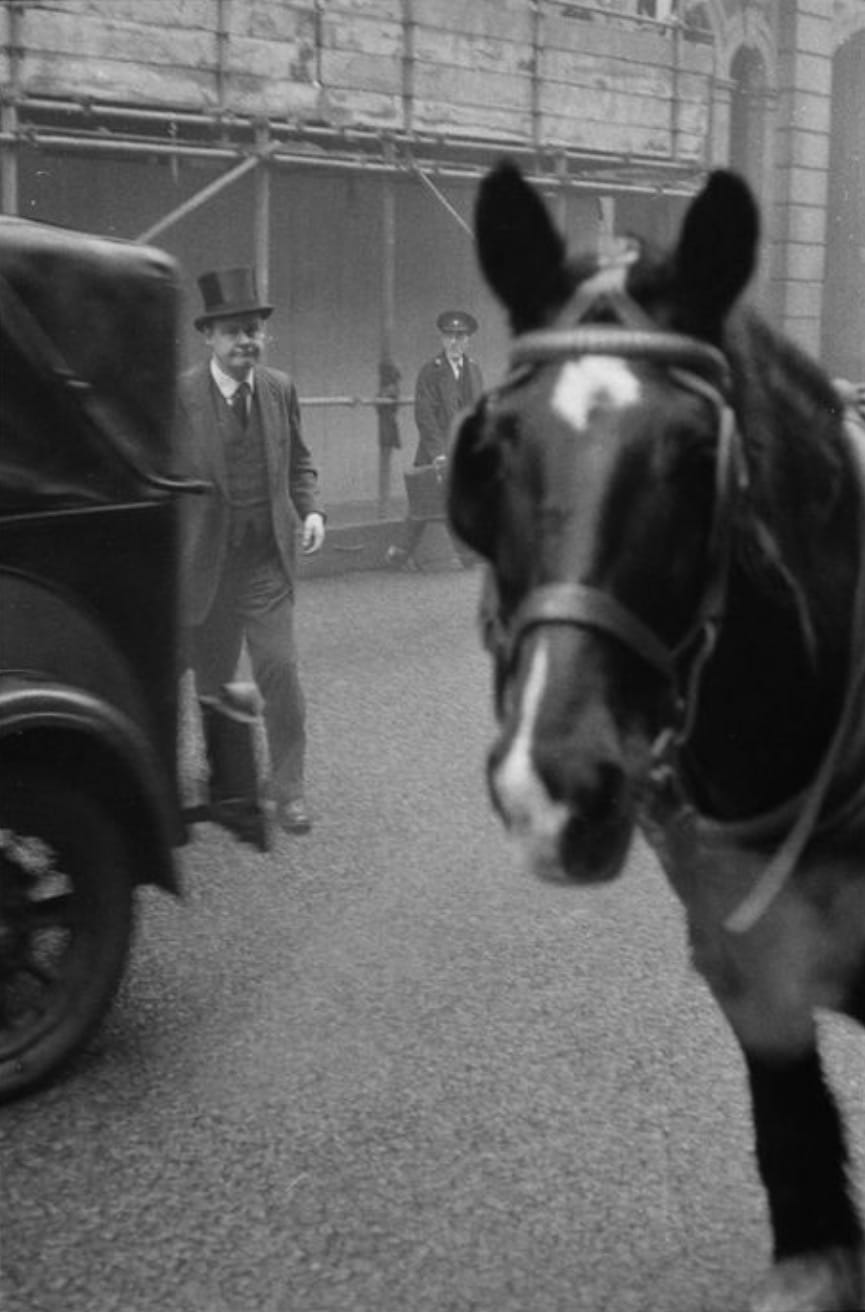
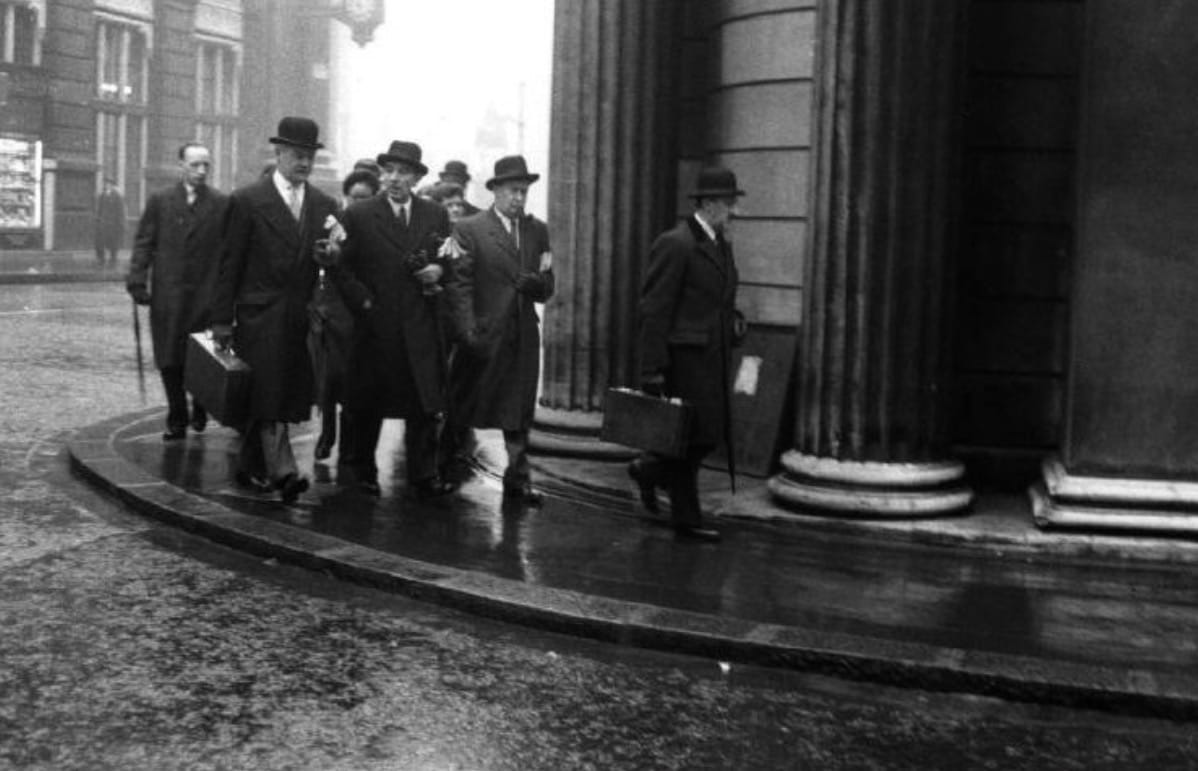
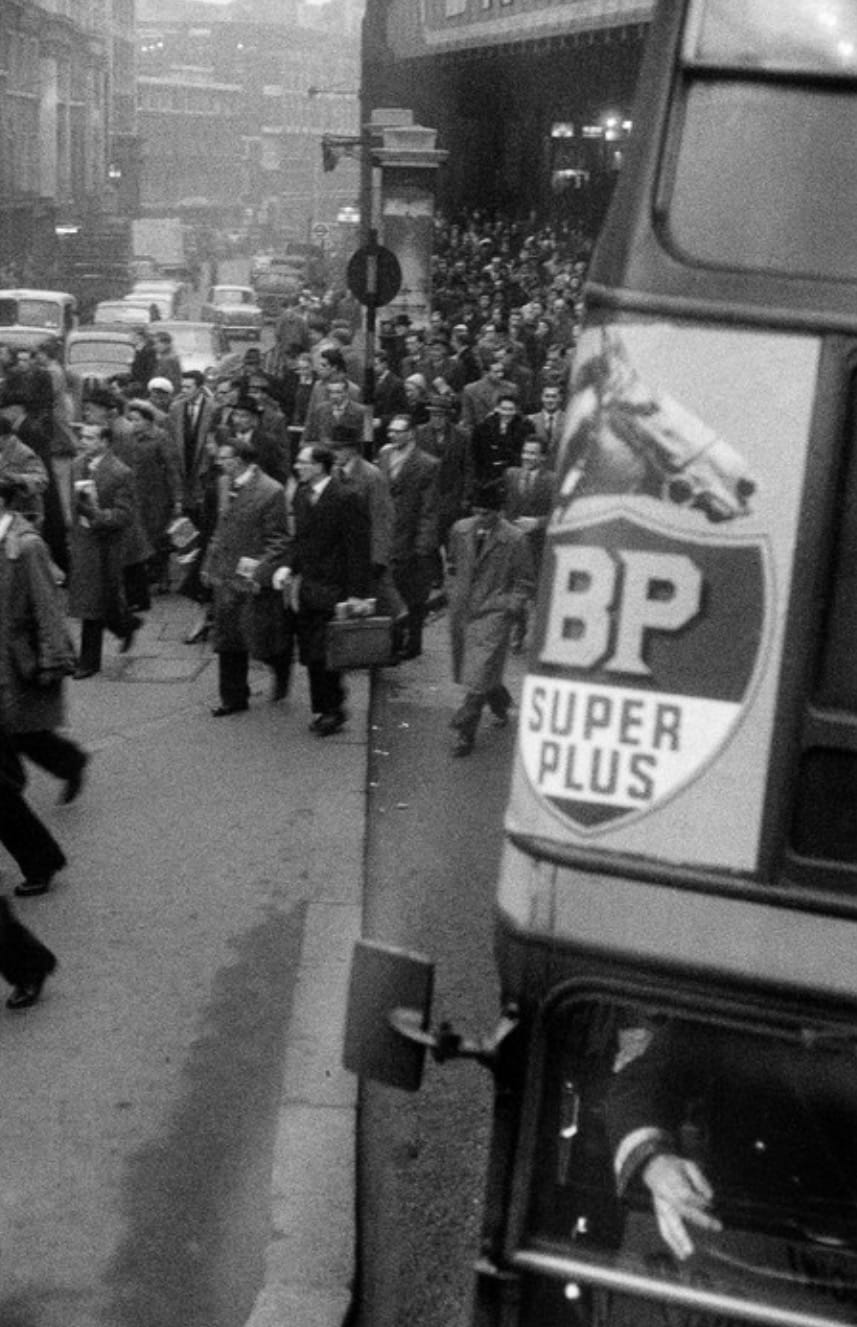
The photographer was Sergio Larrain. At the time he was just snapping photos, not on assignment, not part of the Magnum photographers humanist project. He was hired by the “British Council”…which I am reading is funded by the UK but acts independently to create cultural exchanges. I wonder who had the idea to hire in a photographer from elsewhere to look at London as she recedes?
Larraín said he felt the demise of the “capital of an ancient and vast colonial empire”.
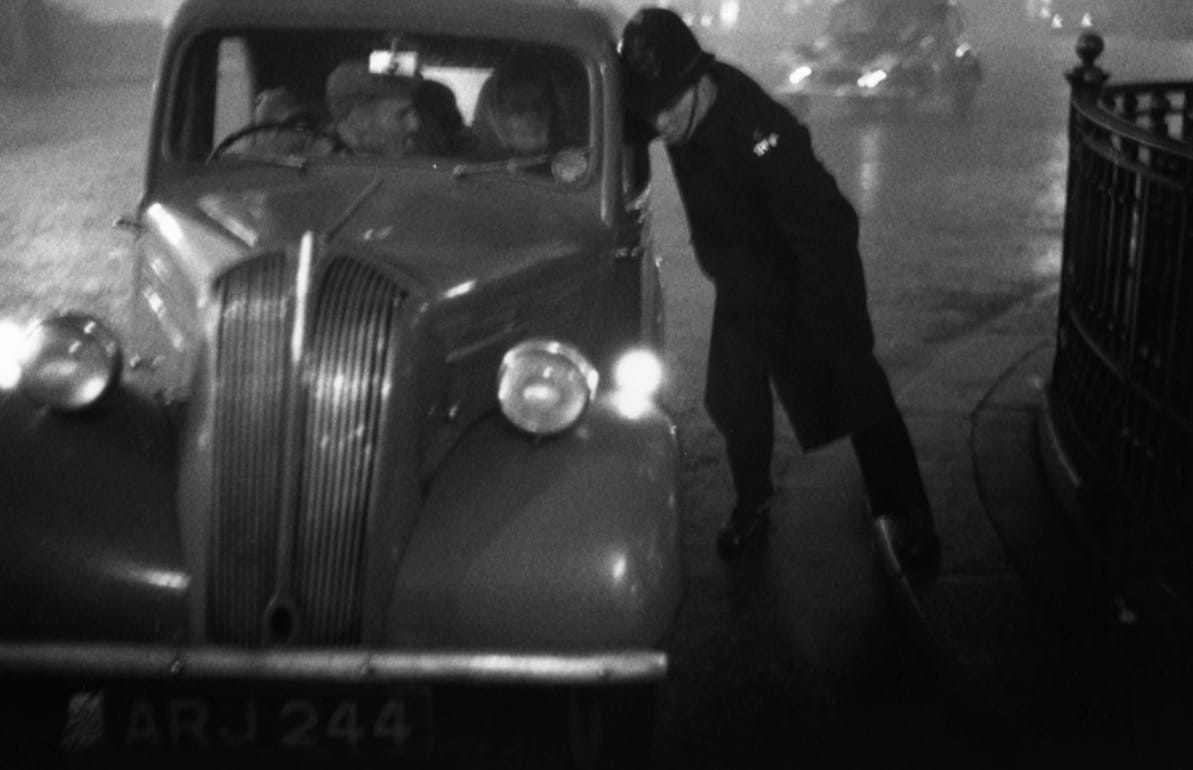
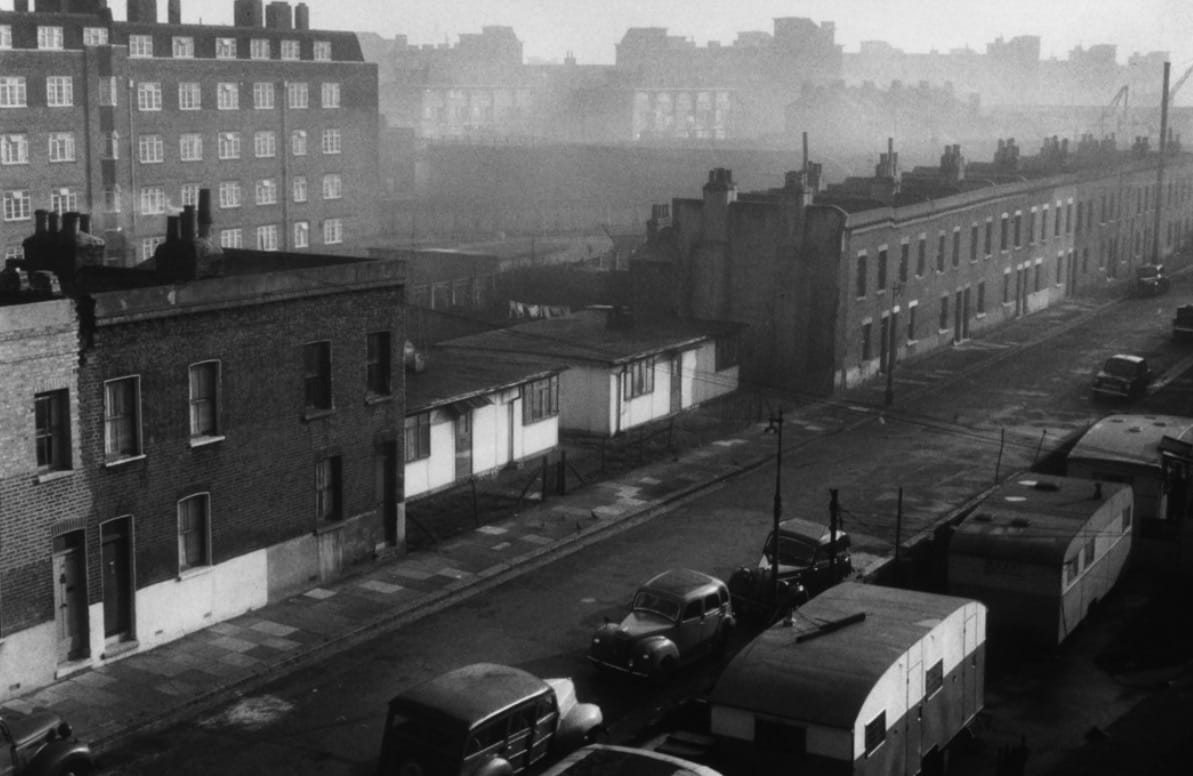
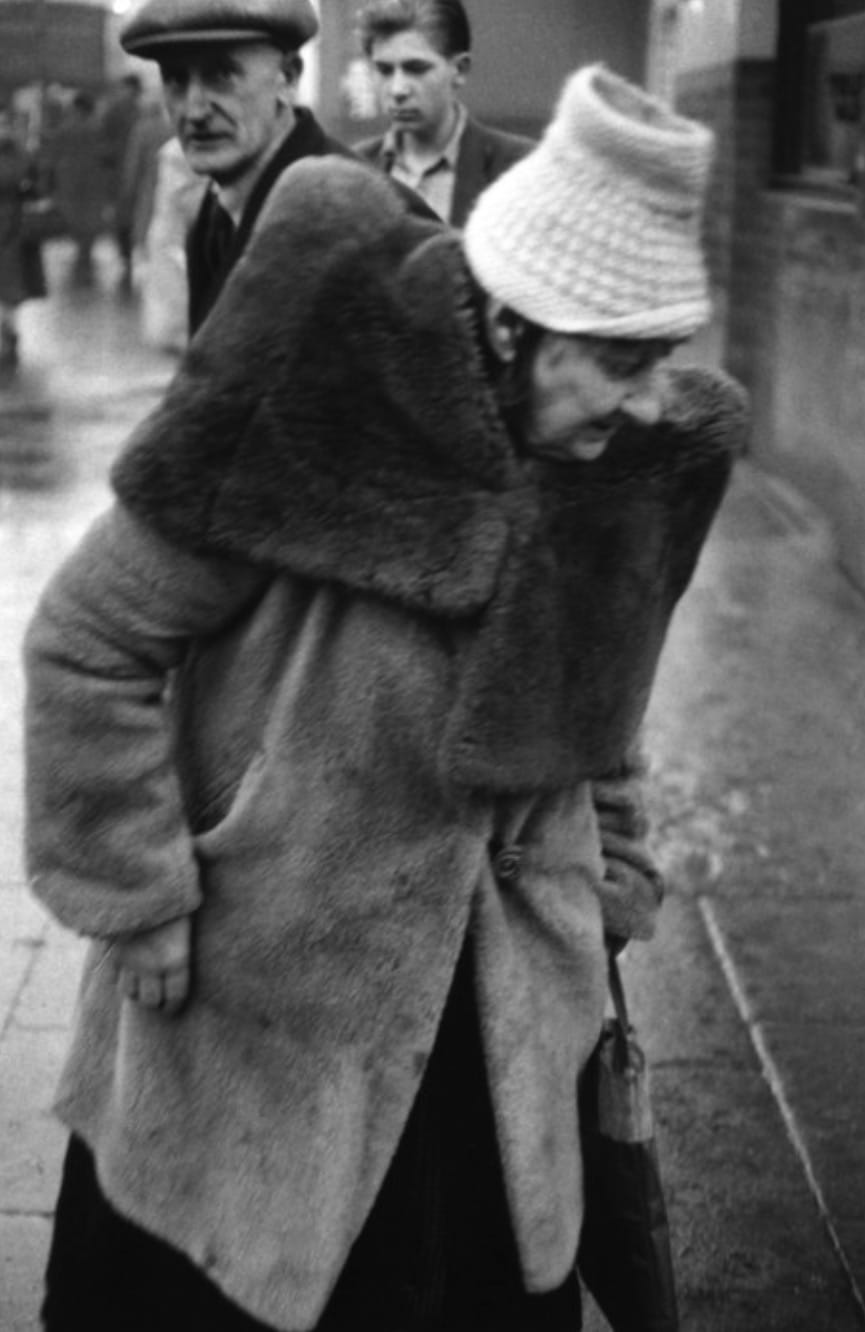
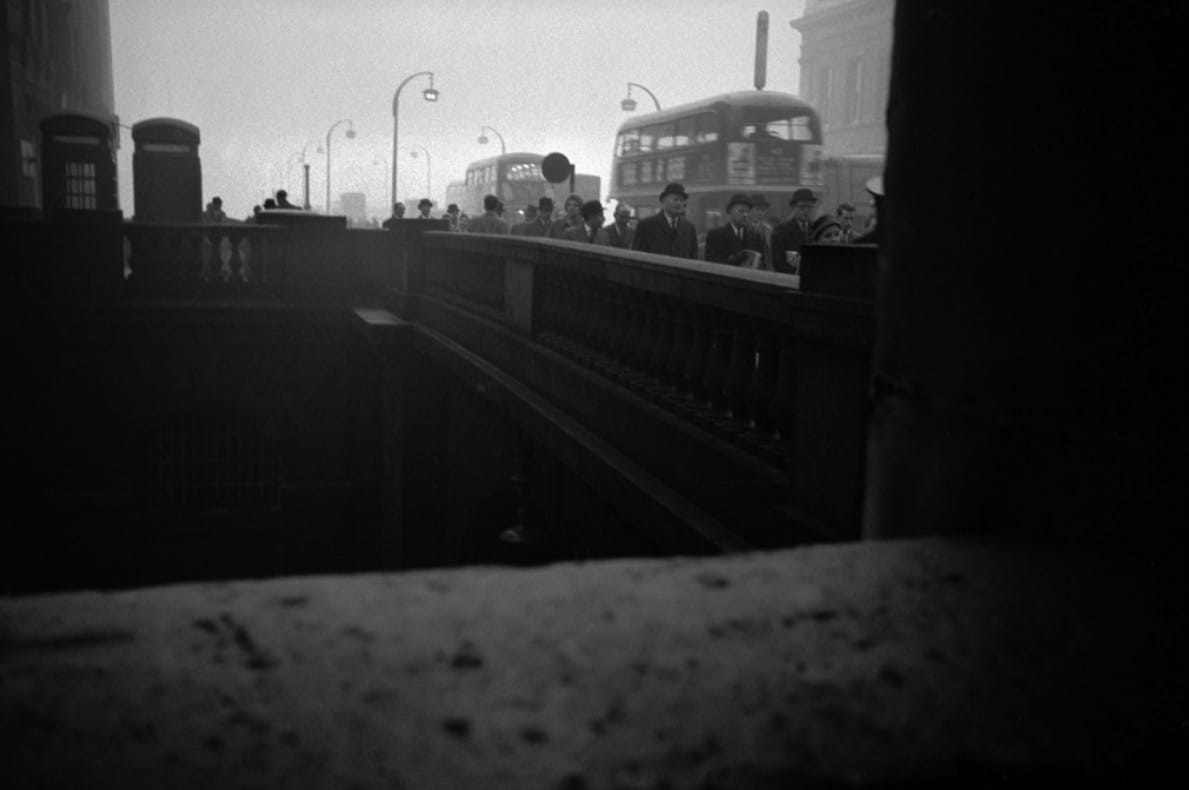
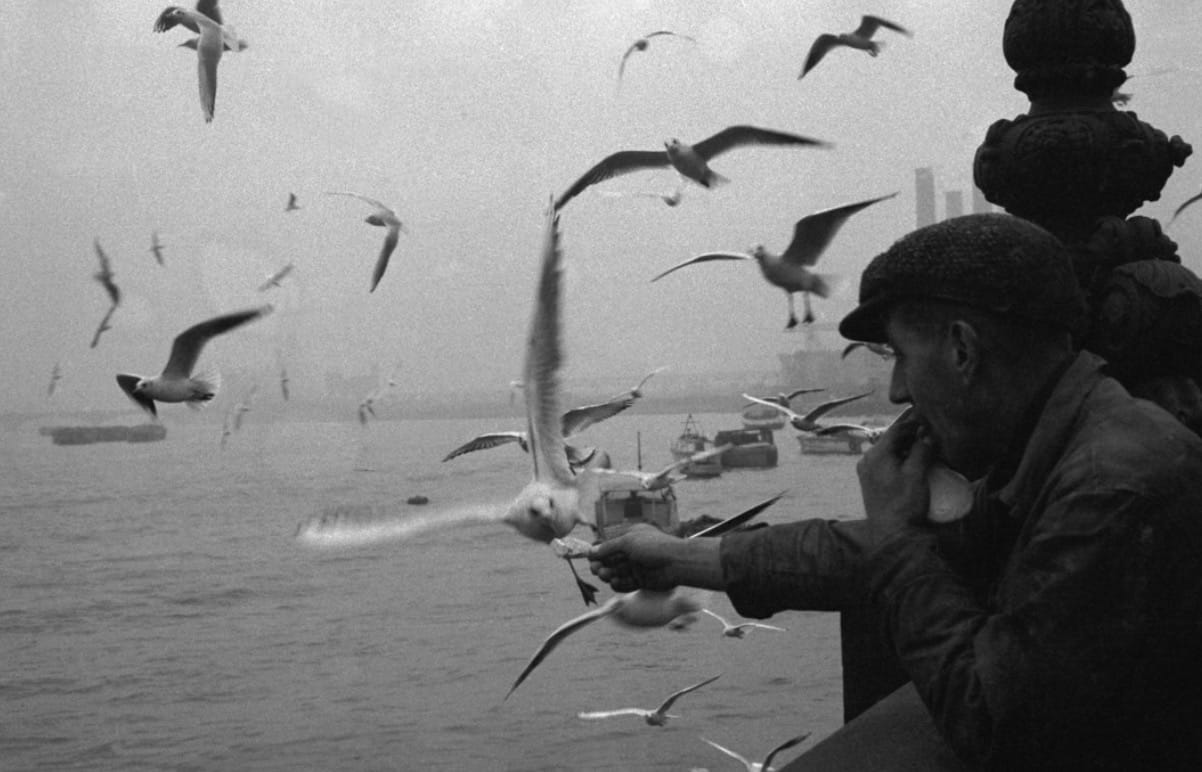
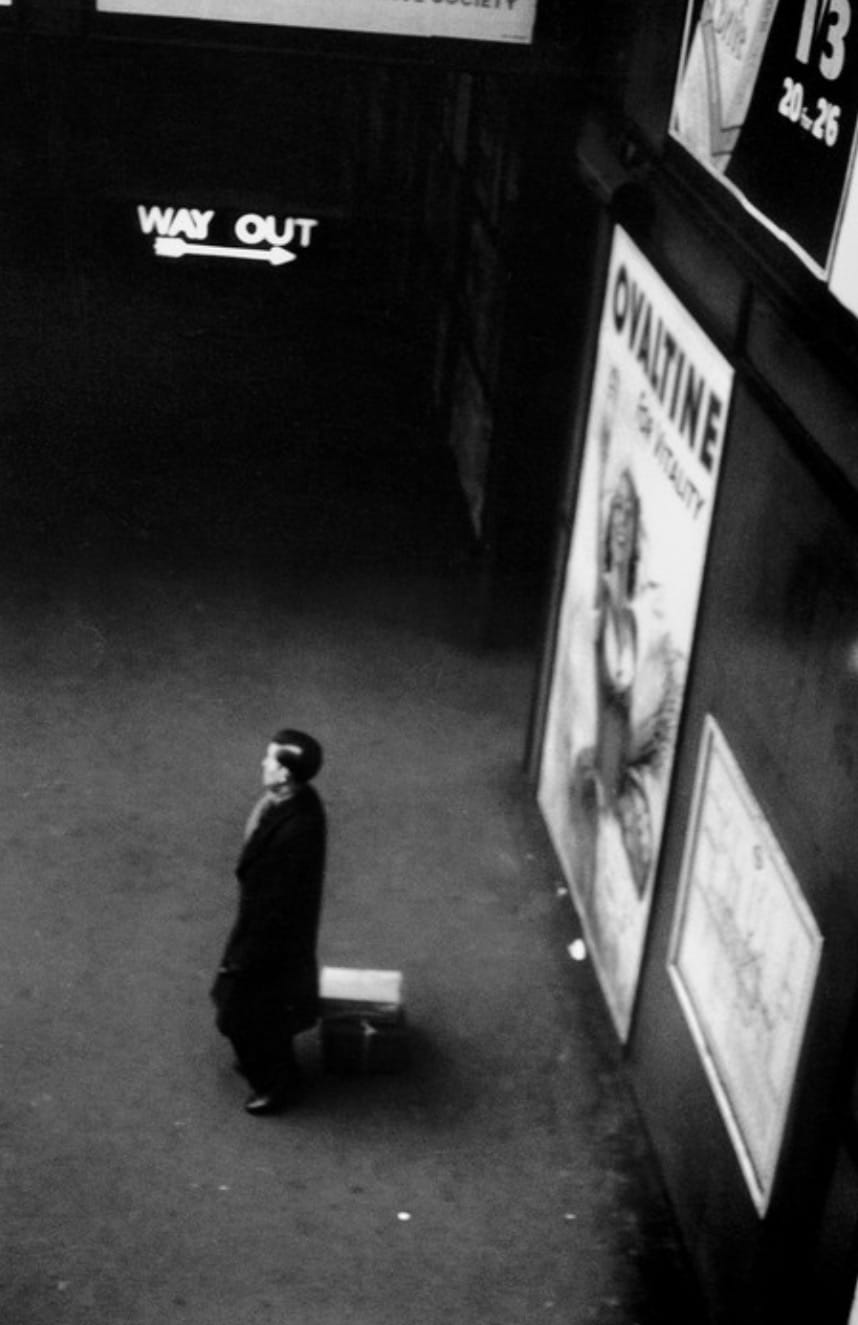
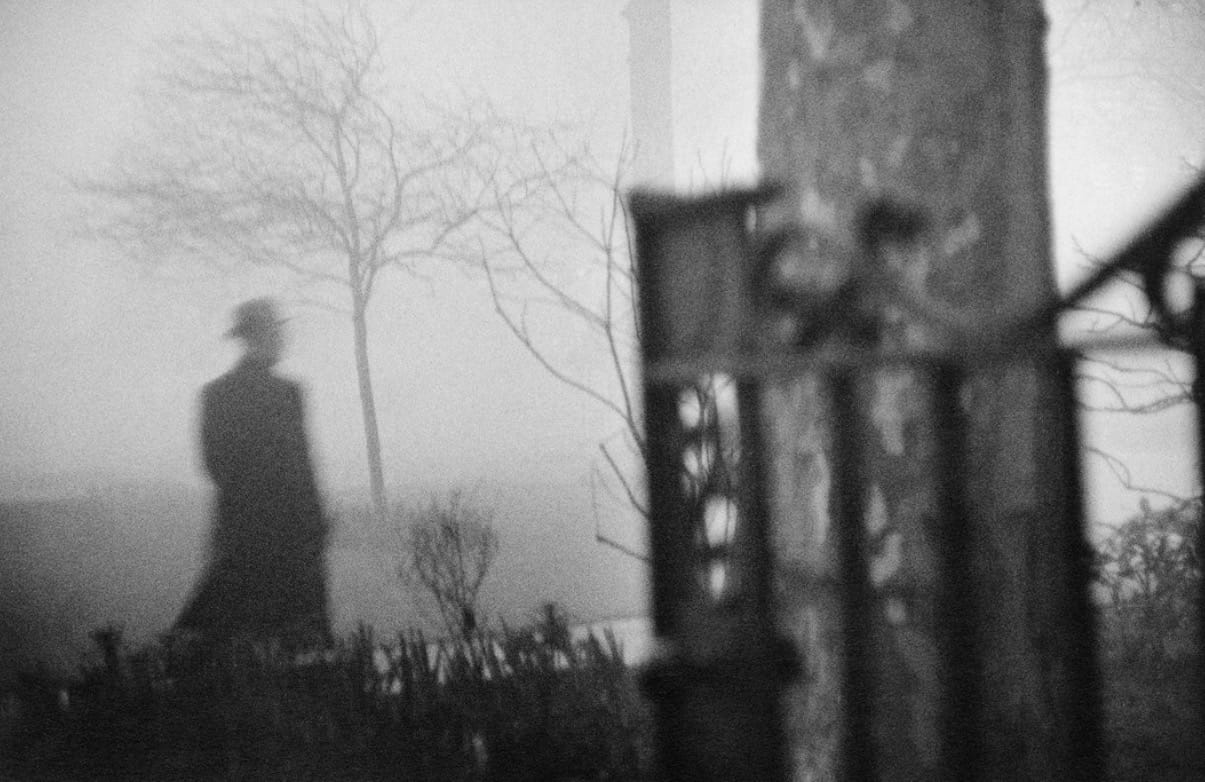
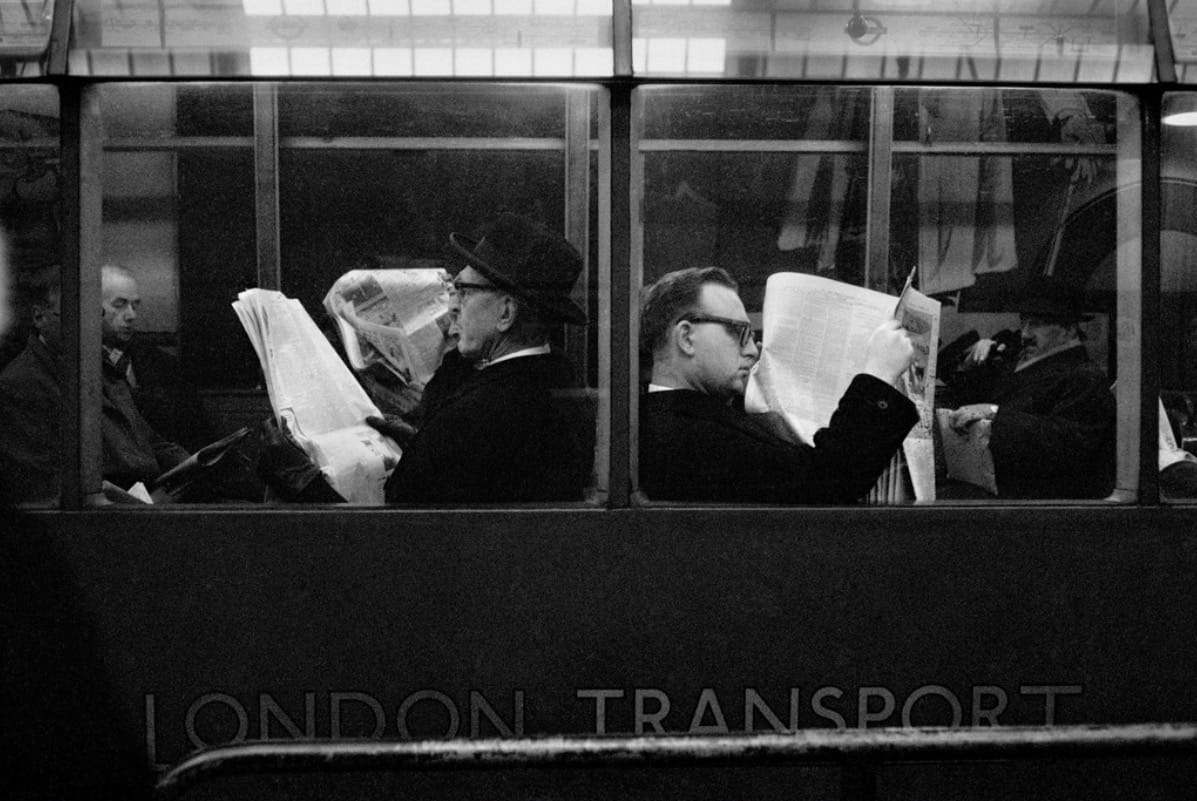
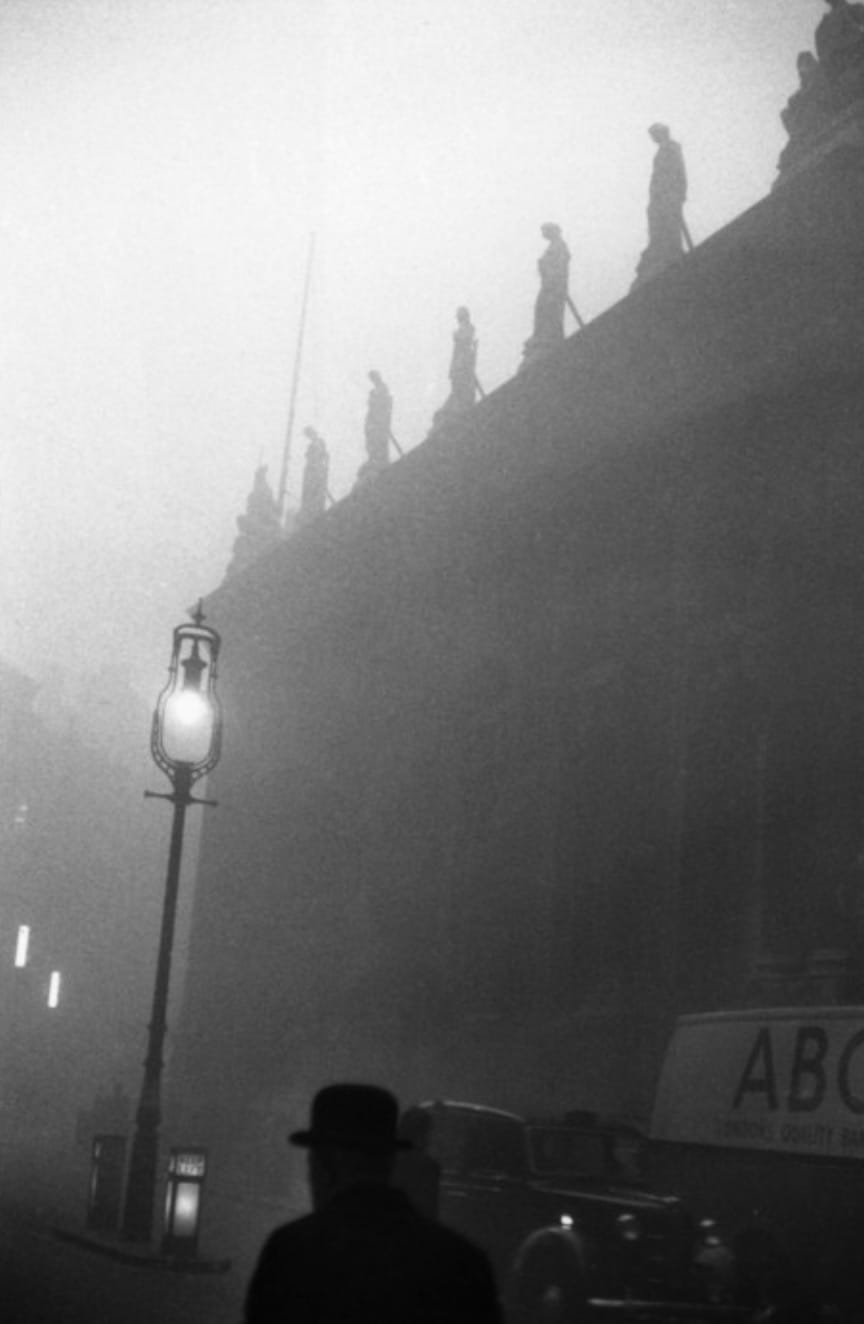
Gloria Steinem spends many words on humbly pointing out where she sees the patriarchy in effect and where she missed it. She missed it here; I wonder why this photographer saw it so well everywhere he looked.
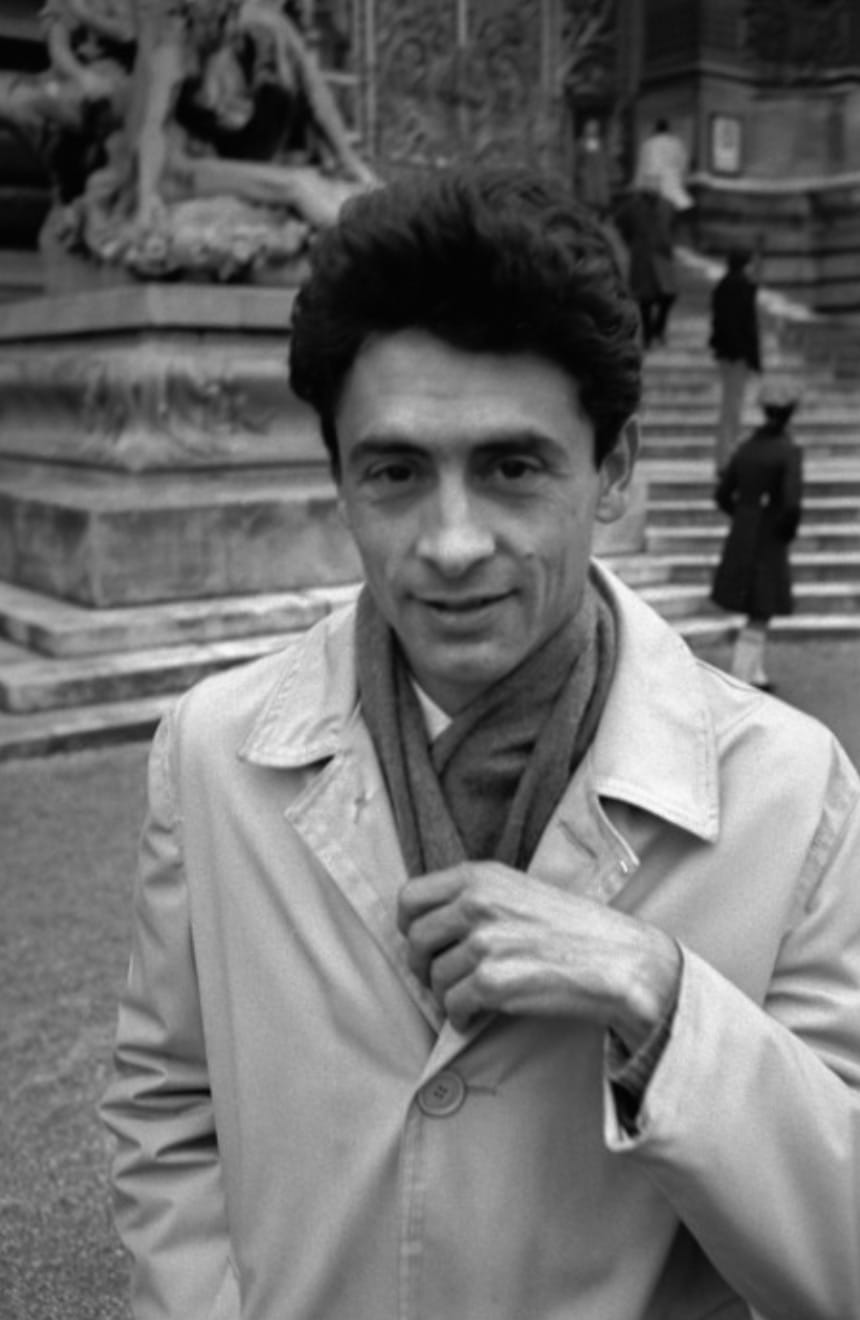
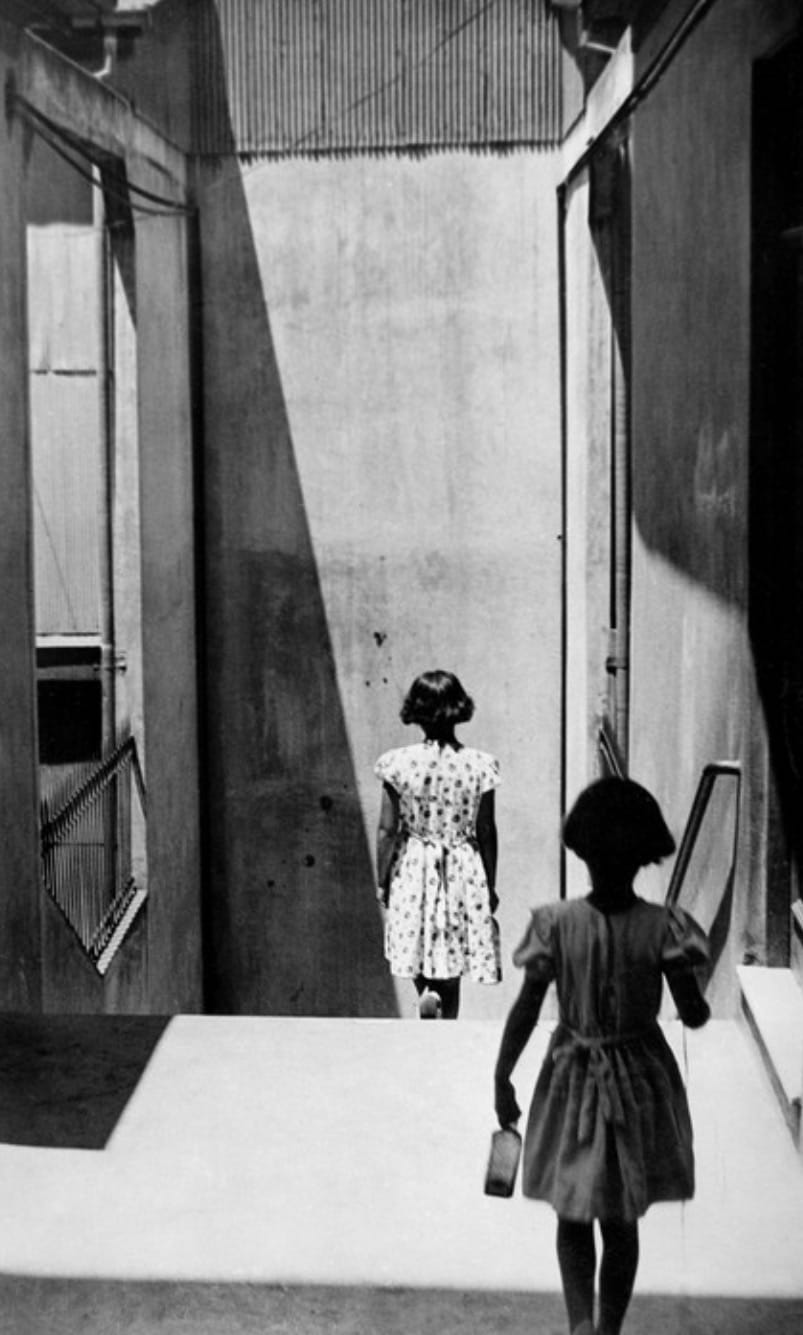
Sergio Larrain in 1967, photo by Rene Burri; and, his “first magic photo” from Valparaiso in 1952.
Sergio Larraín was an upper class Chilean from Santiago, living in London. I include that upper-class identifier because Isabel Allende trained me to call out all crude identifiers in every Chilean. I have read every single thing that Isabelle Allende has written in both languages…so, any Chilean nuggets go right into my purely Allende context. For example, in My Invented Country she mentions how all the children playing behind the gates of upper-class houses are blond. That association clicked firmly into my head when some playground friends showed me their dozens-deep clan with all the variations of yellowish hair on young and old gathered in front of modern houses perched on the edges of metropolitan mountains in Santiago. These Chilenos were in the United States finishing degrees and fellowships. They were all looking forward to returning to their families while also nervous about the protests and uprisings against the ”rich”. Their word, not mine. We all ”look rich”. I assumed at the time that she meant … that she wears nice scarves … but, after my sojourn through Isabel Allende’s “imagined country” I wonder if she just meant that her hair, eyes and skin placed her and her kids in the income bracket of the oppressors.
Facile little associations like that one are the enemy of great art. I am sorry to have shared it…but! I know that Isabel Allende is still the worldwide entrypoint to Chile….or, mine…so, I have to admit that my slice of understanding is thin. I have to wrestle with these every time I encounter a Chileno, like this photographer.
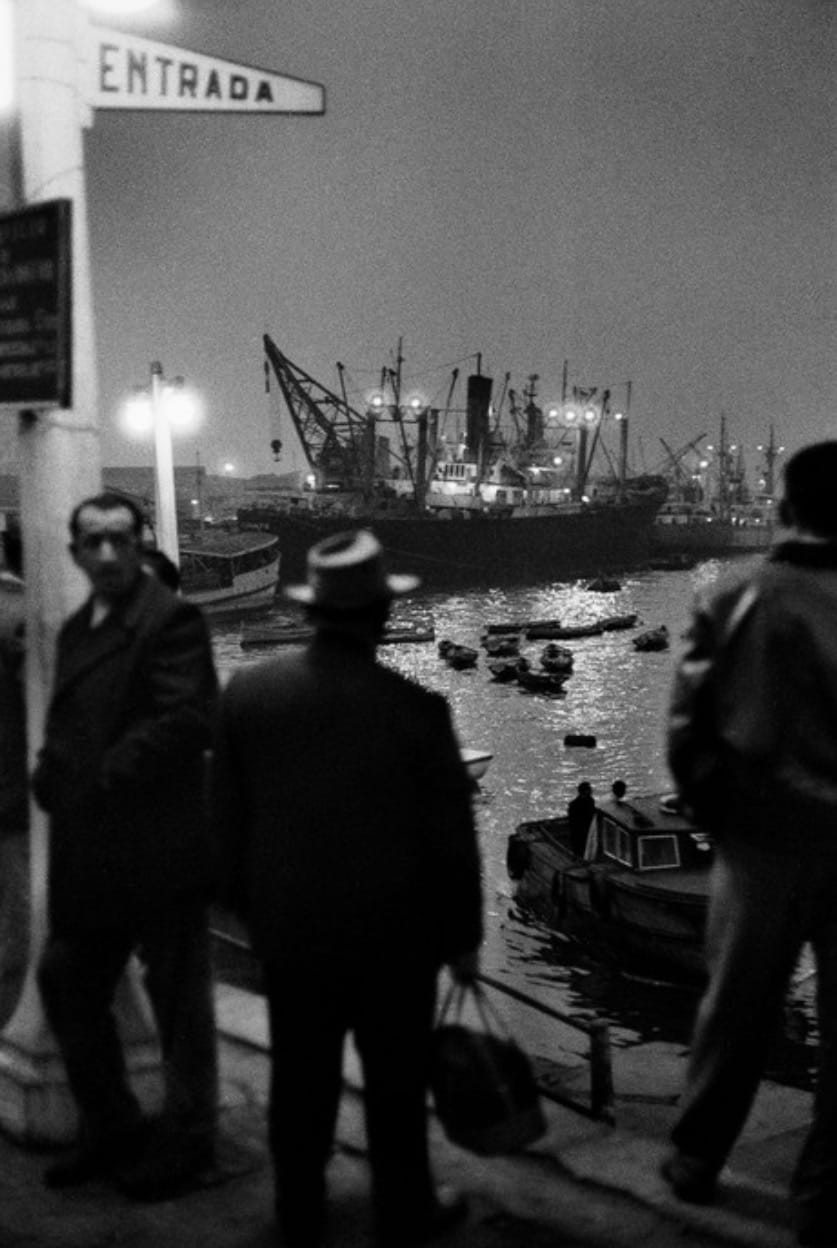
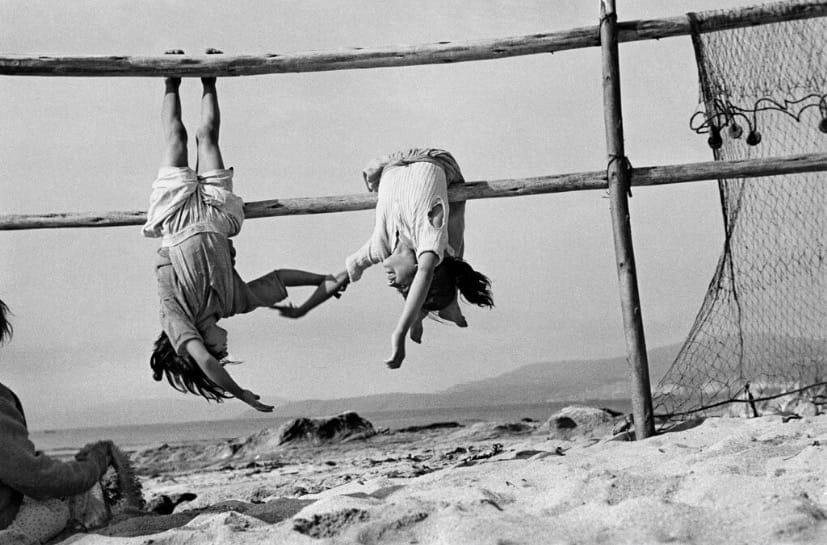
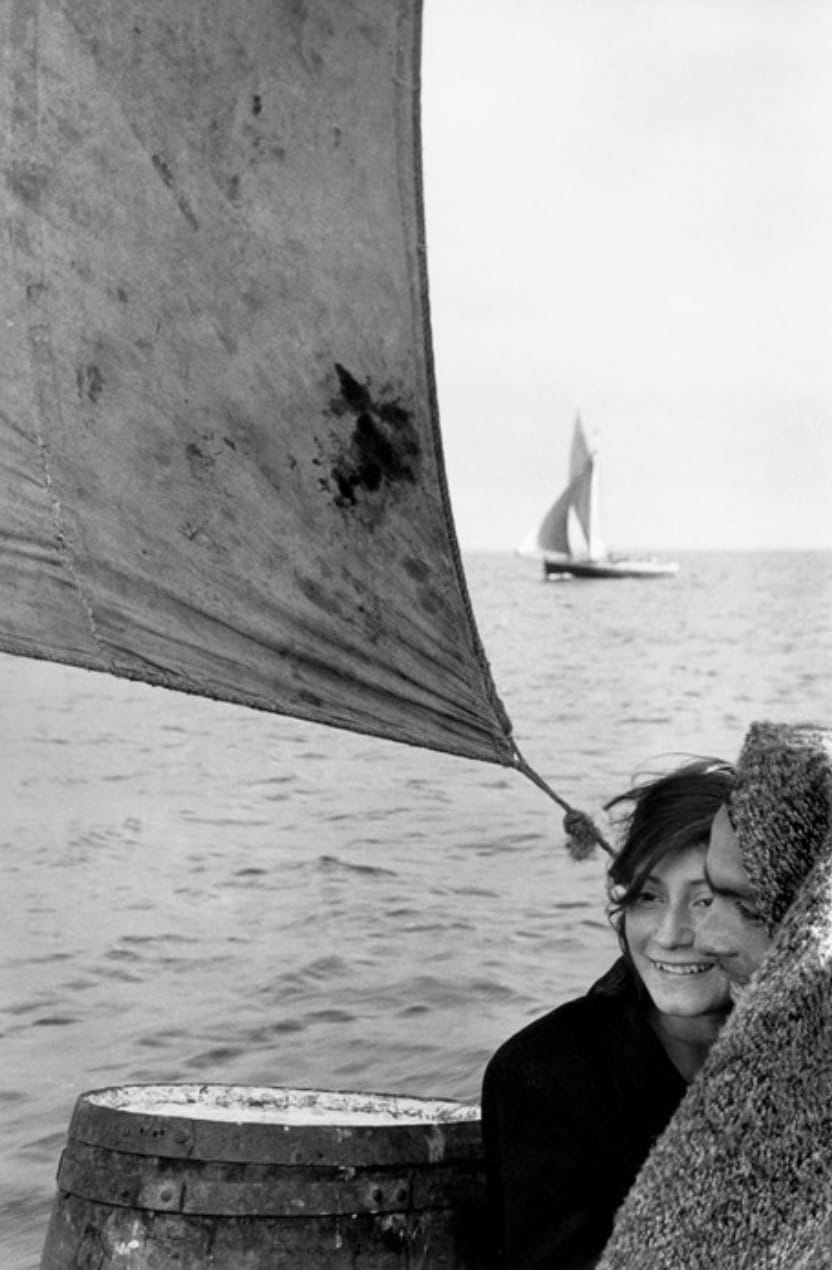
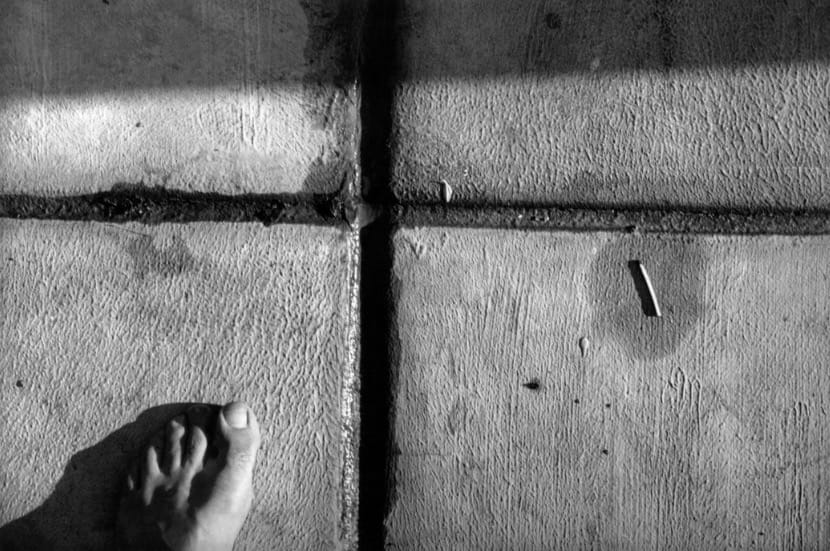
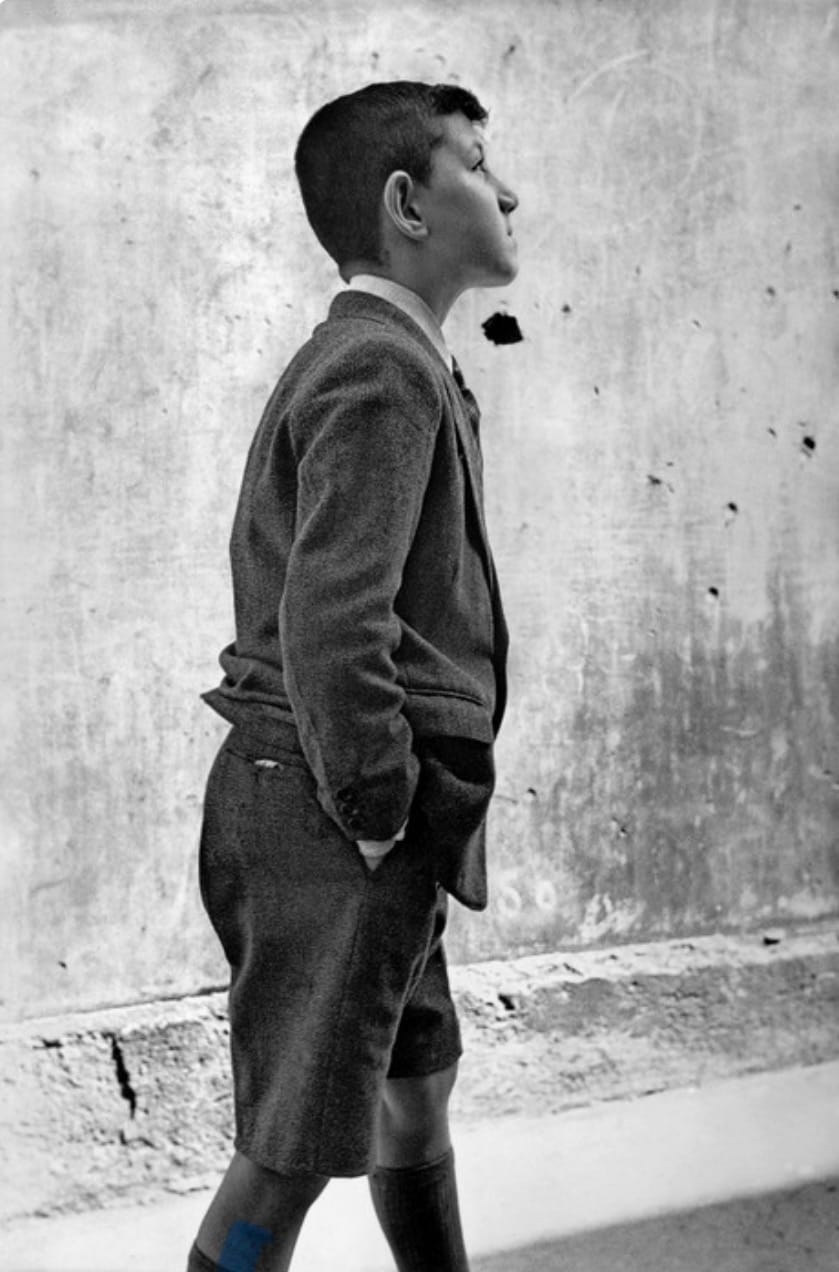
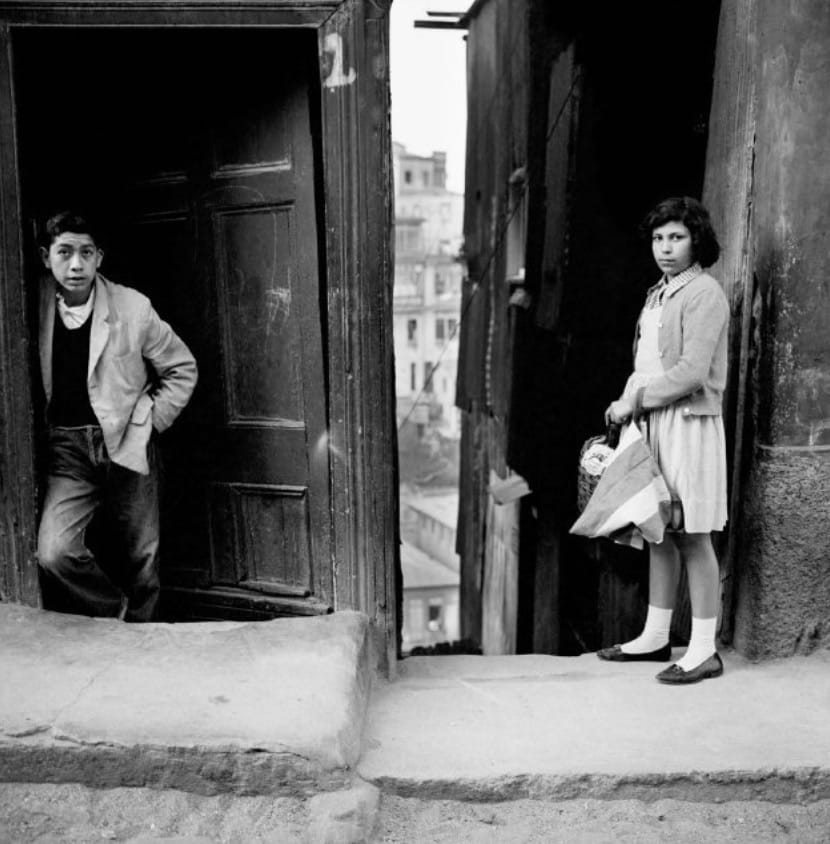
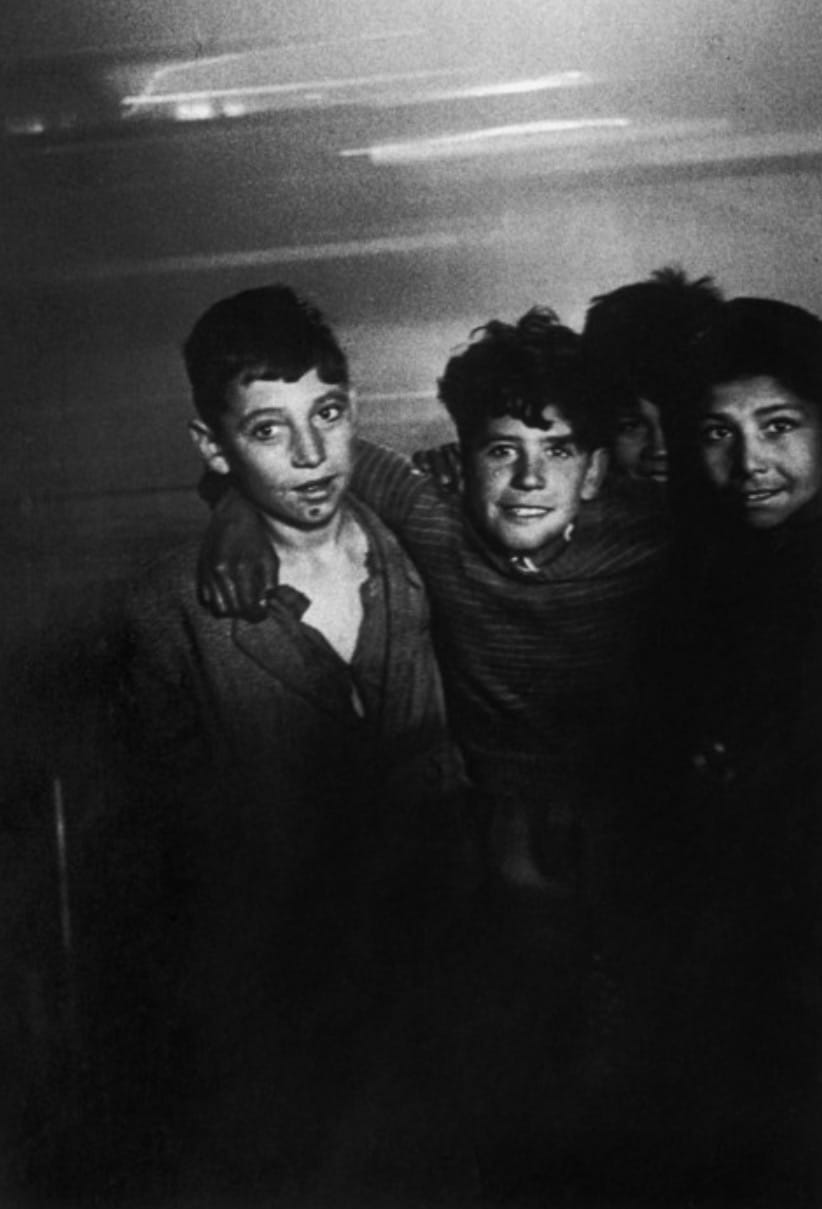
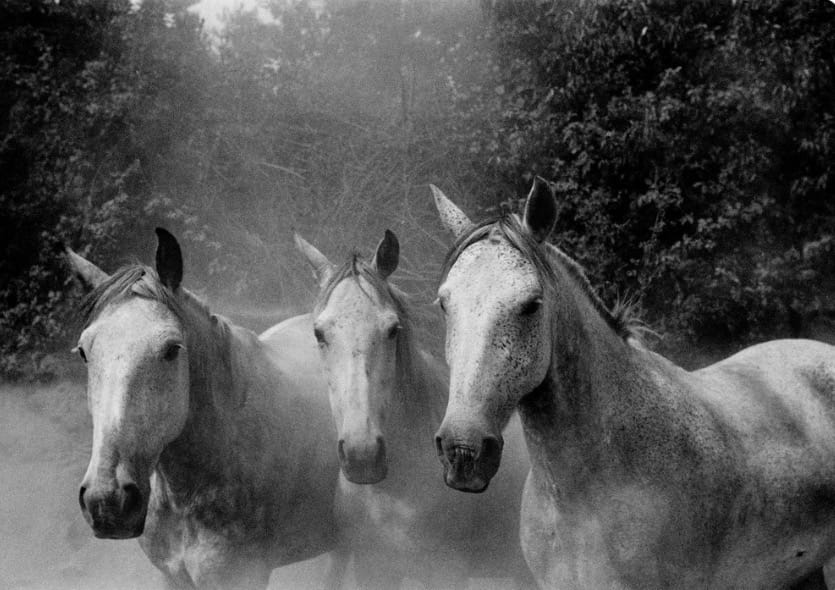
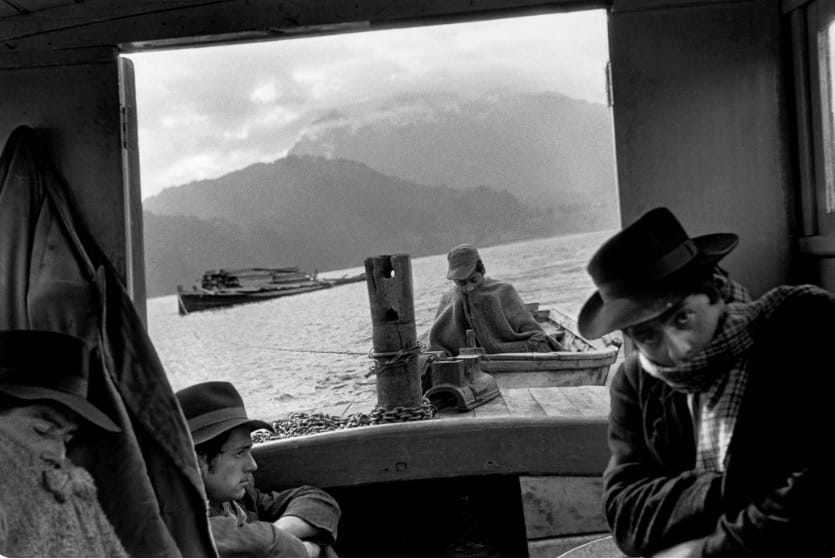
Maybe these are the photos that he showed someone in the British Council. He took them in 1954 of Valparaiso and surrounding fishing villages. If I were in charge of hiring a photographer to capture England—I might look at these photos and see the potential for a misty and mythical Britishness… my kids tell me there are no more wild horses in the USA, did England ever have any? Is there an equivalent that he could have captured in 1958.
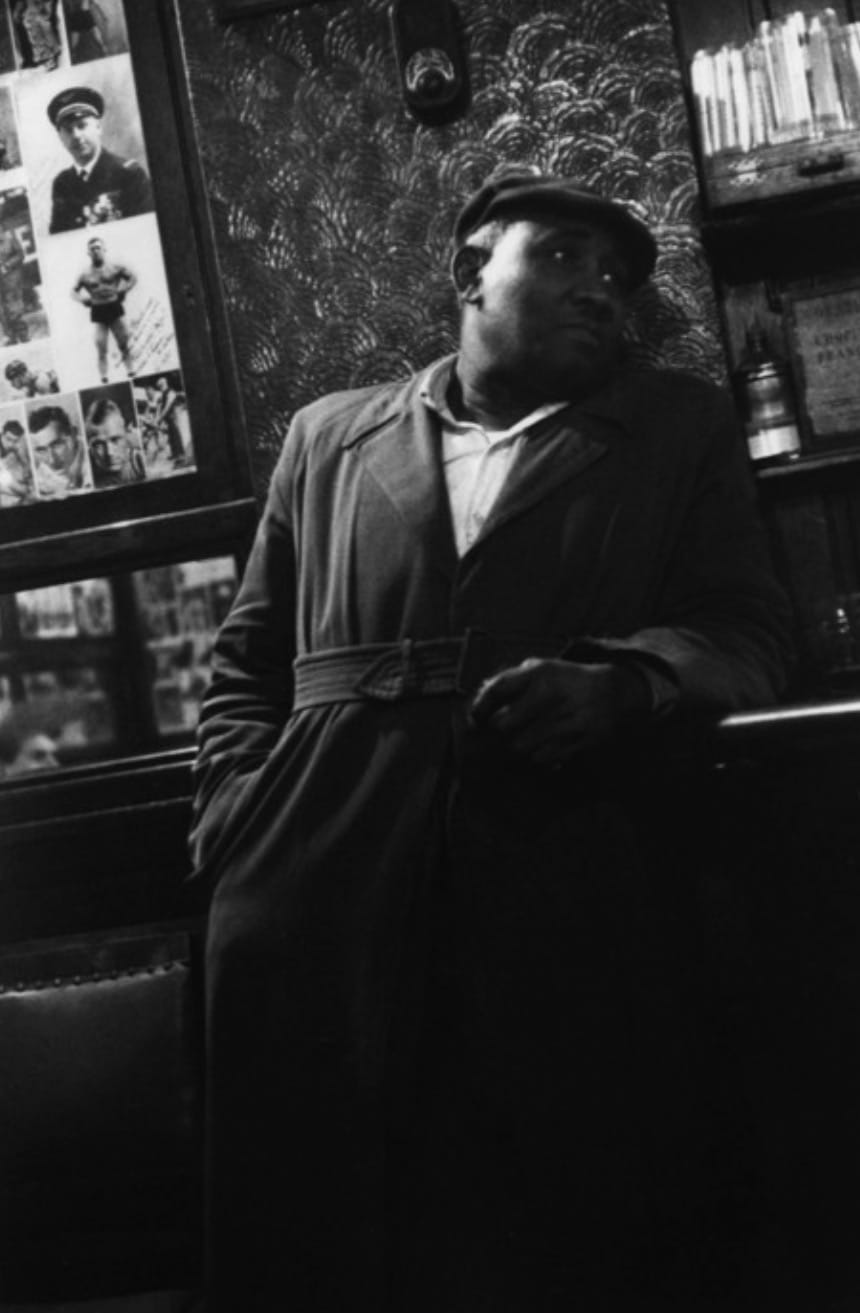
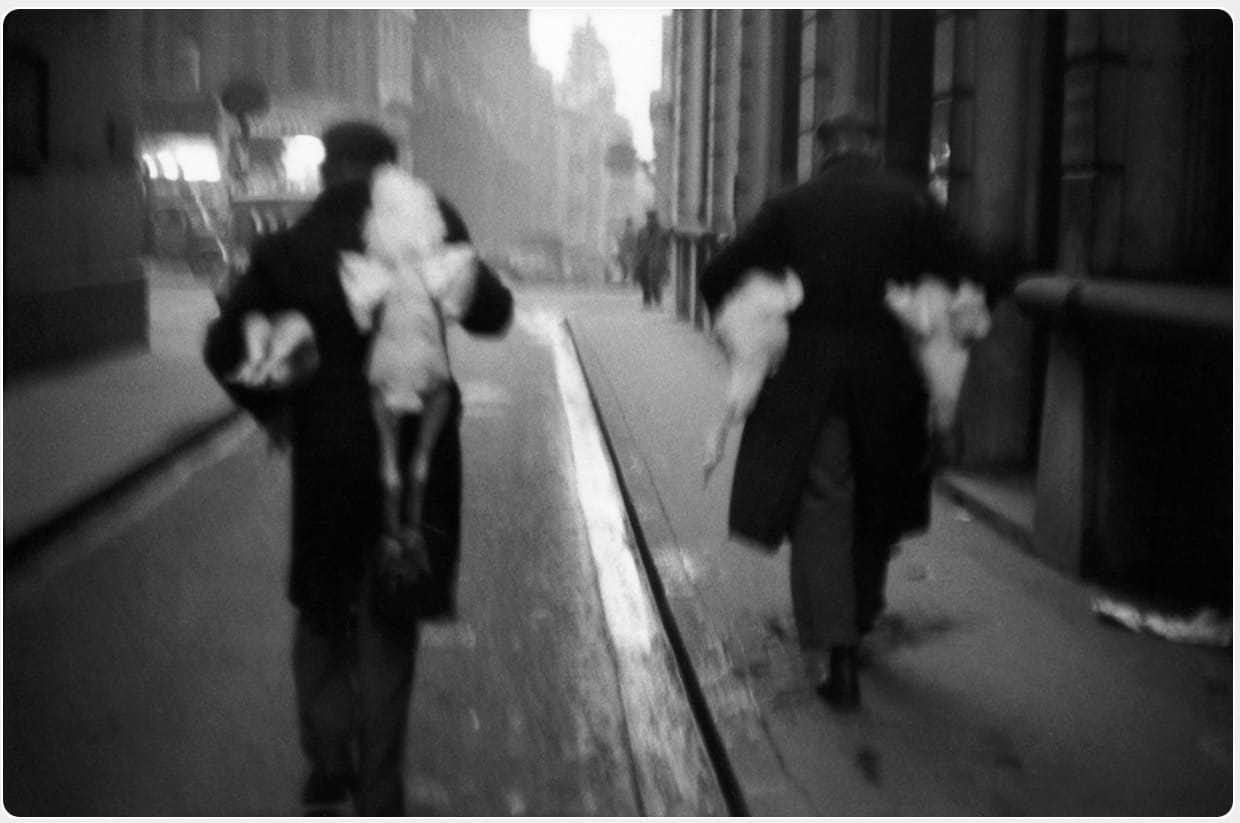
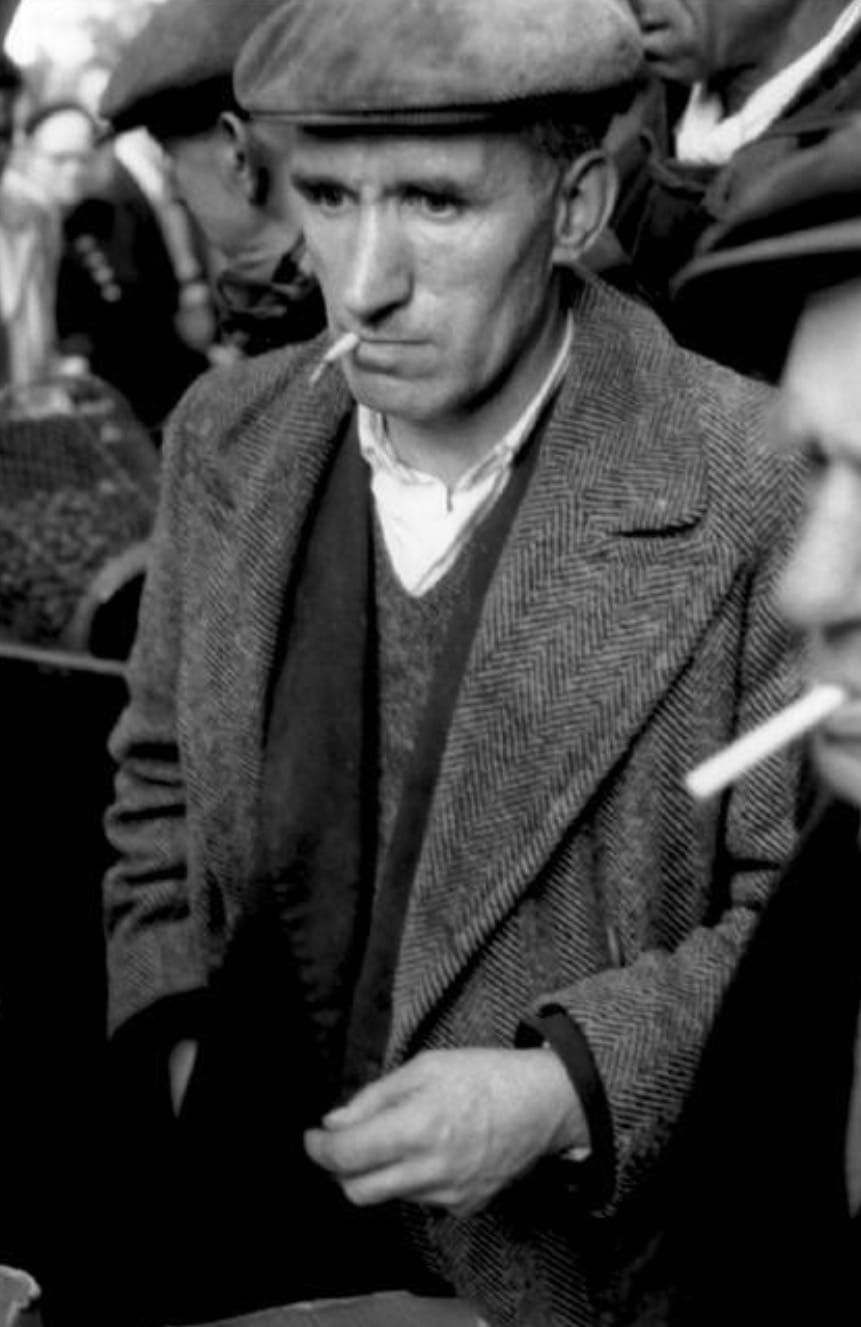
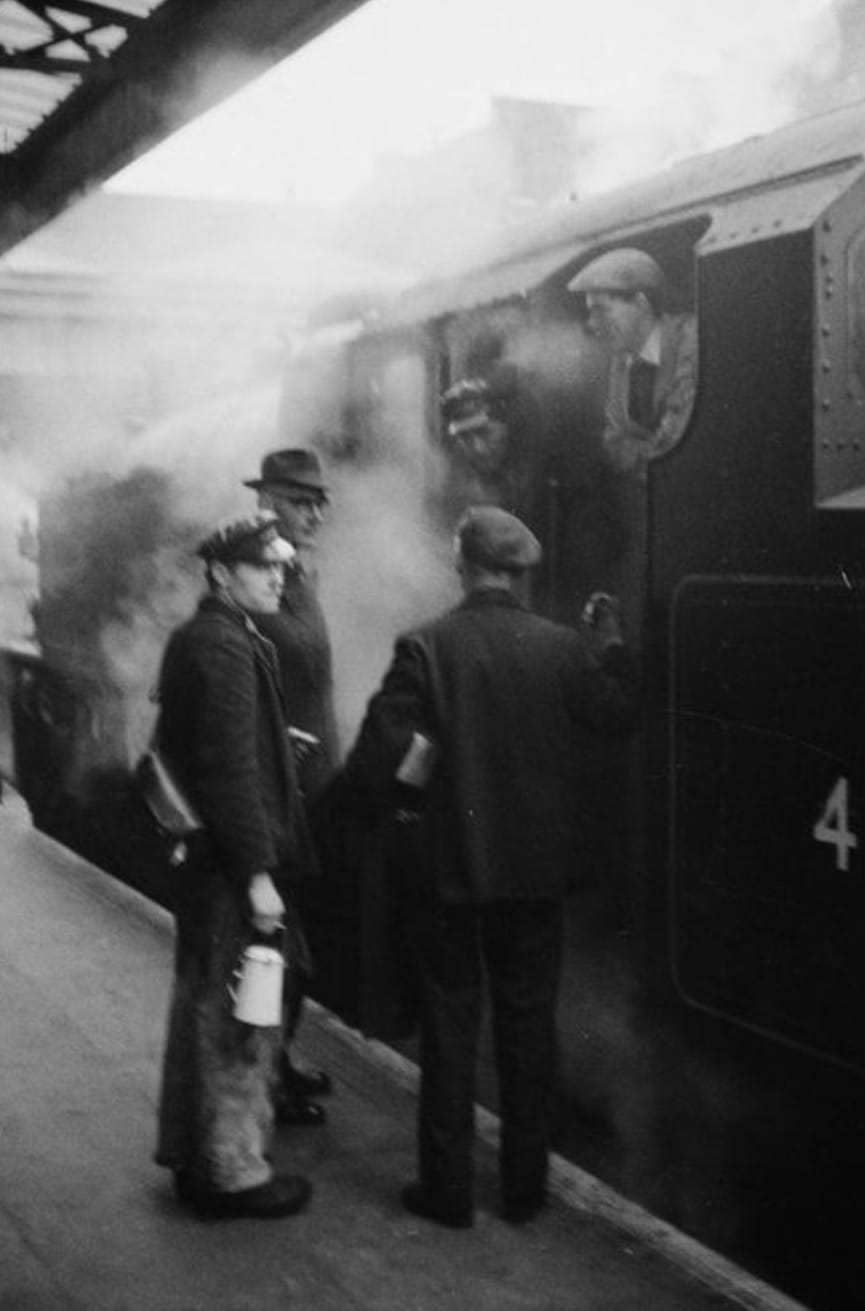
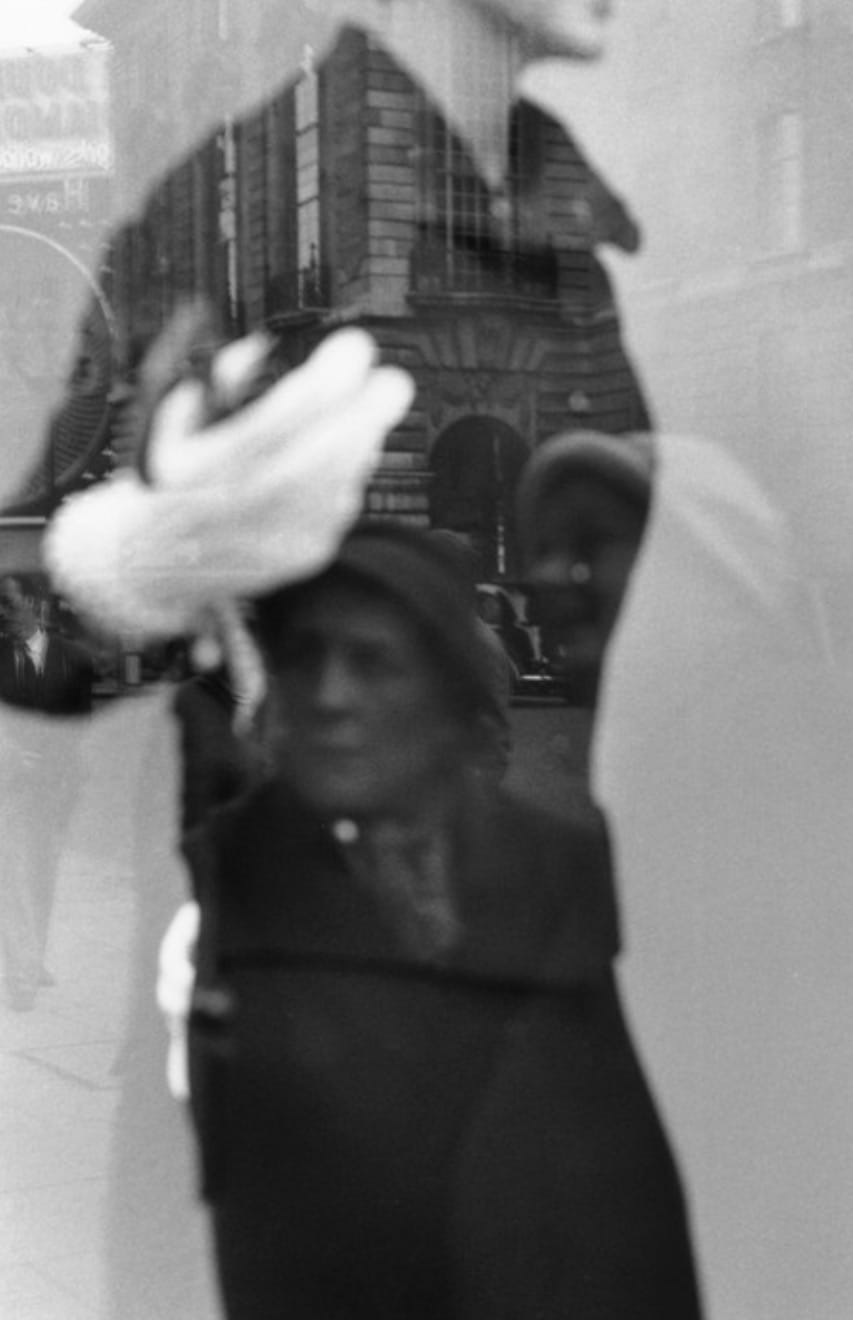
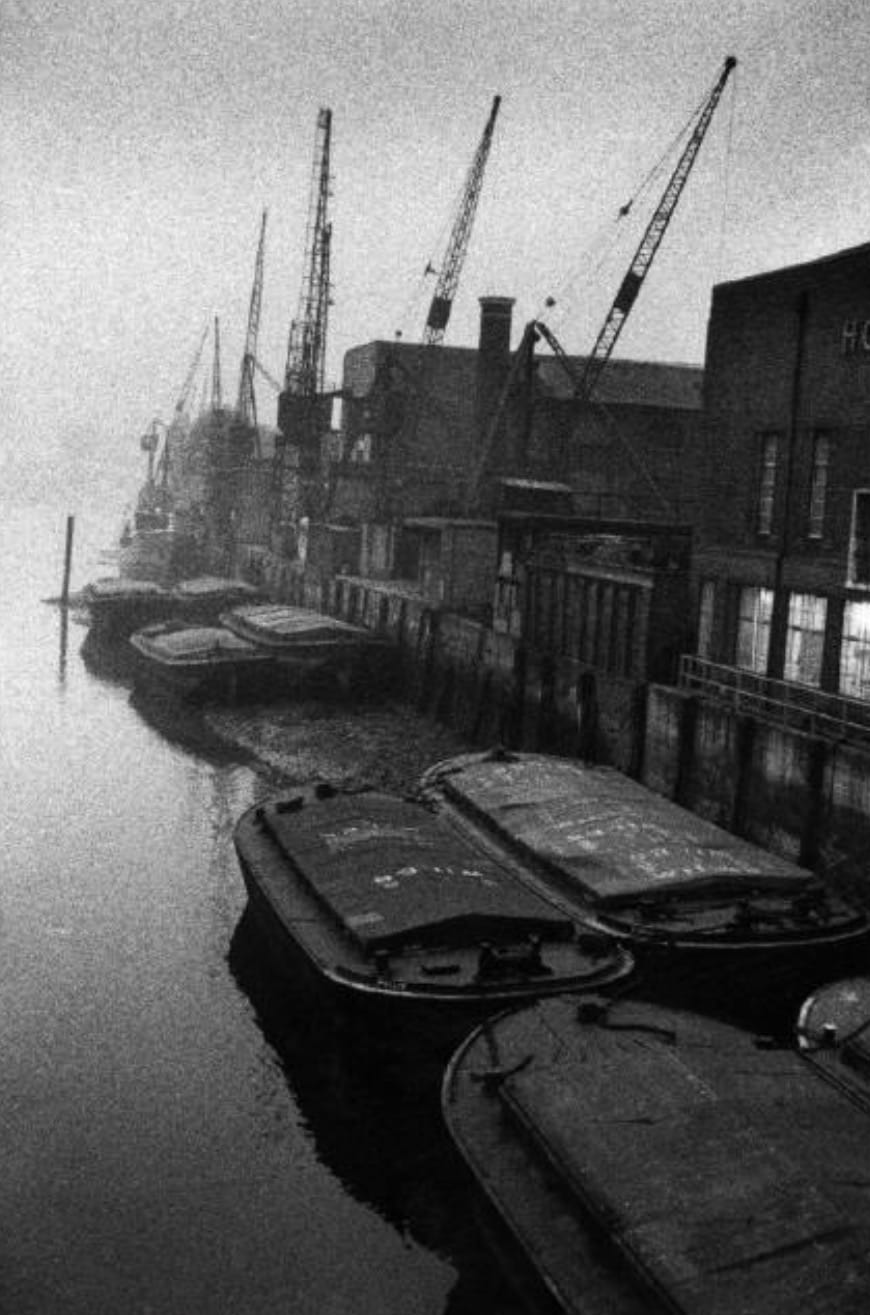
”When I am looking into the rectangle in my hand; I am looking for myself.” That is my attempted translation, ’Rectangulo en la mano’ is a more beautiful in spanish; so is “buscando mi mismo”, ~searching for myself.
Finally! One of us is honest about it! Every photo is a reflection of the photographer first of all. All art is really about the maker. For that matter, the audience is looking for themselves the whole time, too.
So, what did Larraín see of himself when he looked through the viewfinder at London? Magic and ghosts, but not the Dickens’ kind. No reformed Ebenezer Scrooge relationship to money ghosts; and definitely no Mary Poppins feed-the-birds-dance-out-of-the-banks magic. (Though, i will be referencing these photos when I design both of those shows.)
He saw the ghosts of colonizers and the colonized because Chileans understand that relationship well. Sometimes I think that conquering has a magical mind-washing effect on the conquered. Upper-class Chileans revere the British (according-to-Isabel). Did he have many moments of mundanity in which he saw a little of the superiority that allows folks to conquer?
in practice we try to emulate the English. We admire them so much that we think we’re the English of Latin America, just as we believe that the English are the Chileans of Europe. During the ridiculous war in the Falkland Islands (1982), instead of backing the Argentines, who are our neighbors, we supported the British, and from that time forward the then Prime Minister of Great Britain, Margaret Thatcher, has been the soul mate of General Pinochet. Latin America will never forgive us for such a faux pas.”
I am glad to have finished the Allende-oeuvre…so, I never have to go back there again. The unabashed naming of eye color and breast size, height and physical deformity, quantity and color of body hair — is bad for white fools like me.(i wrote folks and the computer autocorrected to fools— i take honest feedback from all sources.) Isabel Allende is a novelist and essayist who names her history of Chile “imagined”. She never needs to cite a source because it is always her. She is open about this perspective…but speaks with such authority that i have trouble restating ‘according-to-Isabel’ prefix that needs to be appended to all of her declarations.
She has a whole memory cache to draw from—so, when Allende reflects on her baby photo in which her hair has been dyed blonde and curled—she can relate a lifetime of subtle feelings from her and those around her toward blondness. Summed-up those memories indicate preference for blondness; to her this is a generalization supported by one photo and a lifetime of feelings…but to the rest of us it is not the mist, myth and magic of memory…I have equations instead blond=better, upper-class Chileans=racist (her word, not mine…but now mine…because I said it…and thought it…even if she put the idea in there…and now I’ve done it to you!)
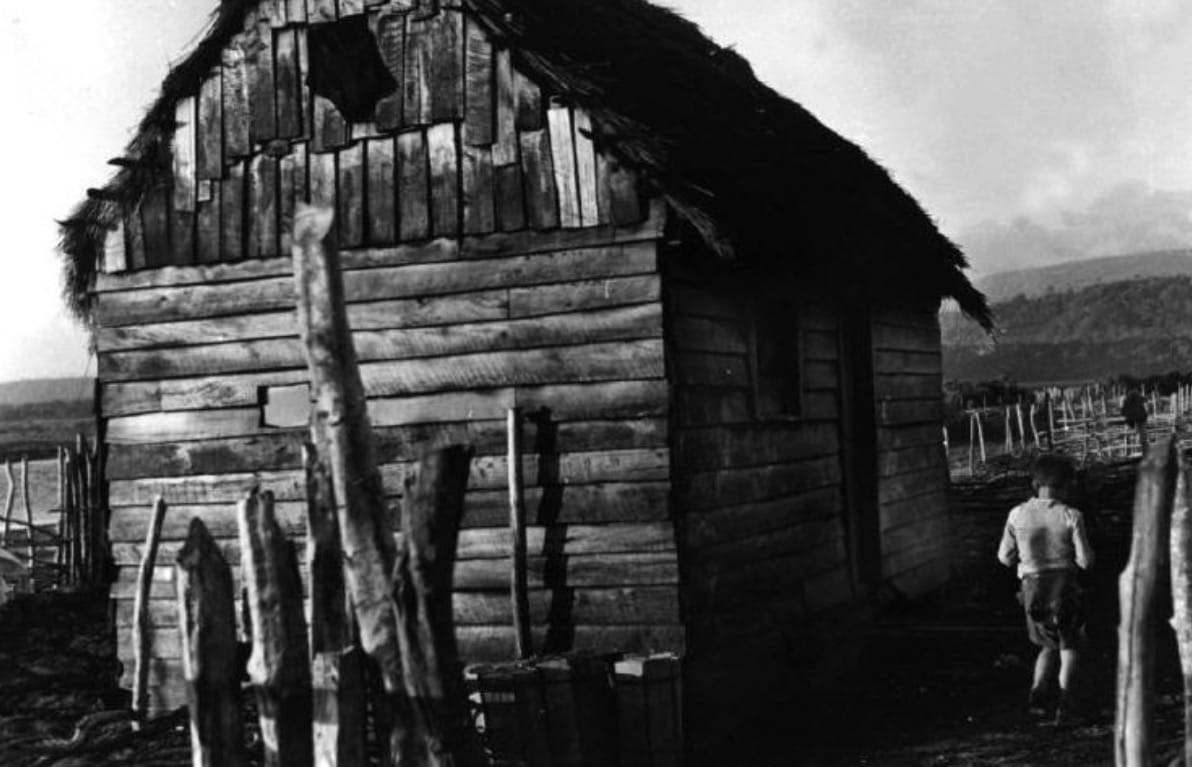
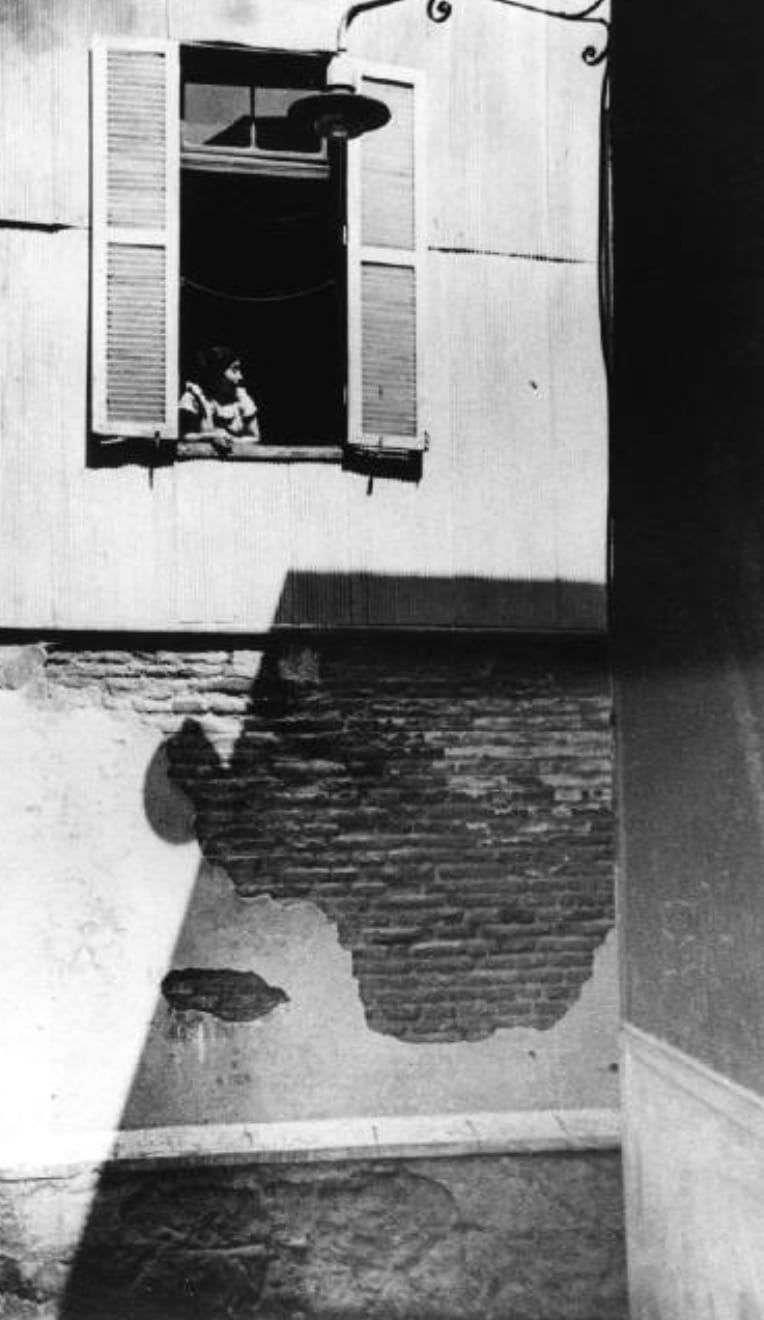
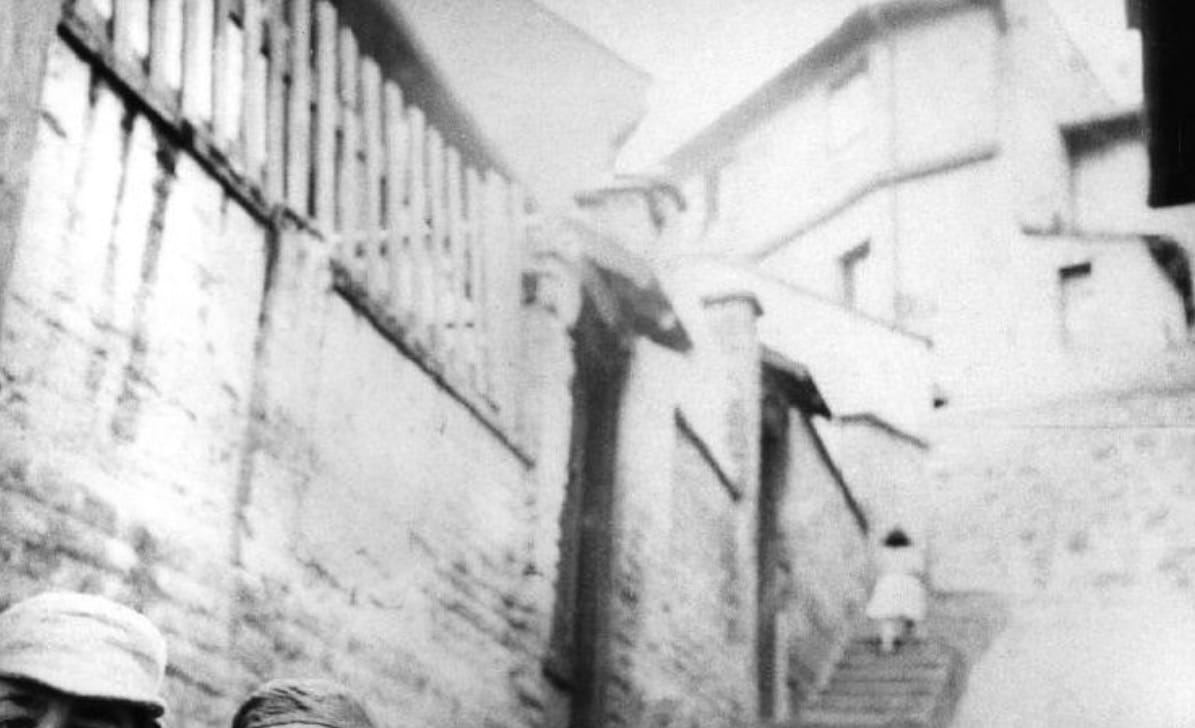
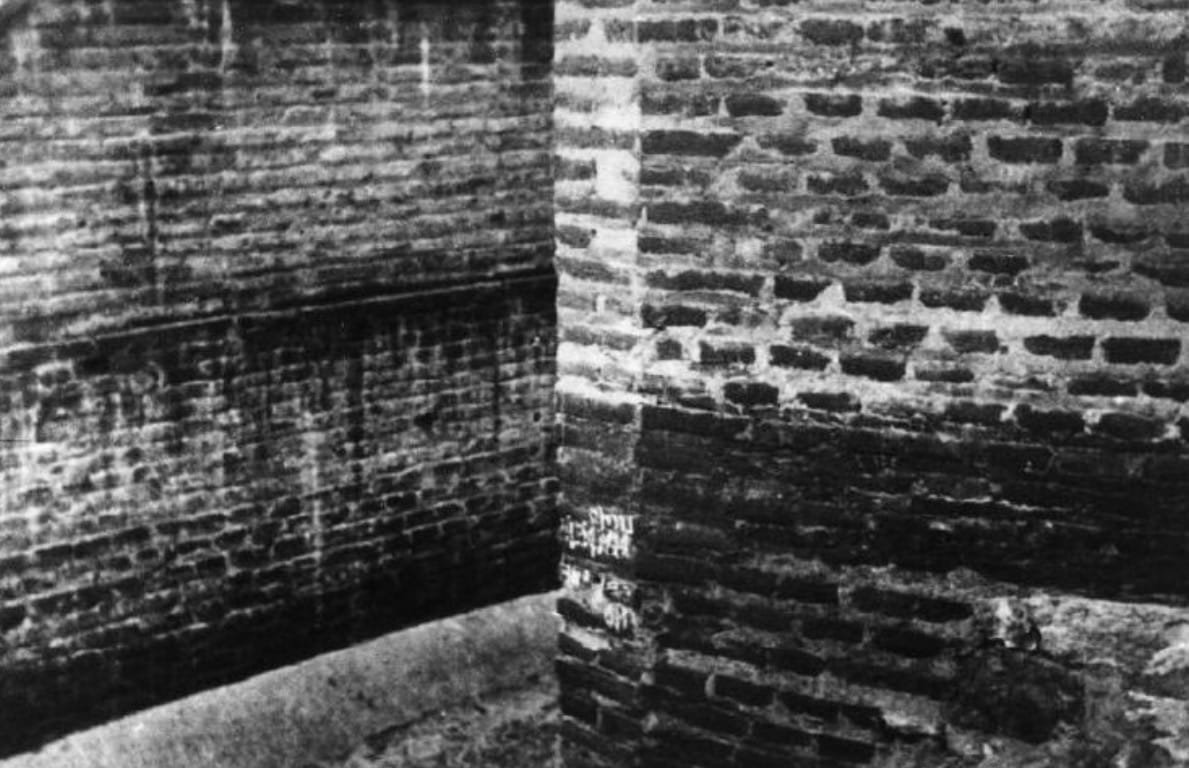
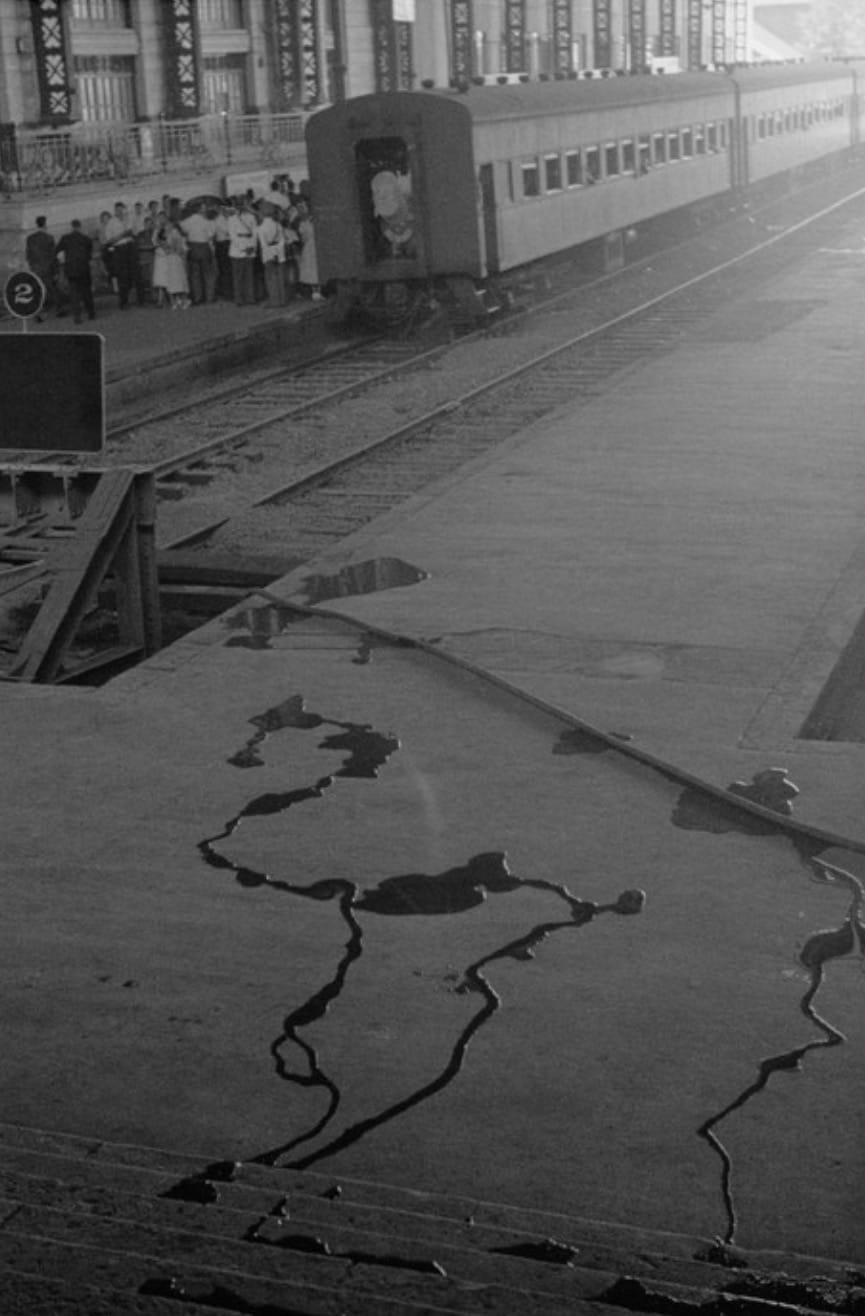
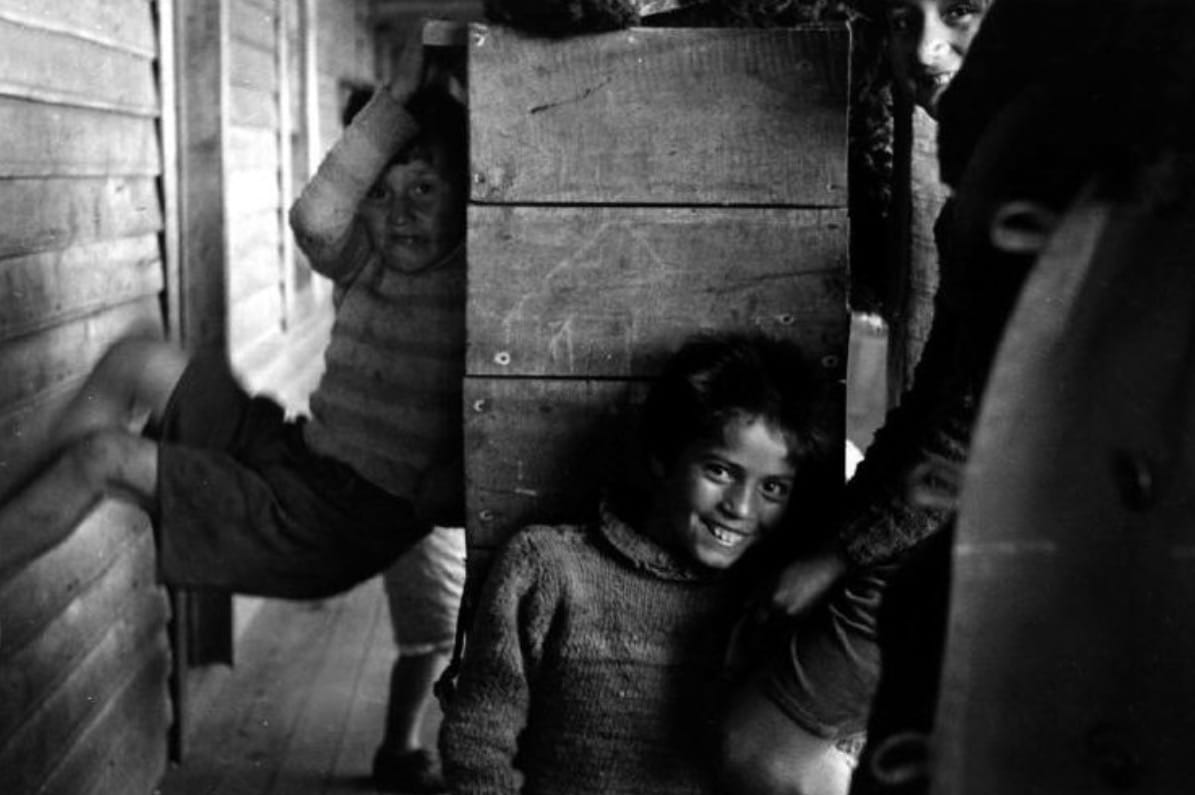
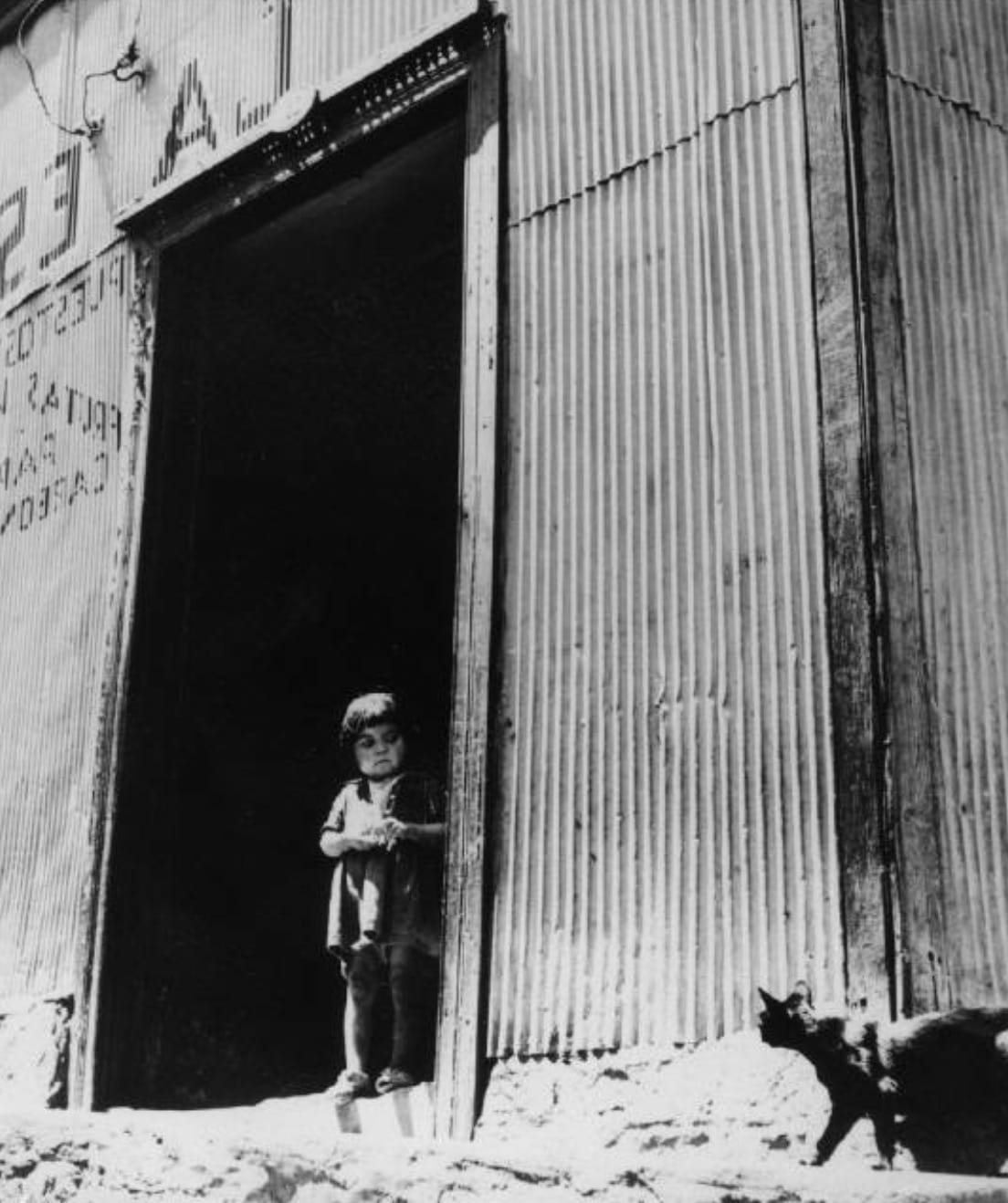
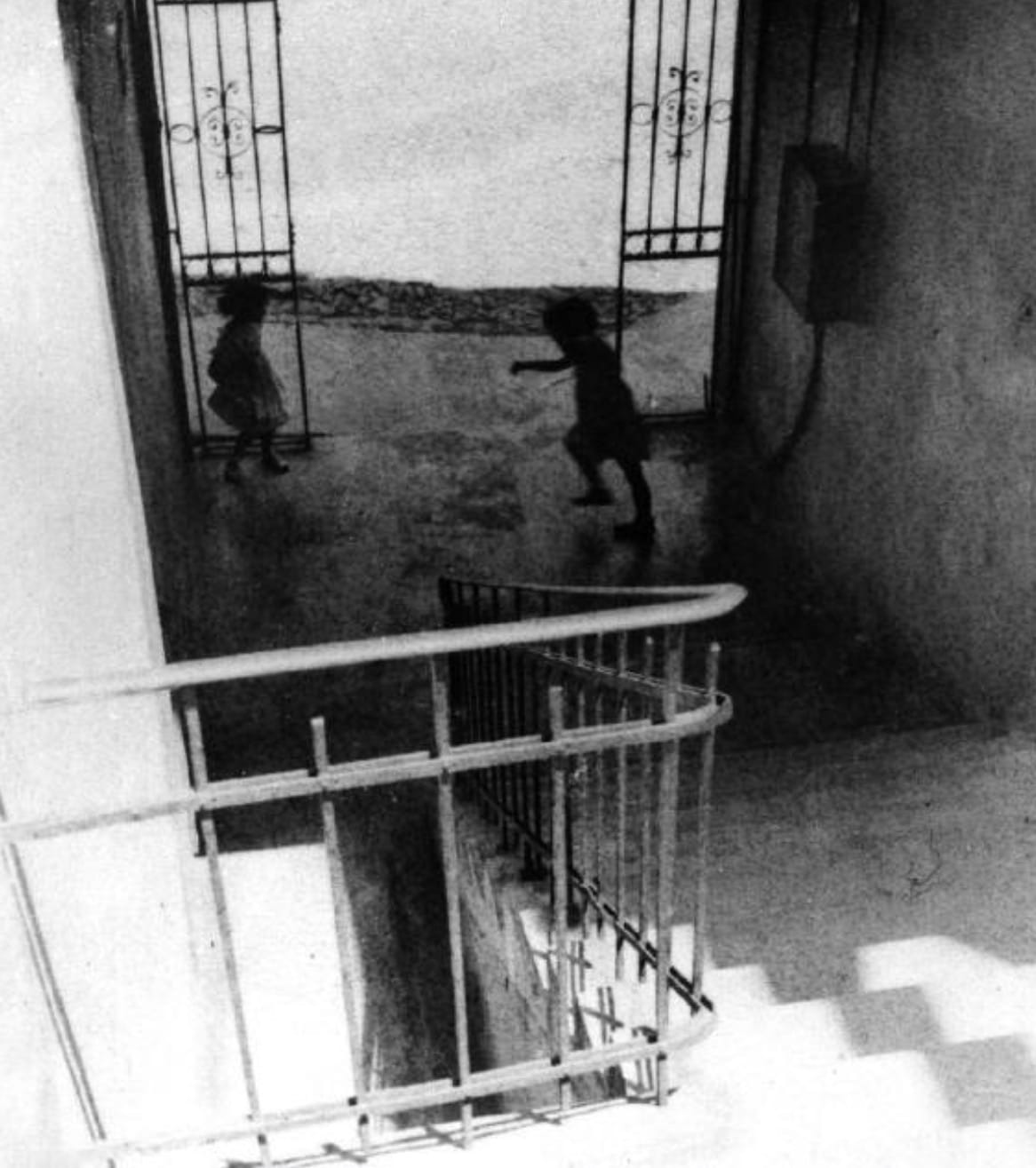
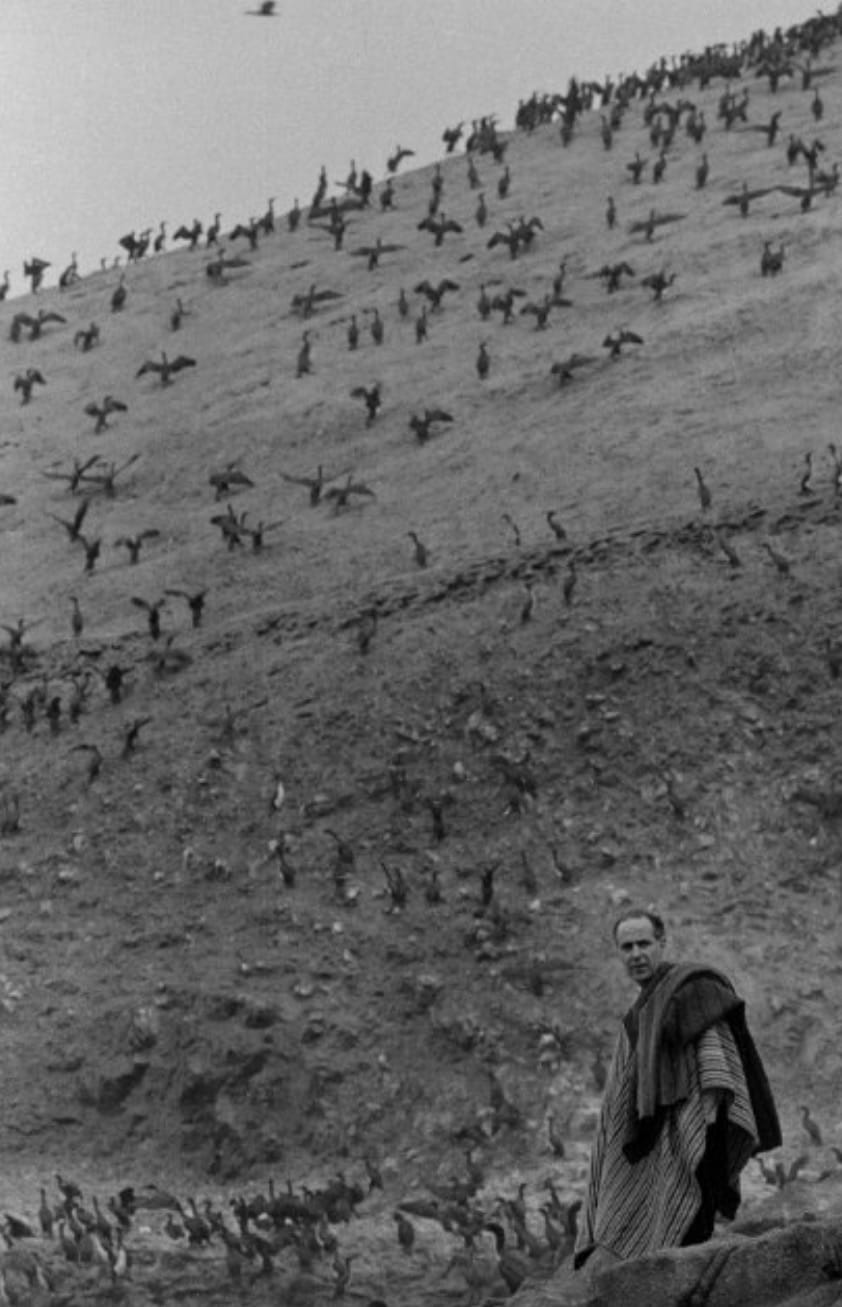
I gather that Larraín had a tough time with his famous architect dad — evidently the man that designed the first modern buildings in Chile, in the style that I have seen in those family photos. In the Magnum photos summation of Larraín they note this tension, but mention that he and his father shared a “sophisticated eye”, a flawless sense of design. And. they bring up the really heartrending paradox of being a privileged descendant of oppressors that is still rich, and does soooo love his country and all the people in it — his dad sold his Picasso and Matisse to buy Chilean artwork, assembled this collection of pre-Columbian art in a public museum. Yes, I tear up thinking about an art collection while looking at photos of very hungry children. Sergio Larraín didn’t seem to have words for that apparent lack of congruity, either.
Warning! I am going to wade into Allende’s Chile way way above my head again.
All of Allende’s books deal with her own identity — again, the capital I kind of Identity. The one you can see visually, and hear in accent and surname. She is upper-class with no indigenous ancestors she can name. She says her family would get European newspapers and affect a Castillian accent. However, she instructs us to “look at [her] face” and assume indigenous ancestry. So many of her characters are raped by her fictionalized composite-grandfather. I would need to do a full re-read to get the right quotes to support this — but, my impression of Allende’s work is that she looked around and in the mirror, and in most moments, had to process the physical artifacts of the literal and metaphorical rape of indigenous Chile.
She didn’t have a rectangle in the hand, she had a memory mist in her head. So much information and impressions that a novel is not really enough.
I’m not going to attempt to place the physical features … of anyone, ever again. It’s a habit of folks of that time, and most places. She was stating her truth plainly…but, I wonder if it gives all of us a bunch of license to dumb-down our impressions of people. Categories and identities that simply do not serve to help us understand each other. I don’t know what Sergio Larraín saw when he looked in the mirror. But! I bet he did see himself, a lot, when he looked at London through his viewfinder.
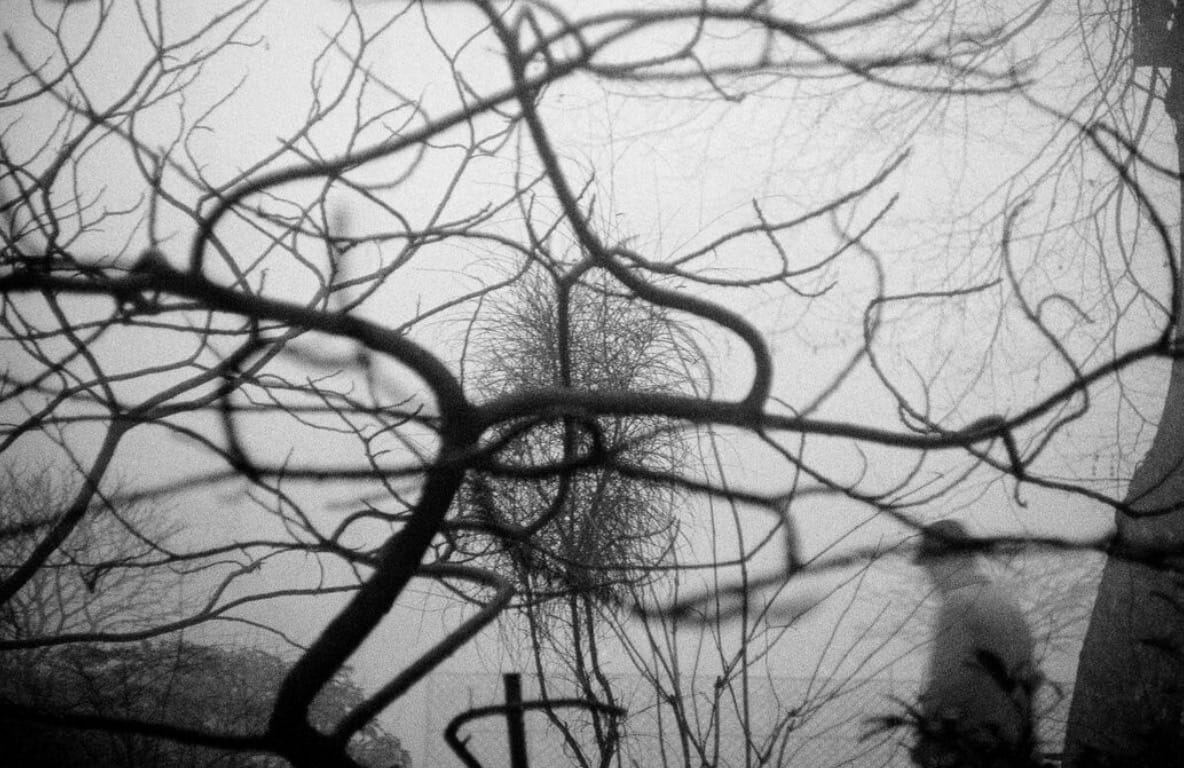
No British press printed these photos! None! The British Council paid his fellowship but never used any of them!
Too much truth. Fellow photographers saw them, though. They asked him to join magnum and annointed him, ‘El Rey’. Yeah. He is the king.
We took this detour because I was so moved by his insightful photos, and I wanted to know what made him able to have this vision. I will still look…and…watch his nephews movies to try to understand more…Pablo Larraín! The director of Jackie. Not a coincidence. Some families have figured some things out…and wealth helps sometimes.