Was is Girl Power?
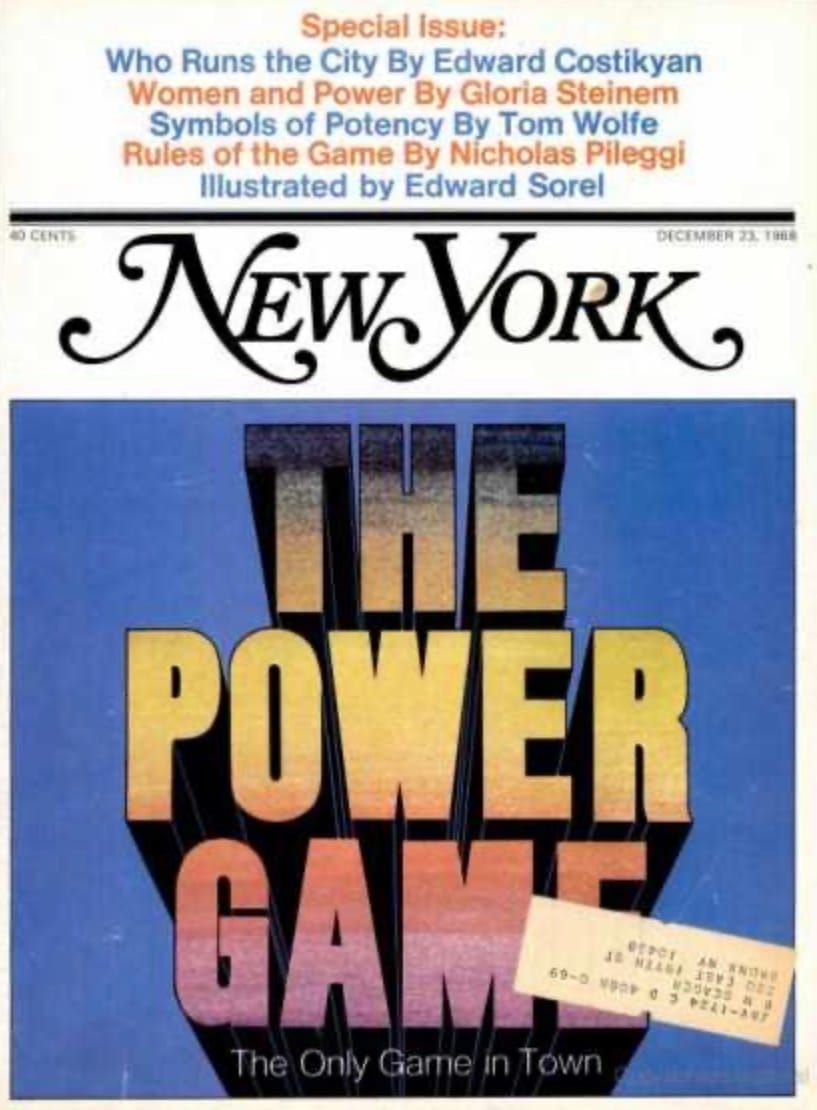
“You lose interest in everything else for a month or so before childbirth, and several months after,” explained a former State Department official, now a political science professor. “Nature takes care of that. But the women I see who continue that singlemindedness year after year because they think they ought to—they end up being a burden to the child.”
… that quote ends the first section of Gloria Steinem’s 1968 New York magazine essay Women and Power. This idea of the parent who is too involved in their childrens’ lives gets fully fleshed out in Steinem’s book Revolution from Within 23 years later. From a mother that potty trained her daughter at 5 months to Adolf Eichmann’s need to be told when to use the toilet as a 55 year old prisoner, Steinem connects the societal woes large and small to oppressed people oppressing their children. Some of it is as literal and physical as telling a person that someone else knows better when they should use the bathroom; but, most of the self-esteem that Steinem is calling on everyone to find ‘within’ has to do a position in society and the life of the mind—i.e. Esteem yourself worthy of any job.
Being an article in New York Magazine Steinem notes that women go to New York City to free themselves of society’s ideas about what they should and should not/can and cannot do. And, while they are there they find what they really want are “tangible and intangible proofs that they make a difference in the world, that they are unique and valuable people”.
Steinem’s column is “The City Politic”. She has never before connected women’s desire for status as a full person and the rights that go with that and government. How and why is she going to do it here?
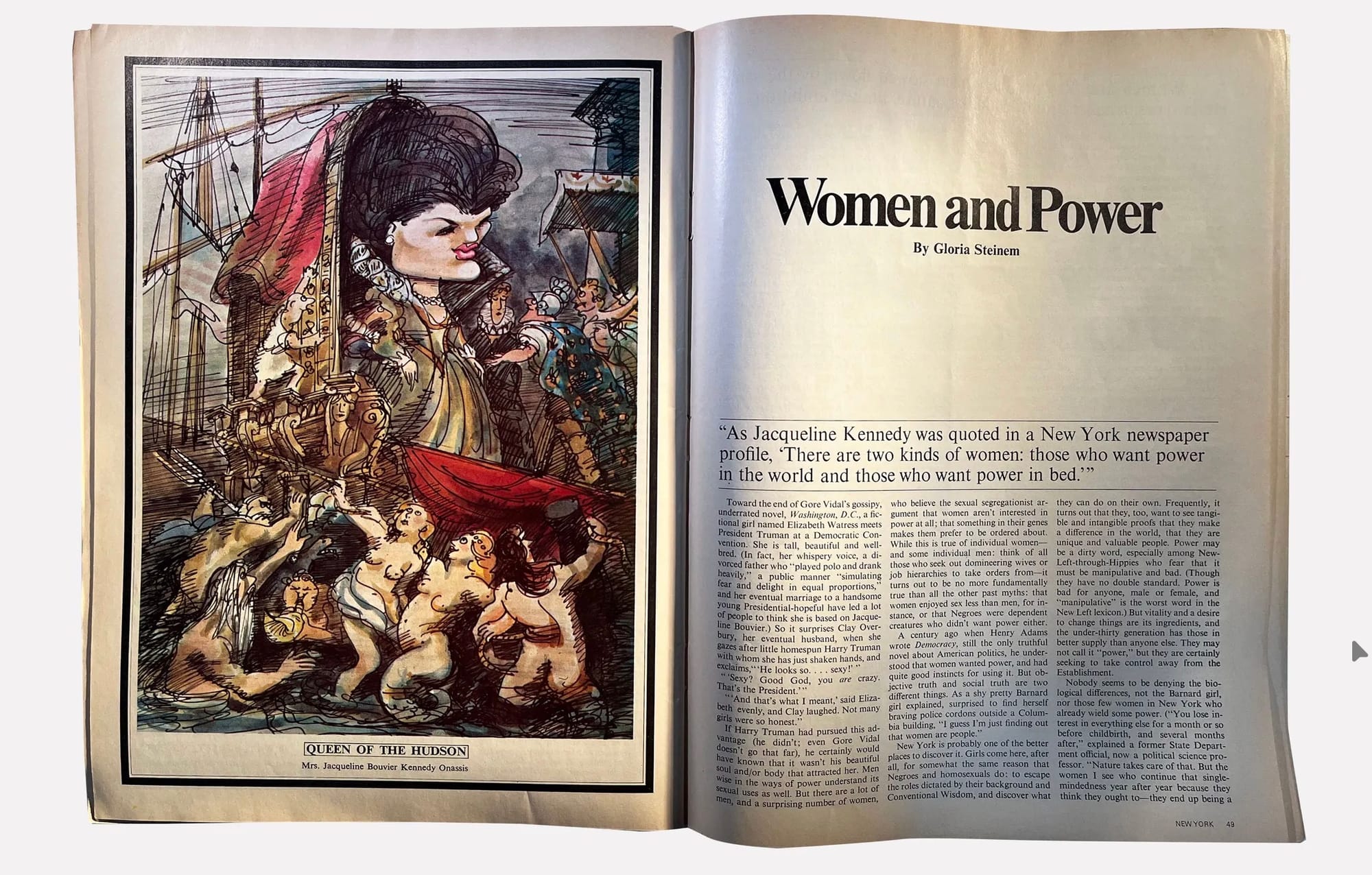
Jackie Kennedy was in the news a lot in the fall and winter of 1968 because she had just married Aristotle Onassis.
What was being said that quote? That Jackie Kennedy Onassis did not want power in the world? like, not in politics like her 1st husband nor in business like her 2nd husband? She wants to be powerful in her “bedroom“ with her famously philandering 1st spouse and then her 24 yrs older 2nd spouse? In the 8.5 hour long interview she gave in 1964 (that she asked to be kept secret until after she died) she said “violently liberal women preferred Adlai Stevenson” because they were ”afraid of sex”.
In the NYtimes review of those compiled interviews Janny Scott notes that Jackie told a friend that she finally realized, after Aristotle Onassis died, that she could not live primarily through her husbands. If I keep in mind that she implies that affiliating with the political power of John F. Kennedy, either by voting for him or marrying him, is to be unafraid of sex — well, I guess I’m thinking that Jackie Kennedy got power in the world by having power in the bedroom…so, she is both types…
But the fact is, even in New York, that the great majority of women don’t have the training or opportunity or courage to get and use power on their own. Probably, they’ve been brought up to believe that such ambitions weren’t feminine.
got it. Even the expensively educated well-connected Jackie Kennedy didn’t have presidential training or opportunity, even Mrs. Onassis’s own money, resume and network couldn’t make her into a billionaire. She needed husbands for that access.
So which “kind of woman” was Jackie Kennedy Onassis?
…help me out, Ms.Steinem. The history of feminism was not a part of my Catholic and state school education. I wasn‘t alive when JKO said that—I’m lacking cultural context and sufficient education.
Even Jacqueline Kennedy, regarded as ornamental but frivolous before her husband’s death, got all kinds of serious suggestions that she become Ambassador to France, or even Johnson’s Vice President, immediately after. But as she was quoted in a New York newspaper profile, “There are two kinds of women: those who want power in the world, and those who want power in bed”; the clear implication being that she was the latter. And, almost equally clear, that she disapproved of the former.
That Jackie Kennedy quote is not easy to find in print. Steinem pairs it with her refusal of jobs like ambassador to France or Vice President after her husband died. I bet that Gloria Steinem was carrying that quote from Jackie around in her head for half a decade…mulling it over. If offered the job of the first female vice president, who turns it down? She clearly did have the training and opportunity to be ambassador to France.
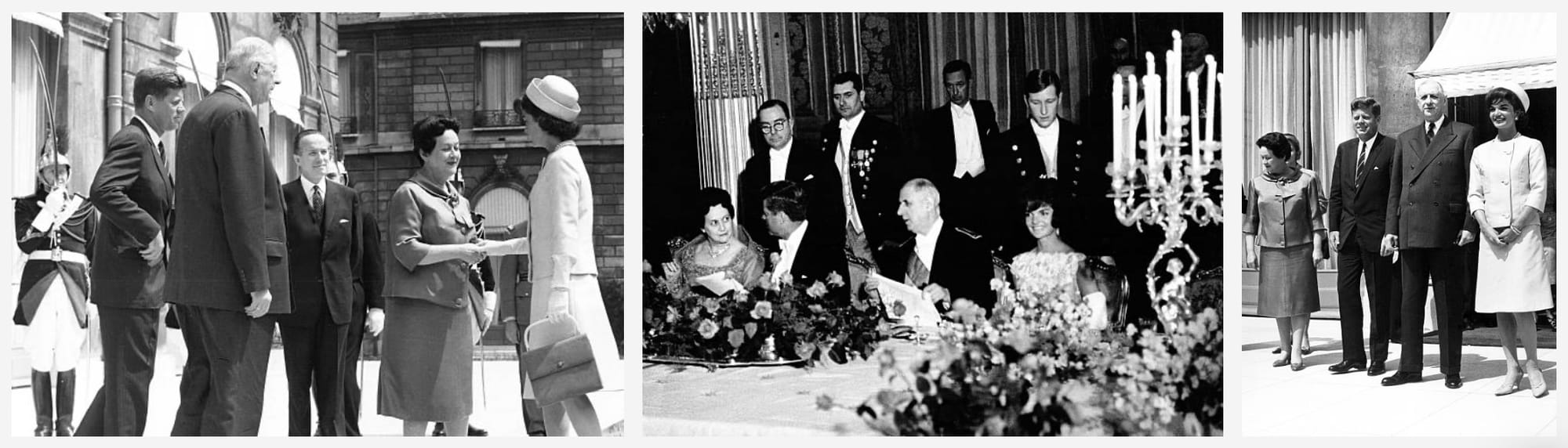
So, Gloria was thinking about Jackie when she imagined an upbringing in which power “ambitions aren’t feminine.”
Gloria Steinem spends a few paragraphs listing the types of wives who access power through their husbands. Though the premise for this power seeking is approached with empathy for the women and blame for the system…the descriptors she assigns to this “type” are pretty unkind: “destructive”, “interfering”, “ridiculous”, “combative”, “non-contributing”.
Then she briefly brings it back to the Kennedy White House. She speculates that all of the divorces which happened when Camelot ended were actually the women moving on when their husbands no longer brought them in proximity to so much power. “[A]cquiring power through men remains the only sure-fire acceptable way. Margaret Mead notes that this society approves women’s power only if it’s been inherited in some sense…” i.e. a widow. You have to be a beloved man’s widow…
…are you imagining anyone in particular choking on a fish bone so his worthy wife may be elected?
That was Steinem’s first foray into feminism for New York magazine. The next one is shorter, less pointed but more famous, “After Black Power, Women’s Liberation”.
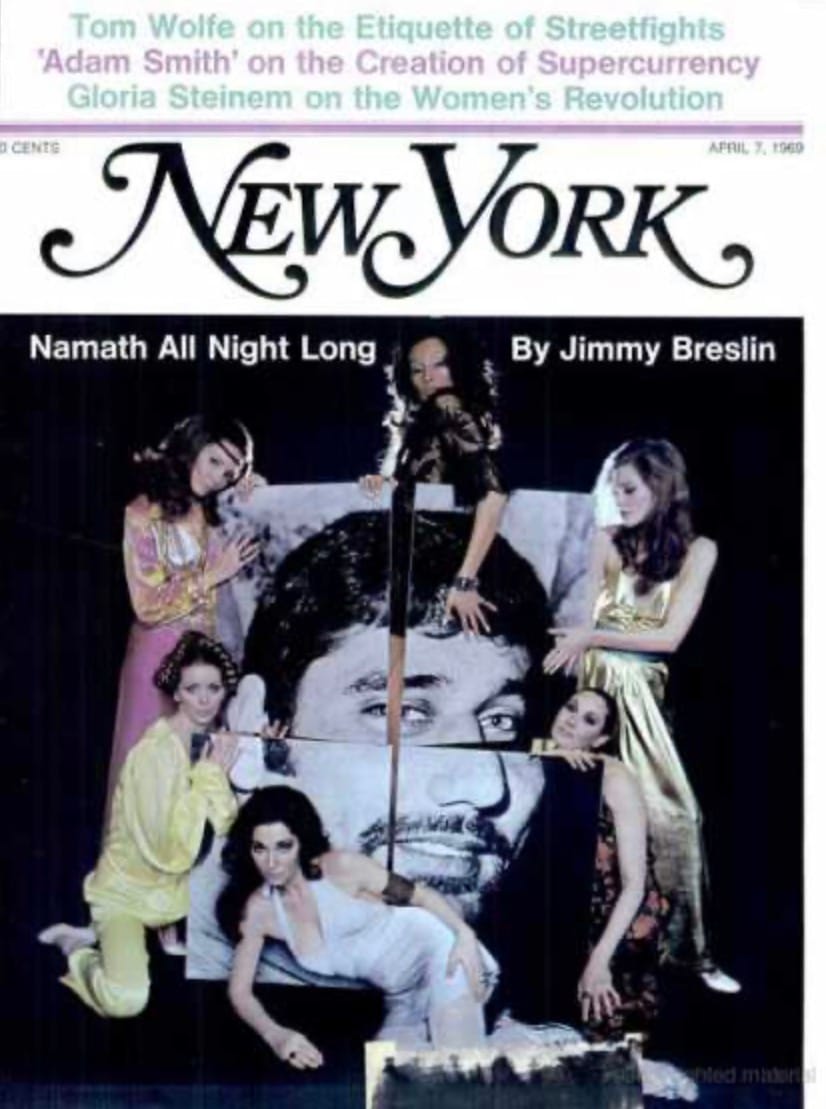
She doesn’t mention the abortion speak out she attended between her Jackie Onassis/women and power article and this one; but, she often cites that evening as the catalyst for her self-assignment as one of the “crazy women” of the movement.
a bioplay has to shoehorn a life into a dramatic structure. It doesn’t always work. But, a 92 year long life of a writer that understood for 6 decades that the personal is political has an advantage over other Bioplay/biopic subjects.
There is more to say about Jackie Kennedy Onassis. Ms. Steinem didn’t have all of the facts or the perspective of history…but, I suspect she was reading Ms. Kennedy Onassis’s life choices from a personal perspective, not a political one. Let’s contrast and compare the two tomorrow!