Women and Power
”It doesn’t matter who you are. It matters who people think you are.”
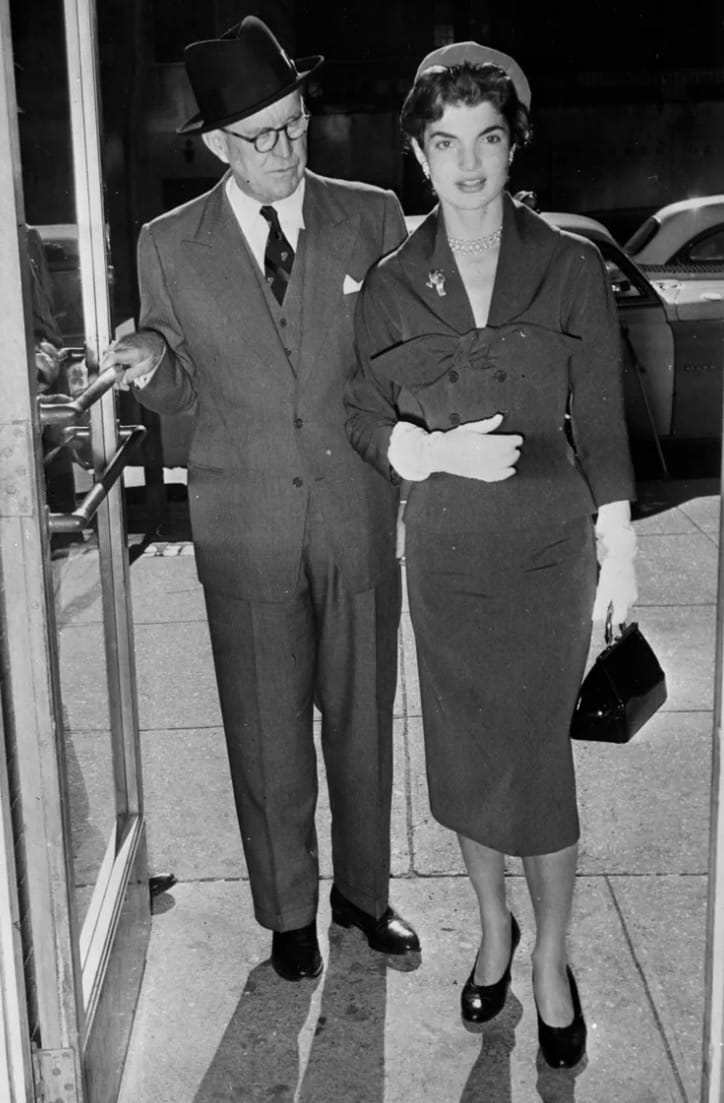
In 2026, people think the man who said that was a cad, a truly atrocious human being. I wonder who people thought Joseph P. Kennedy was in his own lifetime. Was that the intended effect? FDR is on record saying he chose Kennedy Sr to head the Securities and Exchange Commission because “you hire a thief to catch a thief”. Jackie Kennedy called him a dedicated and “sweet” father many times over in her 1964 interviews. I am gathering that those two impressions of him from people who knew him well were the public impression, too.
Let’s apply Joe Kennedy’s quote to his daughter-in-law, Jackie Bouvier Kennedy. In 1968 Gloria Steinem said that most people saw Jackie Kennedy as ”ornamental but frivolous” while she was first lady. Is that who she wanted us to think she was? Like, was she following her father-in-law’s creed, and that impression was intentional?
This short detour into Jackie O world is necessary because,
- Jackie is the apex American female. That’s who people think she is, at least many of us think that. Apex as in, she reached the top. Also, apex as in the most elegant, or graceful, or sophisticated.
- Jackie was “ornamental but frivolous”. That’s who Gloria Steinem thought she was. Many of us tend to agree with that impression as well. Both of those adjectives imply she had no substantive effect on our government.
- Gloria Steinem wrote about Jackie Kennedy Onassis just before she joined the Feminist Movement. Jackie is the prologue.
Jacqueline Bouvier, like Gloria Steinem, broke off an engagement to a very nice WWII veteran to pursue a more exciting life. Each won a fellowship to study abroad, Steinem in India through the American ambassador Chester Bowles, and Bouvier in Paris, where she had spent her junior year, through a Vogue magazine essay contest.
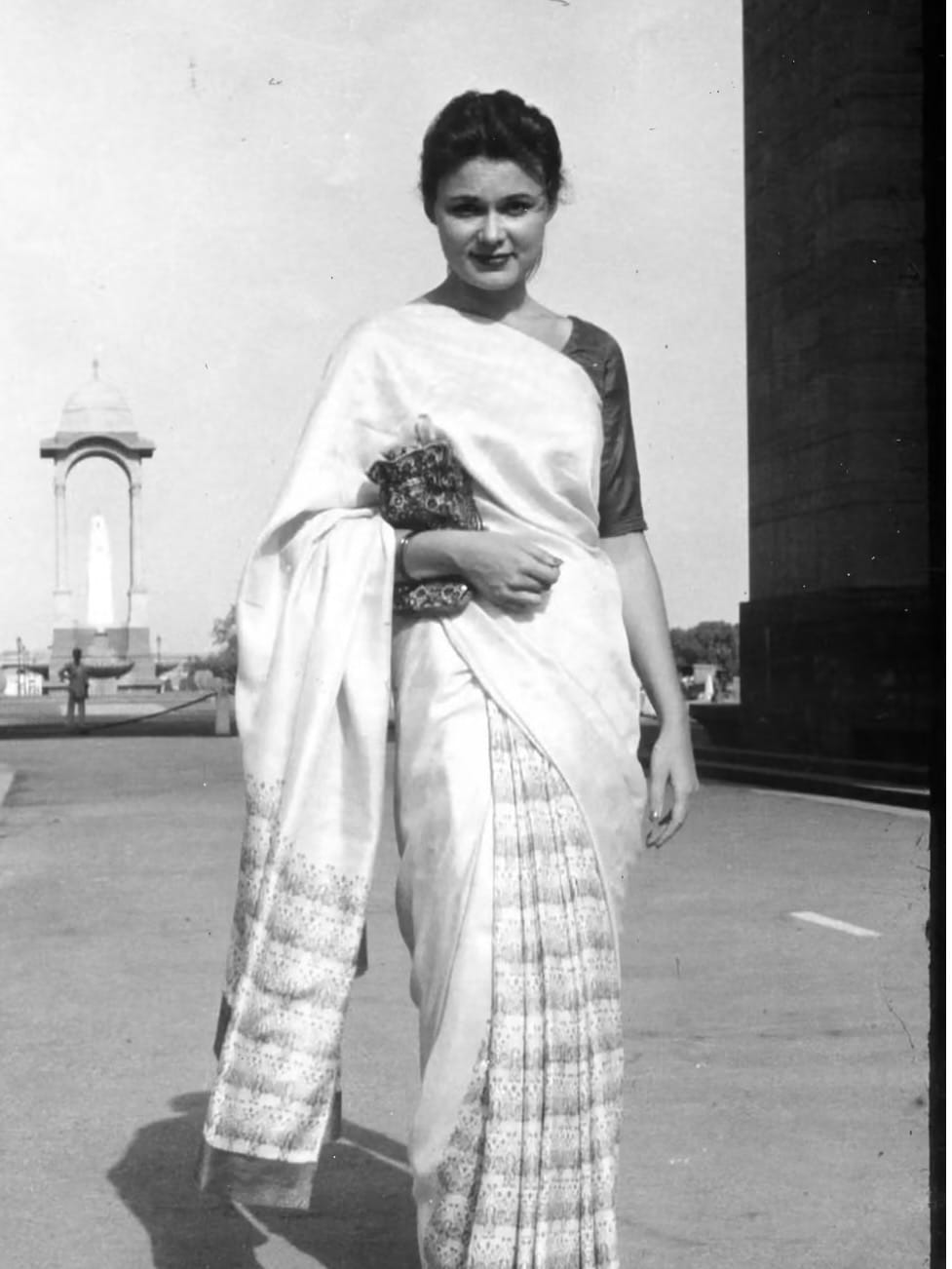
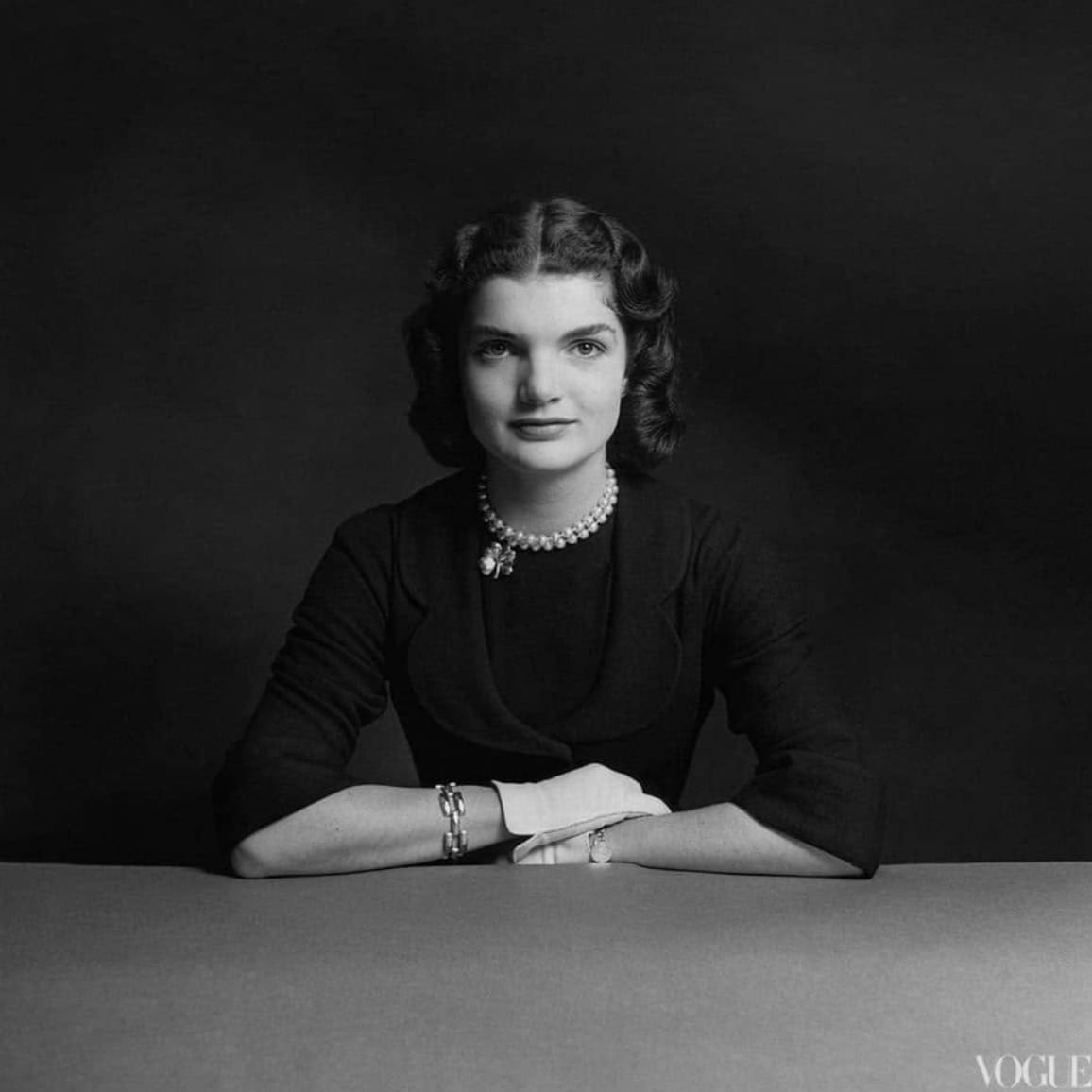
The two got very different guidance from the impressively powerful women who advised for those two fellowships.
In 1951, 22 year old Jacqueline mentioned how female-dominated the fashion industry was to Carol Phillips, the editor of Vogue who herself had been a writer in her 20’s and would later go on to found and run the groundbreaking skincare line Clinique, Ms. Phillips told Jackie that she should move to Washington DC, as “that’s where all the boys are”.
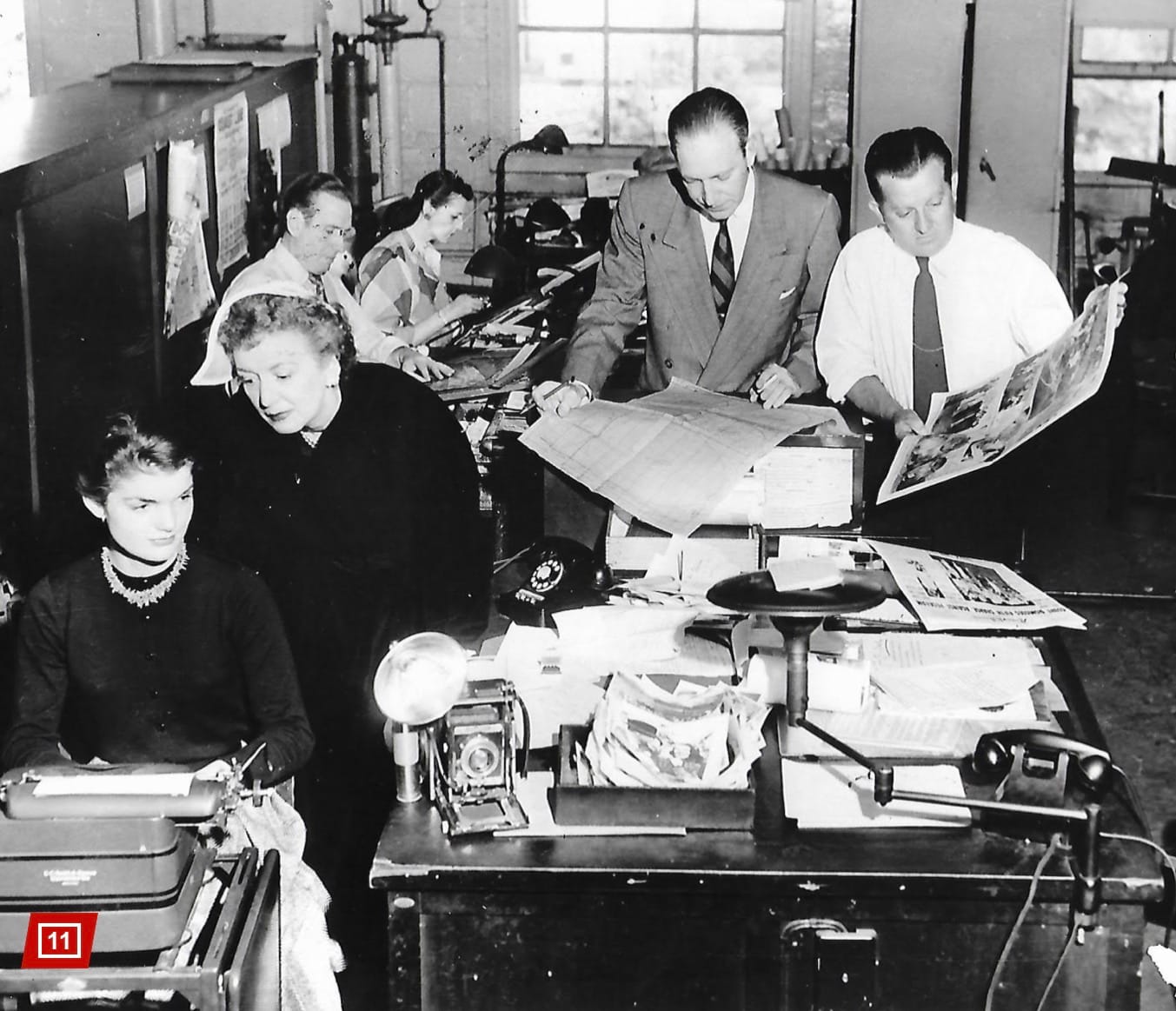
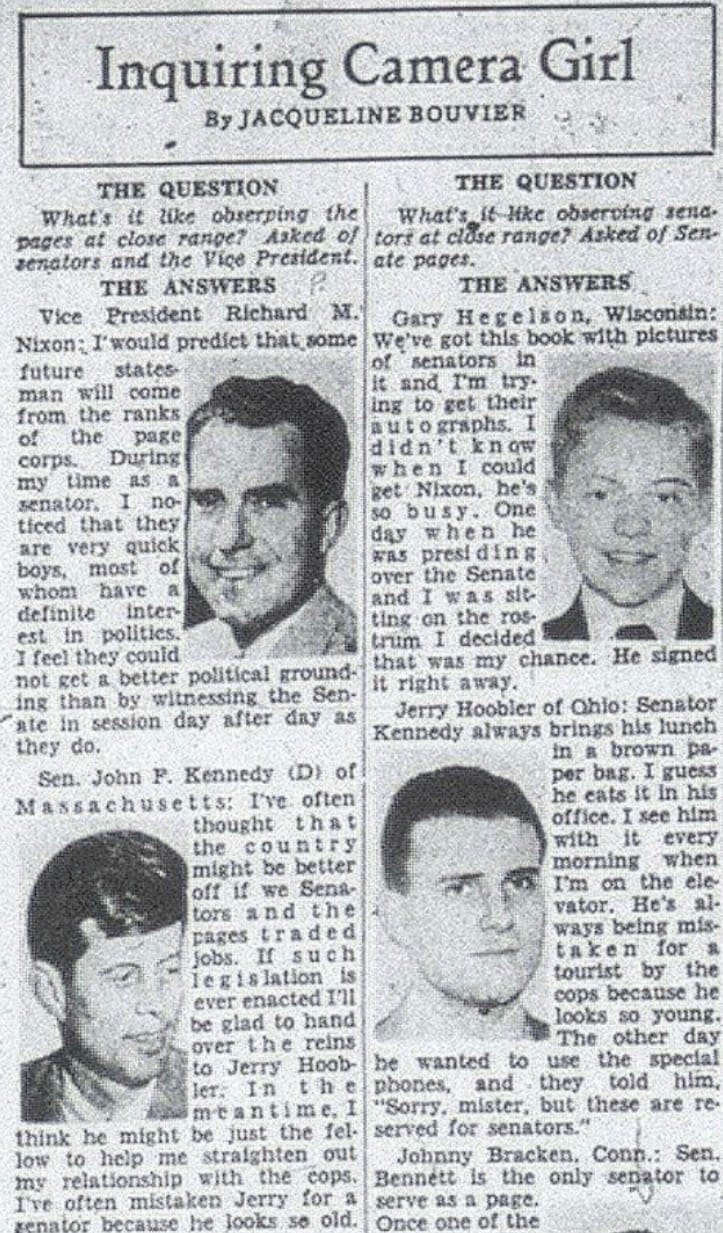
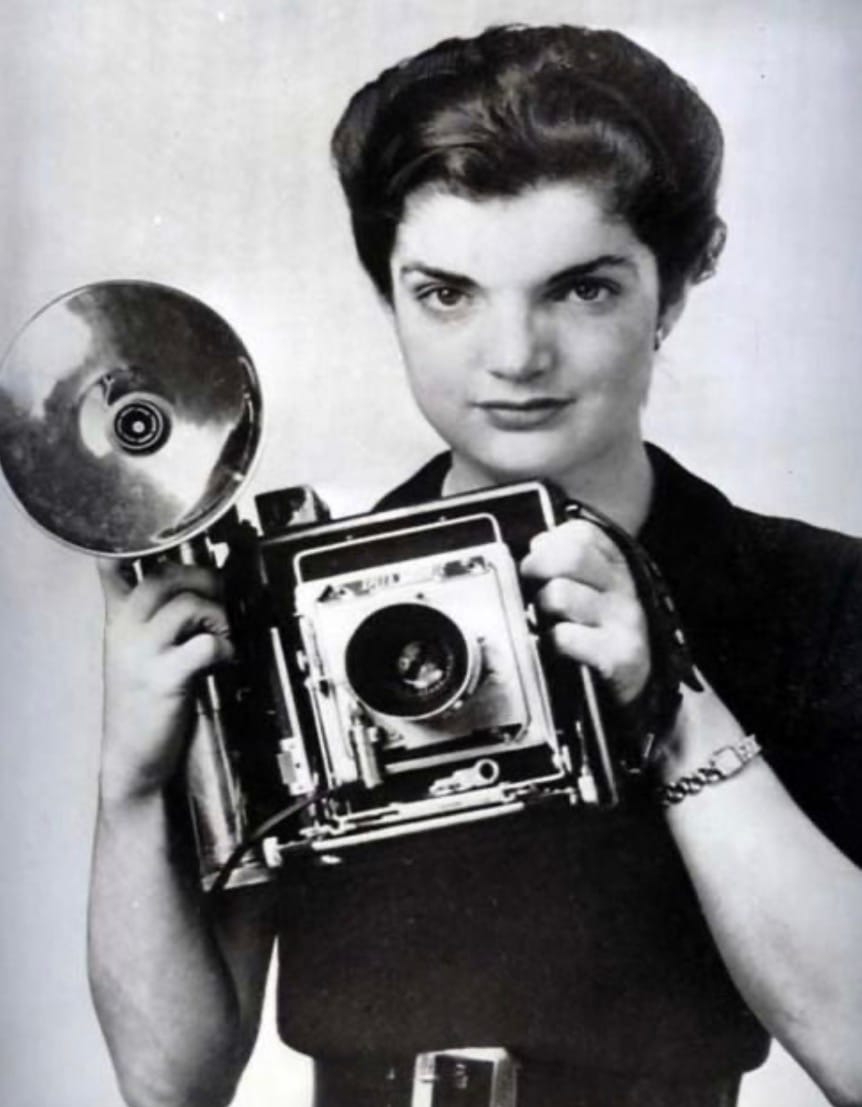
Instead of going back to France, or staying in the female dominated world of fashion, Jacqueline quit Vogue immediately and moved to DC to become, like Gloria Steinem and Ms. Phillips, a reporter.
Five years later, Jean Joyce, the deputy head of the Ford Foundation in India, would give the opposite advice to 22 year old Gloria Steinem, “a very pretty gal” that wandered into her New Delhi office. Ms. Steinem, like Jackie, expressed dissatisfaction at spending all her time in the company of fashion-loving women:

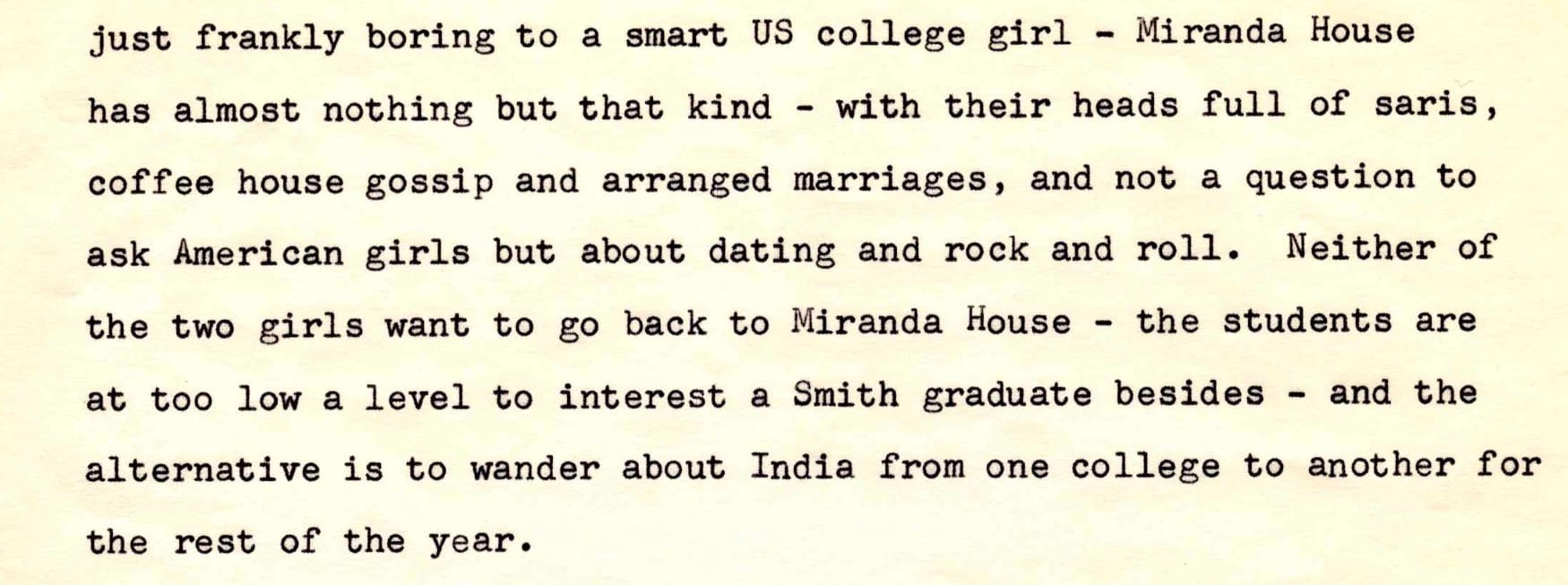
In My Life on the Road (2015) Steinem is lightly positive about the “kind students that taught me how to tie a sari”; and gives the even-handed summation of what she learned from these young women as, “generally more instructive about India than was the curriculum, which was still very much on the British system.” …even-handed…maybe a little on the cooler side…even 60 years later.
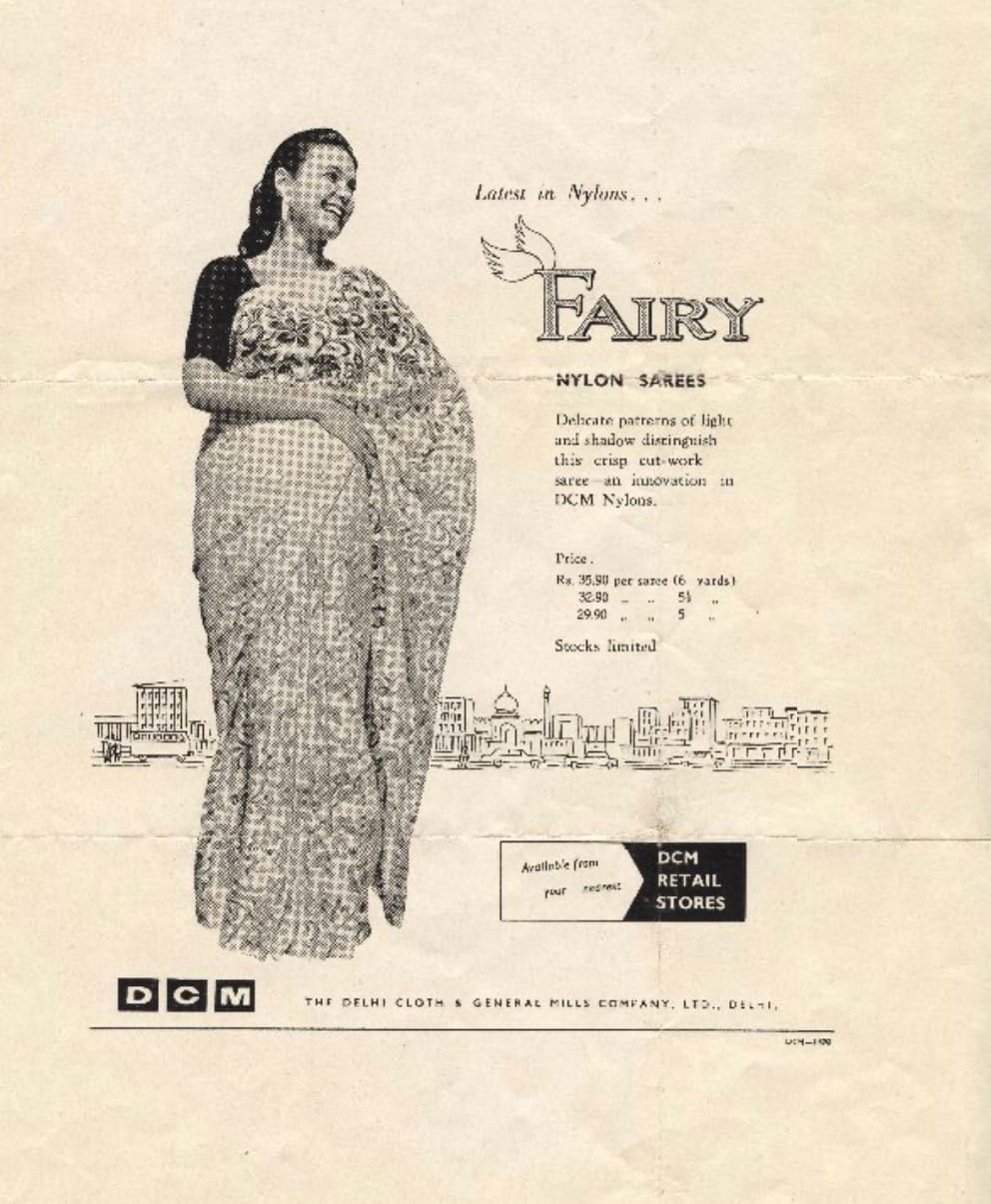
However, when we consider that Gloria Steinem earned money modeling saris and writing travel advice for foreigners — two skills she learned from these women — I think we begin to see a young woman grappling with the appeal of an inherited world-order from which she profits. The article she wrote for the Smith newspaper upon her return gives the Miranda House young women far more credit:
“ After several weeks of inquiry, Kayla and I decided to live at Miranda House, one of the two houses for women at the University of New Delhi. Our arrival there was greeted with warmth and kindness and most gentle curiosity on the part of the 200 some graduate and undergraduate women living there.…We were never allowed to want for a friendly word or a helping hand. Each group invited us to their outings and gatherings. Individuals invited us to their family homes for dinners or weekends, to weddings, to lectures and to concerts or simply long talks over coffee...
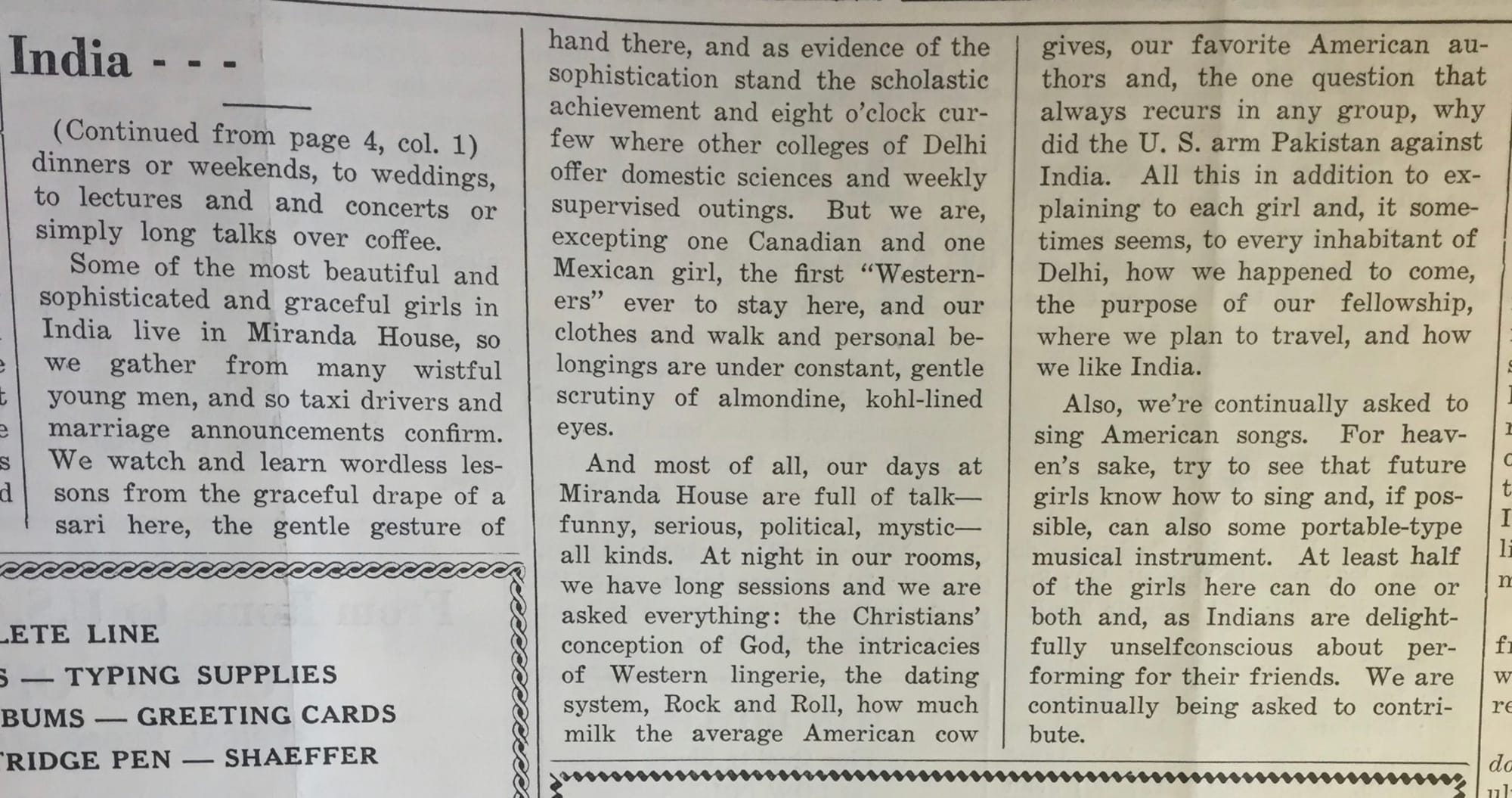
While Steinem ends this article with a plea for a primer on semi-public performance of Rock n’ Roll for all future Smithies travelling to India, the previous paragraph holds the dominant impression of the US from the view of India:
Why did the U.S. arm Pakistan against India?
Before travelling, try to understand the impact of your government and country on your destination. India’s most beautiful and sophisticated and graceful girls will request a primer on US foreign policy so they can put into context your answers to ‘Why are you here?’ and, ‘What do you think of India?’ Interest in dating and rock-n-roll loses its air of frivolity when put in the context of an acute awareness of the economic and political precarity that middle-class Indians felt in 1956. American culture is not a trivial piece of foreign policy.
Jean Joyce, the Ford Foundation India head that wrote the letter about Gloria, either assumed, intuited or was told that Gloria was “the kind of woman” interested in “power in the world” not ”power in the bedroom”; so, she sent her to Ghandigram:
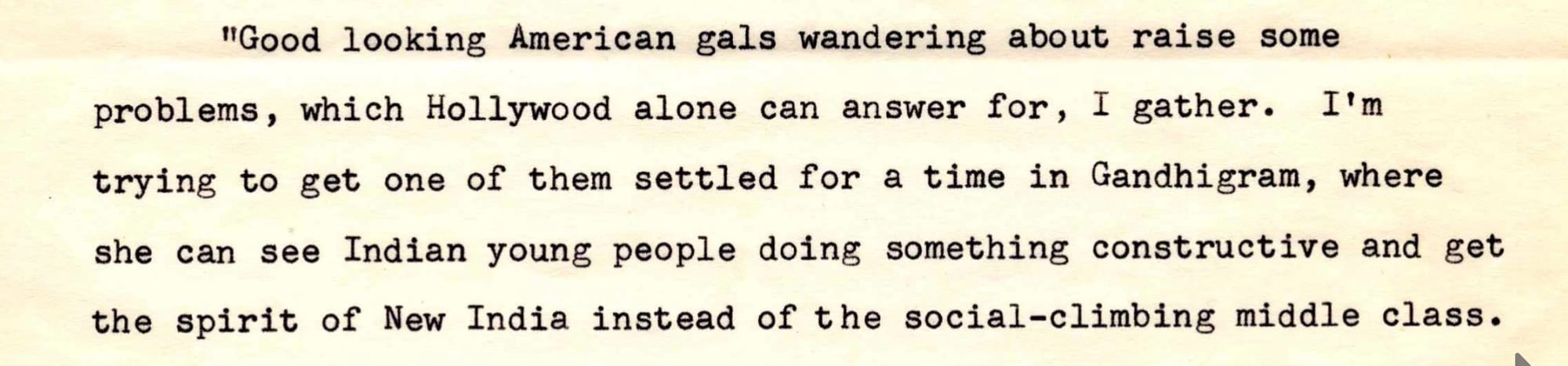
In “the spirit of New India” the citizens were trying to get “power in the world”. Ghandigram gave Gloria Steinem an education in nonhierarchical government and effective activism through listening, specifically in ‘talking circles’. In Ms. Steinem’s many self-reflective essays and memoirs, she calls sitting in circles and listening her huge revelation and the single most important tool in the Women’s Movement. The abortion speak-out that she attended in 1968 only made the women’s movement ‘click’ into place for her because it so resembled the talking circles she saw in India.
A few months earlier in 1968, before her revelatory moment at the speak-out, she and other New York magazine editors came up with articles for their Power issue. Why did Ms. Steinem think of Women and Power - her chosen topic and the title — she hasn’t been writing about women much before that. Had this quote from Jackie been bugging her for years? Jackie was back in the news because she just married Aristotle Onassis — so she took this opportunity to dissect it?

When Ms. Steinem read that quote in 1964, perhaps it encouraged her to look at women through that bifocal lens for the next five years. World or Bed? Did she look at all of her own decisions through that lens?
In 1963, Jackie and Gloria were sporting a similar look:
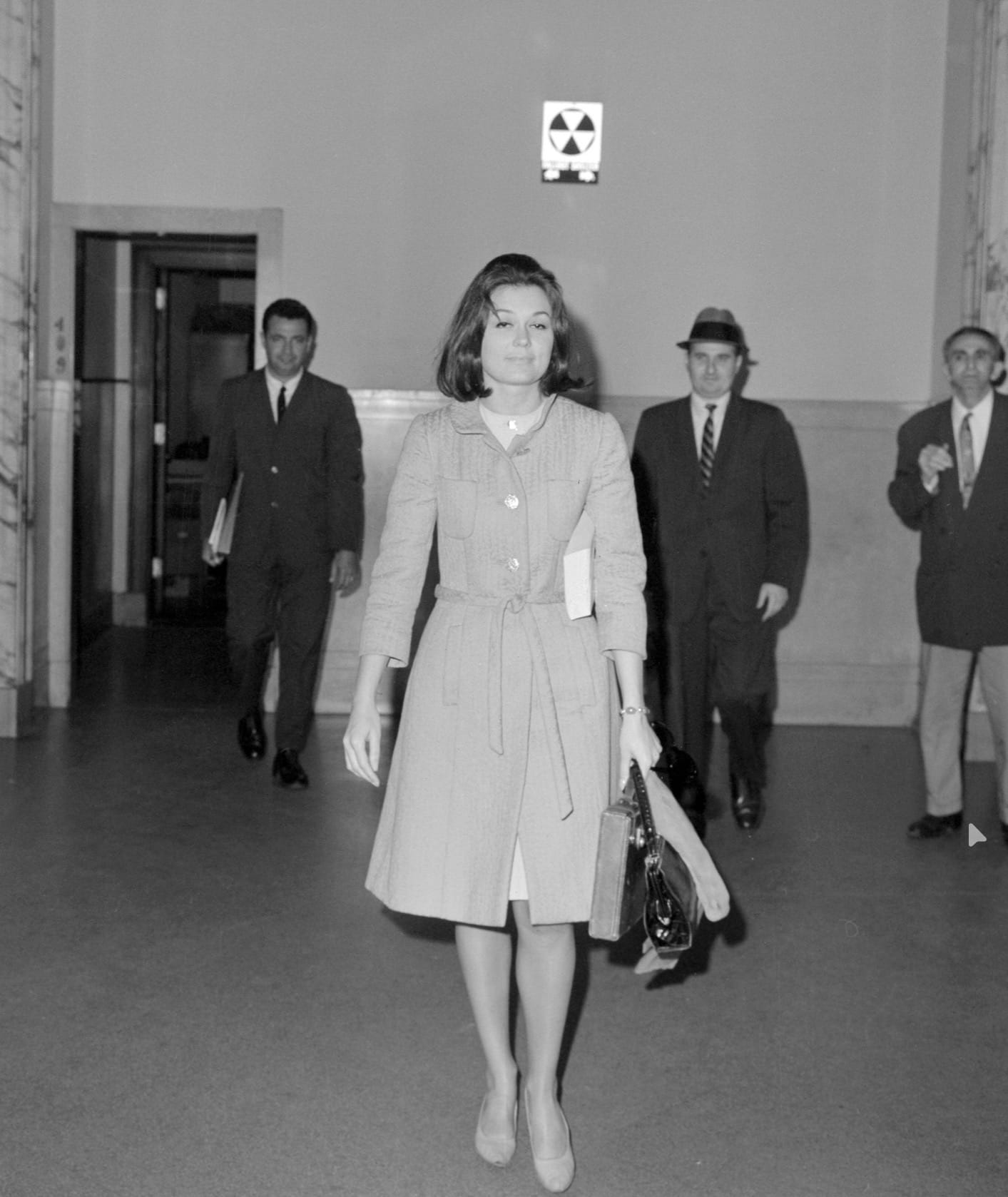
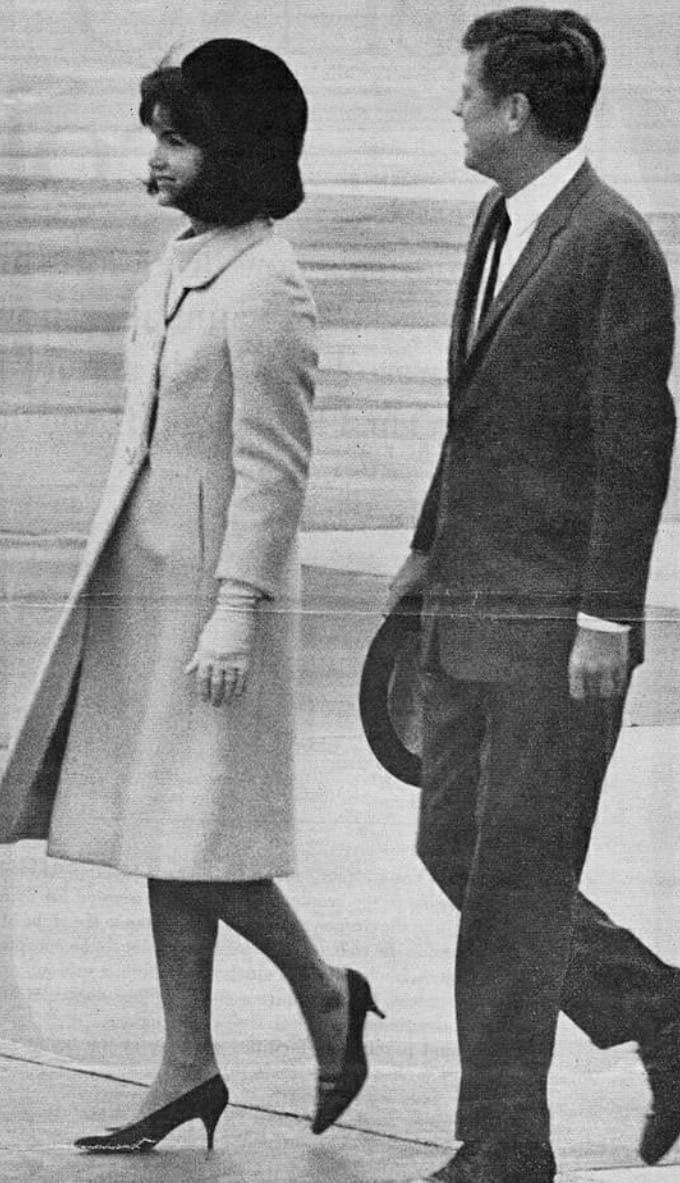
Ms. Steinem is exiting a courthouse in the above photo because she was being sued by Playboy for going undercover as a bunny. Ms. Kennedy has just stepped off a helicopter with her president husband.
Homogeneity seems to be the thing in the early 1960’s. so, the exact length of the coat and the almost exact shape of the collar are less notable than they might be to us. How should we feel about the similarity of the hair?
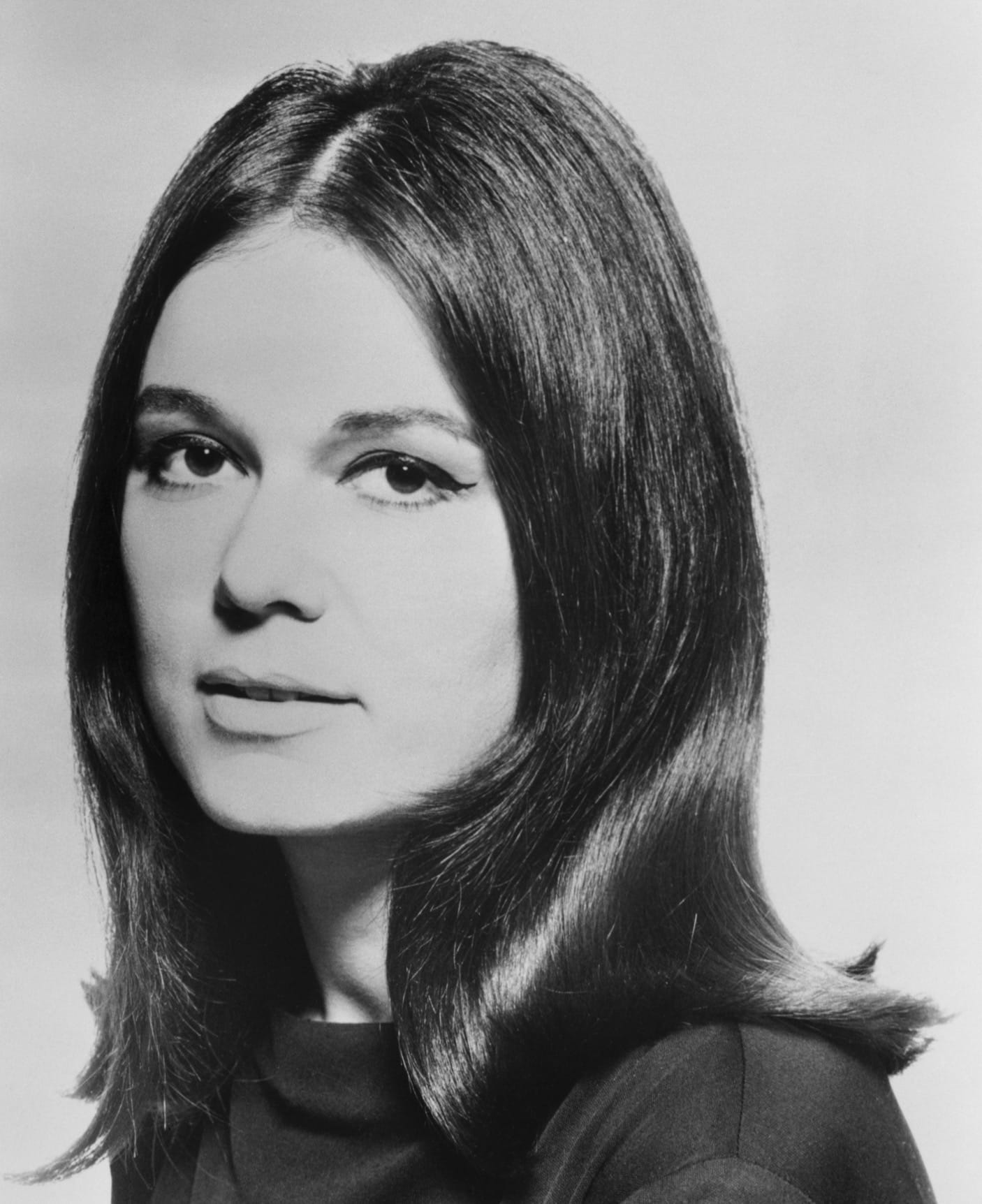
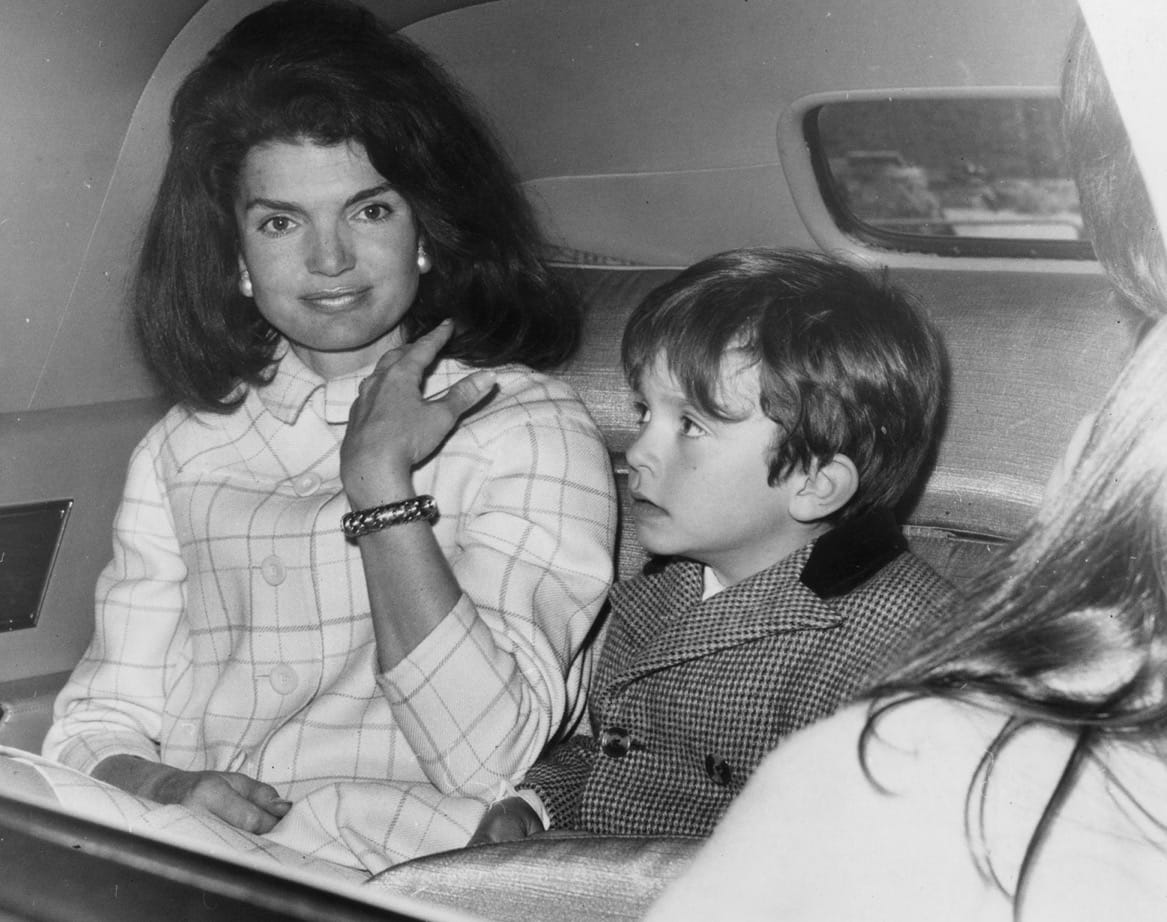
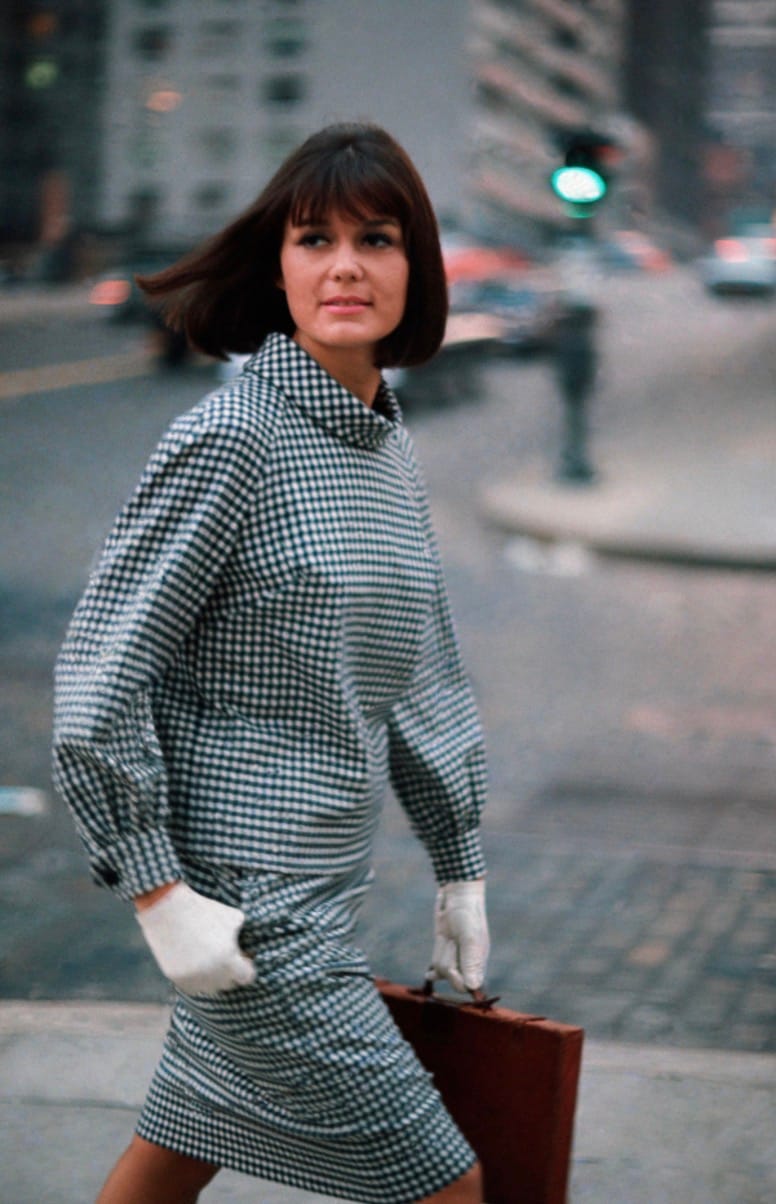
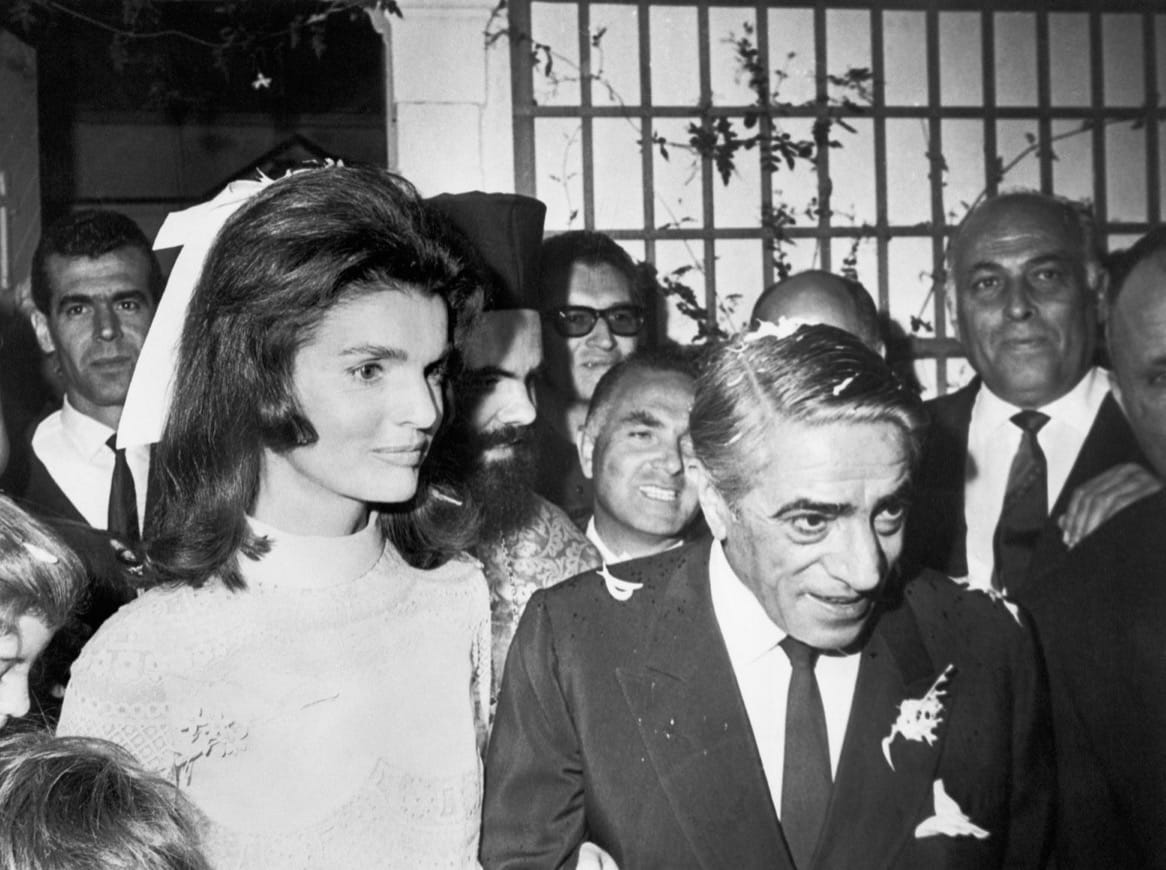
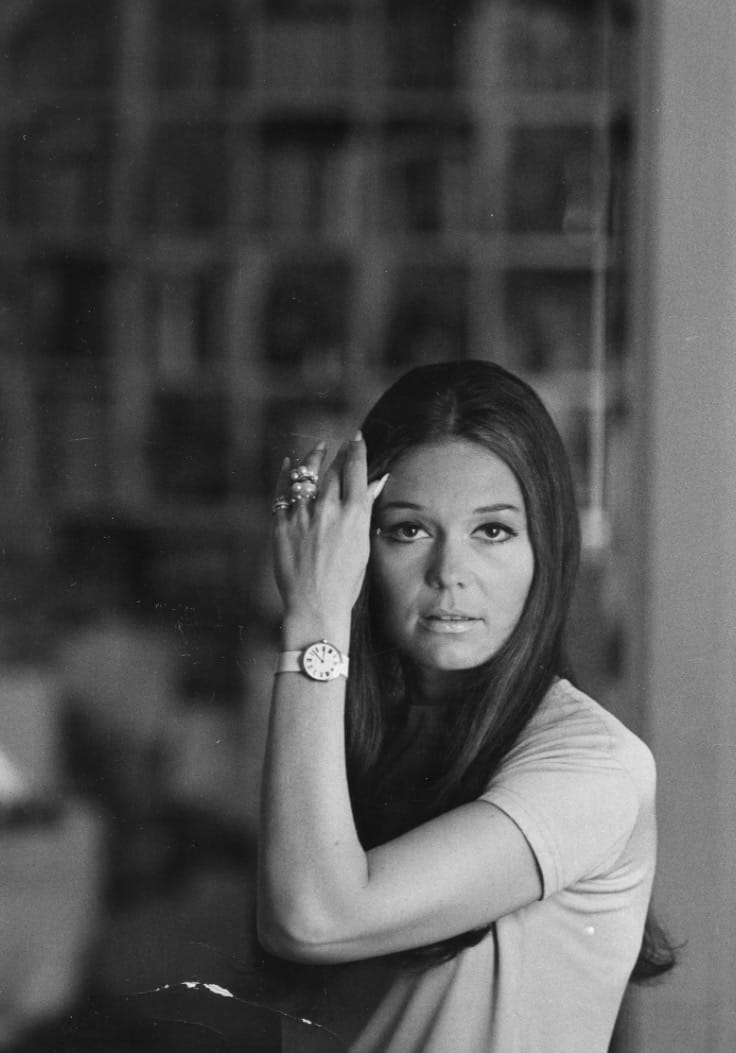
1964 gloria, 1965 Jackie, 1966 gloria, 1968 jackie, 1968 Gloria
Jackie’s husband is shot while sitting right next to her — and the whole world shares her shock and grief — but, she stays the same for the rest of the decade. It’s like she leans into herself by biggering the brown-black bob.
By 1968, though, Gloria Steinem starts to look less like Jackie and more like herself.
In interview #2 of the 8.5 hours of tape she recorded with friend, Kennedy cabinet member and historian Arthur Schlesinger, Jackie Kennedy says, “I think a woman always adapts and especially if you’re very young when you get married and you know, unformed, you really become the wife you can see that your husband wants.”
Just like her statement about there being “2 types of women: those who want power in the world and those who want power in the bed”, I think the above statement about becoming a wife to suit her mate assumes that the listener understands the full extent of the power a wife can have. Schlesinger knew well that some powerful men want a wife that informs, expands and changes their worldview.
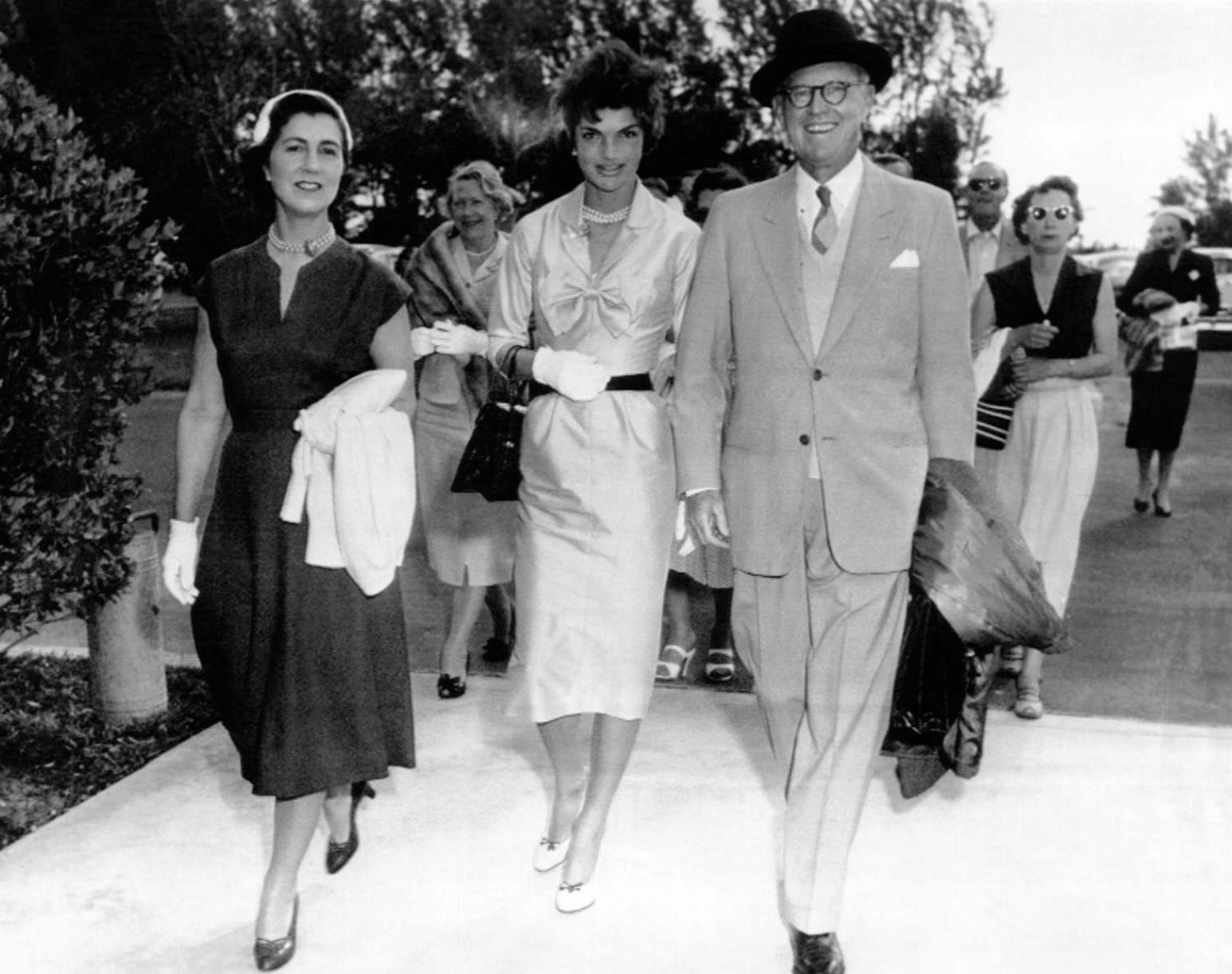
I know it seems counter-intuitive to say that Jackie Kennedy was that kind of wife, given Ms.Steinem’s read on her as frivolous. And, I know that quoting one of America’s most famous misogynists to identify Jackie’s brain as her dominant ‘who’ identifier requires so much evidence…that I’m going to have to write five more essays on her to settle this…but!
When we get into that essay Women and Power I don’t see a missed opportunity by Jackie to have ’power in the world’ by rejecting the position of ambassador to France….Gloria Steinem is still wrestling with Jackie as a powerful counter-argument. Sure, on a resume the job of ambassador is a promotion from the job of wife…but, I think Ms. Steinem and I are both unconvinced that is actually true. Furthermore, I am not sure that a little girl should necessarily look at a female French ambassador and be more inspired to change the world than she would be looking at Jackie Kennedy.
As ambassador to England just before WWII Joseph Kennedy used his image as an enormously rich man in charge of a large voting block to try to have a huge say in how WWII was going to go. One of his many aims was to avoid having his sons killed in battle—and to that end he failed. Permanently opinionated about Europe’s power position in the world, years later Joseph Kennedy was explaining France to everyone at dinner. Jackie quietly interrupted Joseph Kennedy to correct his facts about the French position in WWII. She had read all of de Gaulle’s memoirs — in French. Kennedy Sr. then remarked that she “had guts”, a good thing. That story was retold by everyone at the table and they all agreed that those two got along well for the rest of his life.
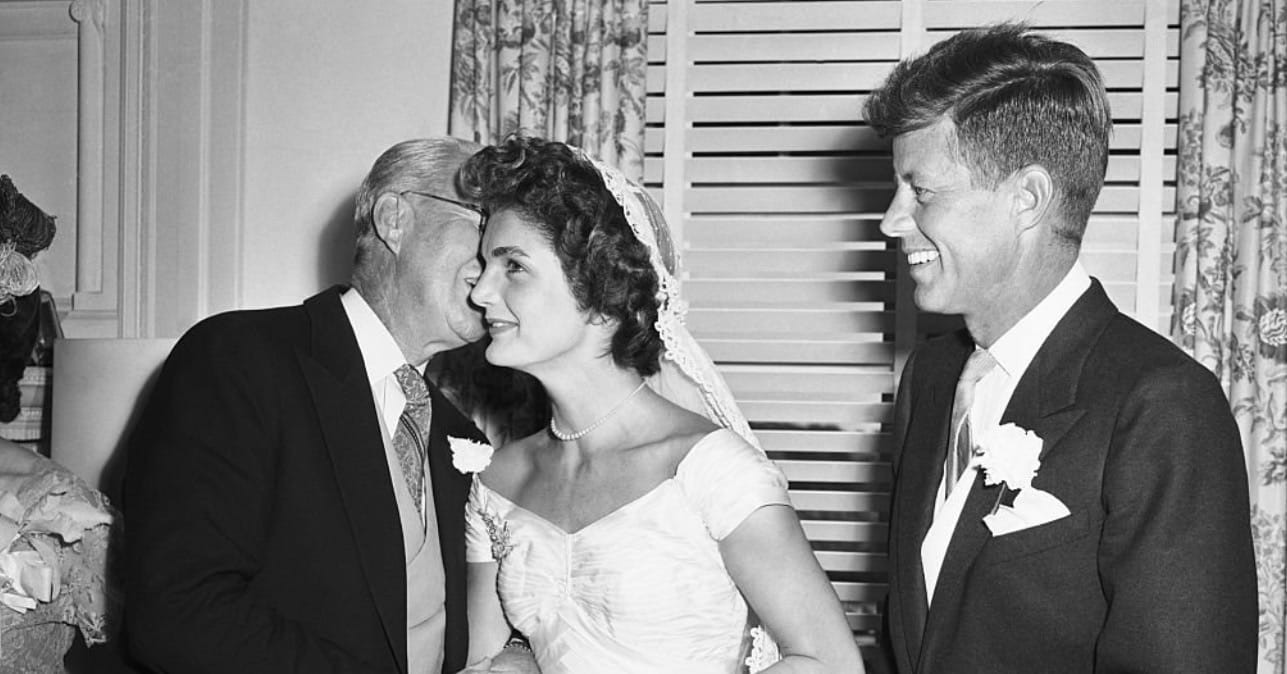
Those young women in Miranda House thought that one young woman from the US might know why the US government armed India’s aggressor; I hope Ms. Steinem knew the answer to that (hugely unsatisfying…we will look at that tomorrow). They asked because understanding the US point of view will help them navigate that power balance better. Jackie knew so much about France that she could inform all of these world-moving ambassadors and presidents about what truly motivated France’s president—an understanding that helped them navigate Vietnam better.
Tomorrow lets look at more photos of Jackie and Gloria in India and do more contrast and compare! Then read some JFK speeches and find the Jackie/de Gaulle influence! And end with an attempt to understand Vietnam and Ho Chi Minh courtesy of Ms. Steinem!