Bare Bodkins and High Necks
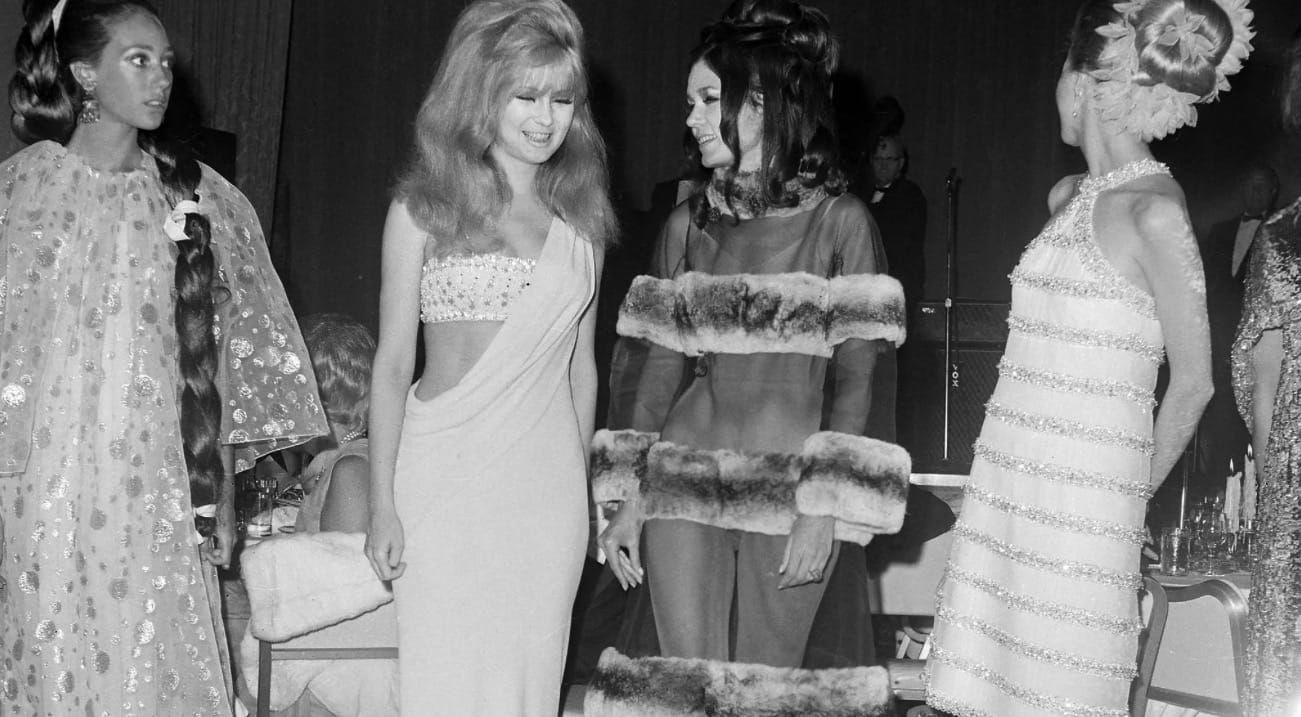
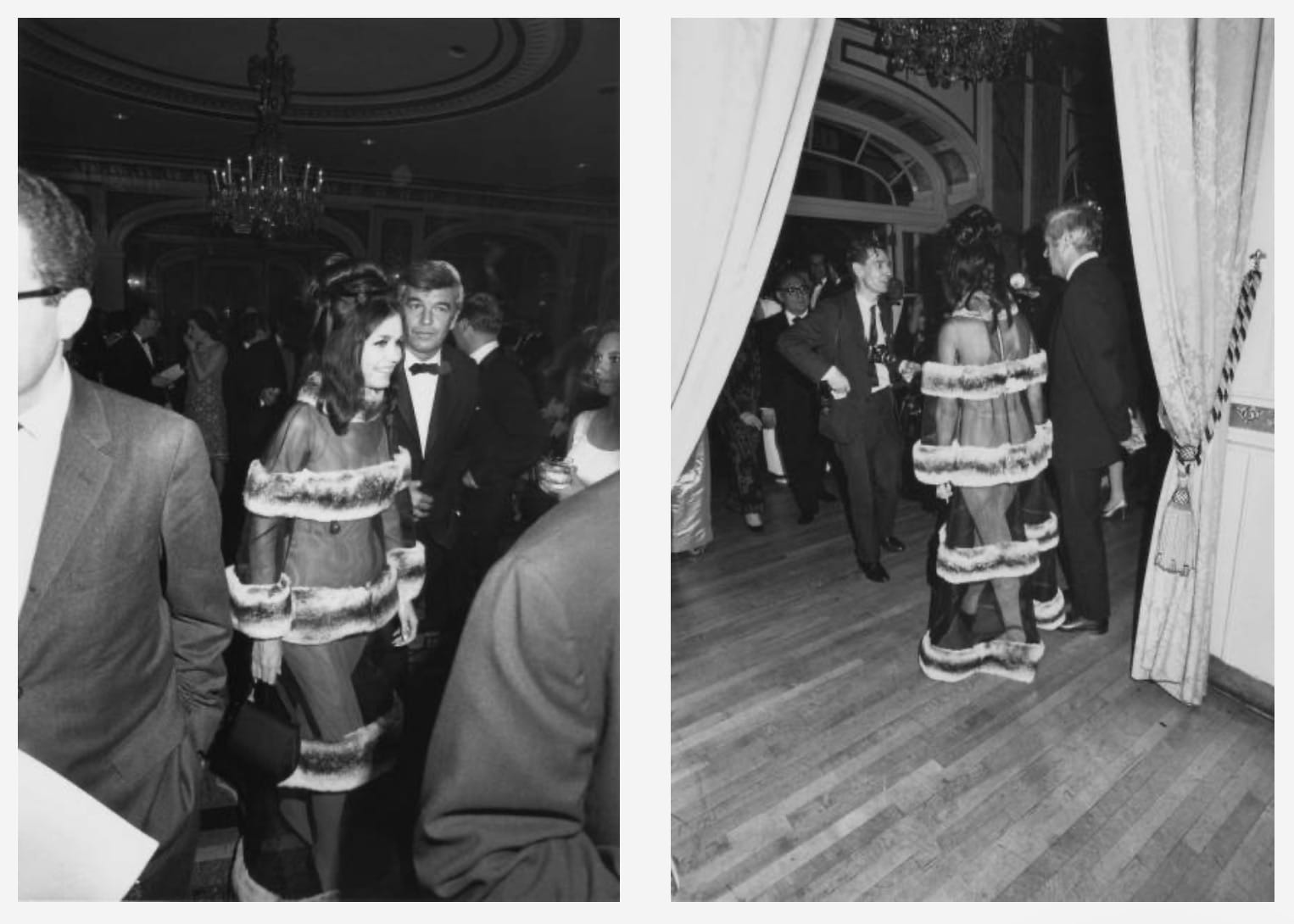
The party planners cast Gloria Steinem as Lady MacBeth. Designer Luis Estevez chose chinchilla.
Was this party the pre-cursor to the Met gala? the Time article on the Bard’s Ball called every yearly fundraiser before this one “dullsville”. Then 2 young socialites were added to the planning committee. Their ’planning’ went like this:
"What shall we wear?"
"Nothing."
They then enlisted their friends to wear "nude" fashions inspired by Shakespearean heroines and created expressly for the occasion by designers.
”The intrepid group was to have attended the opening performance of “All’s Well That Ends Well” at the Delacorte Theater in Central Park, circulating at intermission so that the audience of 2,000 could play the game of “Does she or doesn’t she have anything on underneath.”
But, the show got rained out, so they just flashed the 500 at the party at the Plaza. In many books, interviews, essays and her bio-play, Gloria recounts the frustration and embarrassment of getting kicked out of the lobby of the Plaza while she was trying to do her day job of interviewing celebrities, because, the Plaza didn’t allow women to be ’unaccompanied’. The clerk that kicked her out implied that she was a prostitute. Well! If you put that episode into the context of the other times she is welcomed into the Plaza — in apparent undress to raise money for charity, invited by New York’s powerful people — the paradoxes of 2nd wave feminism start to boggle the mind.
Members of the New Society wasted no time congratulating themselves on the party. And why not? It attracted more than 500 guests, raised $55,000 for the festival, which, in addition to offering free Shakespeare in Central Park six nights a week all summer, is planning to put on a winter season of contemporary plays. At least, last week's party was contemporary.
Joe Papp, the head of the Public, said, ”Expenses had been trimmed to a minimum by using only pink tablecloths and pretty women.” Thank goodness this pretty woman lived long enough to spend the next half a century talking us through these apparent contradictions! This was before her feminist awakening…however, her nearly bare bodkin appears in magazines on occasion for the remainder of the 20th century. This is not off-brand for 2nd wave feminism Steinem-style.
Only one of the below fully went for it, though—no bodysuit. Can you spot the only ombligo?
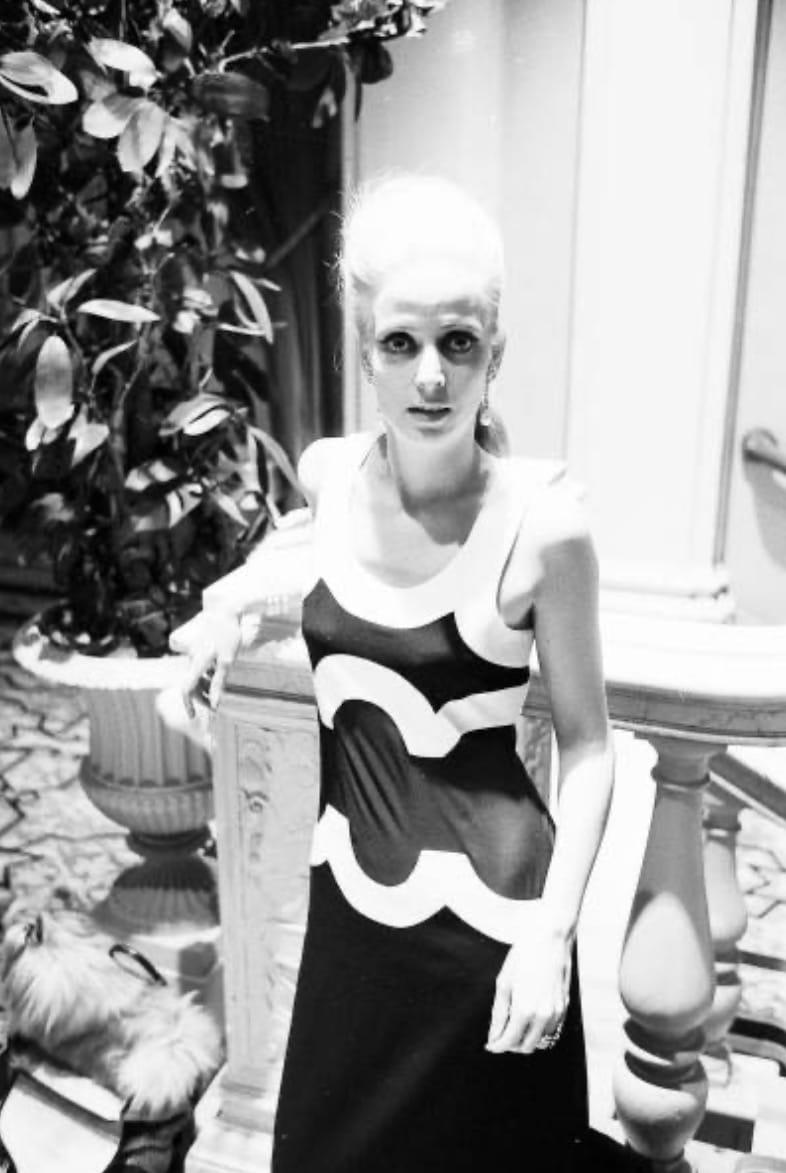
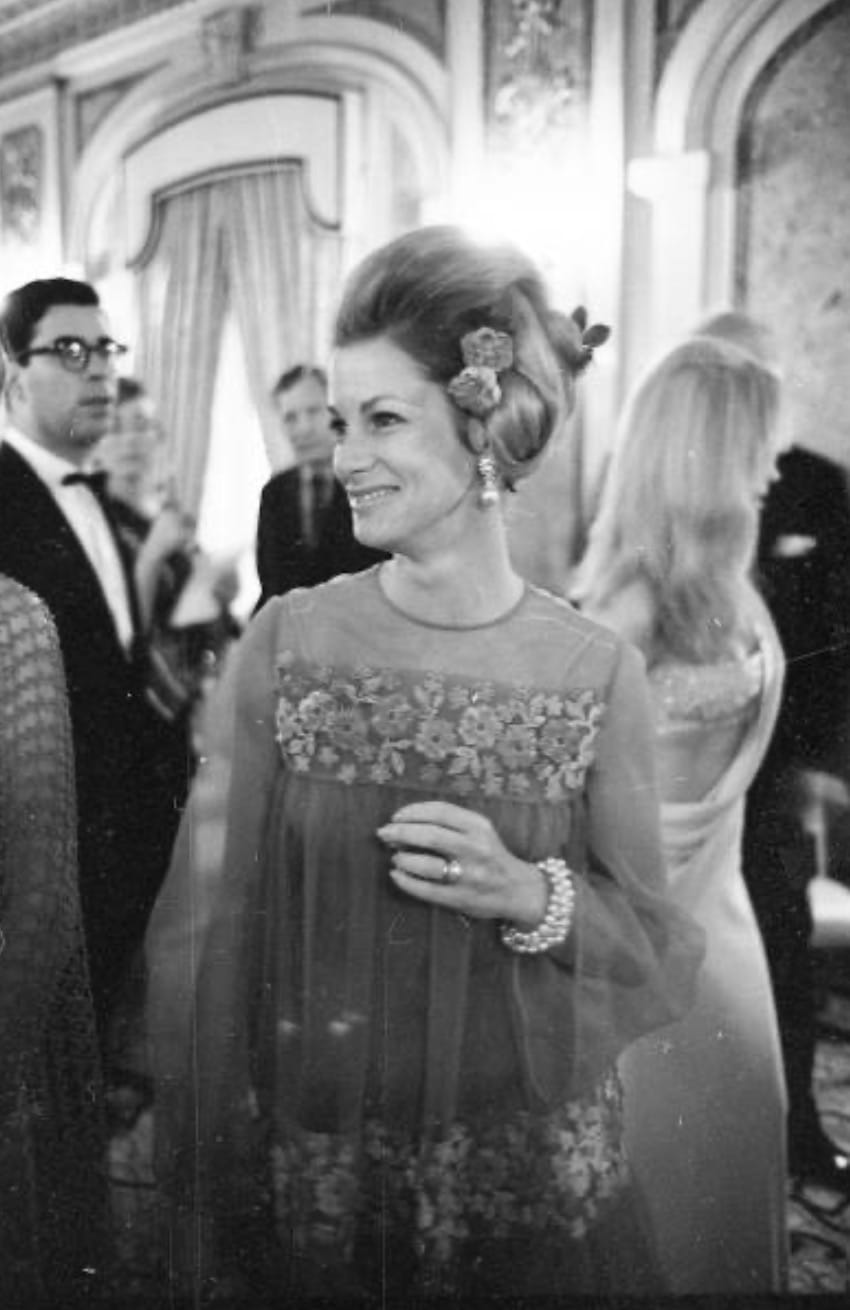
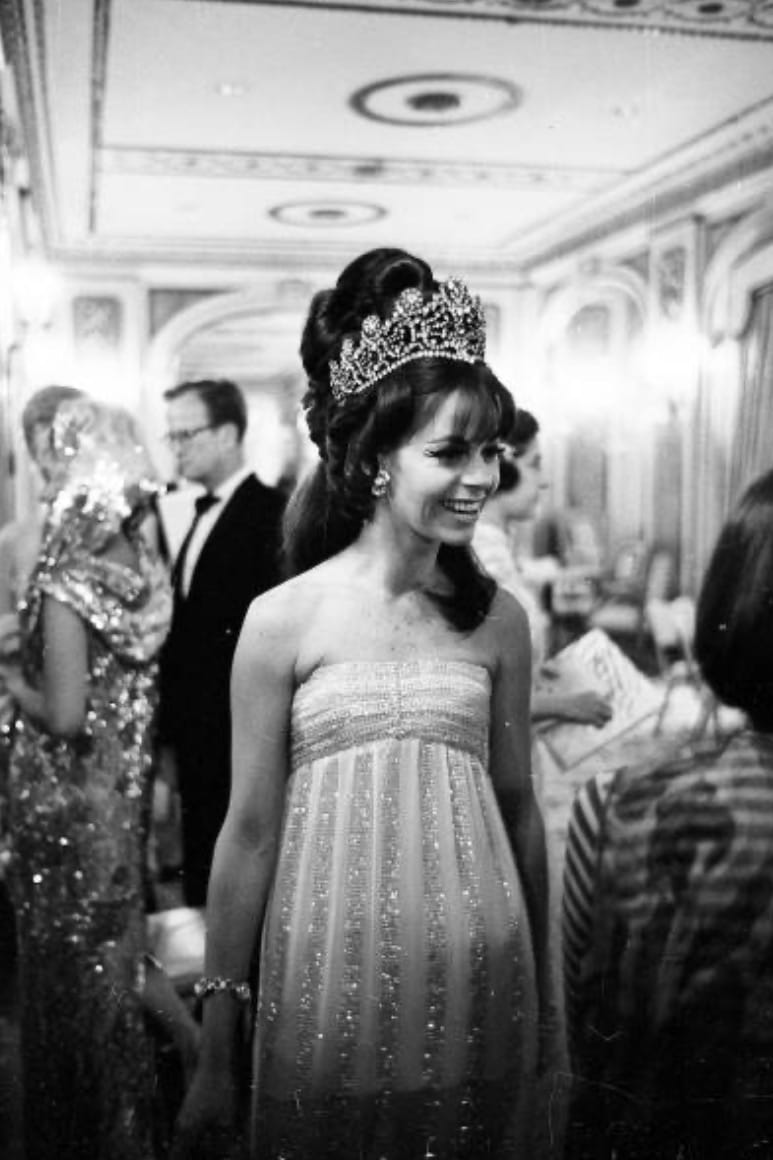
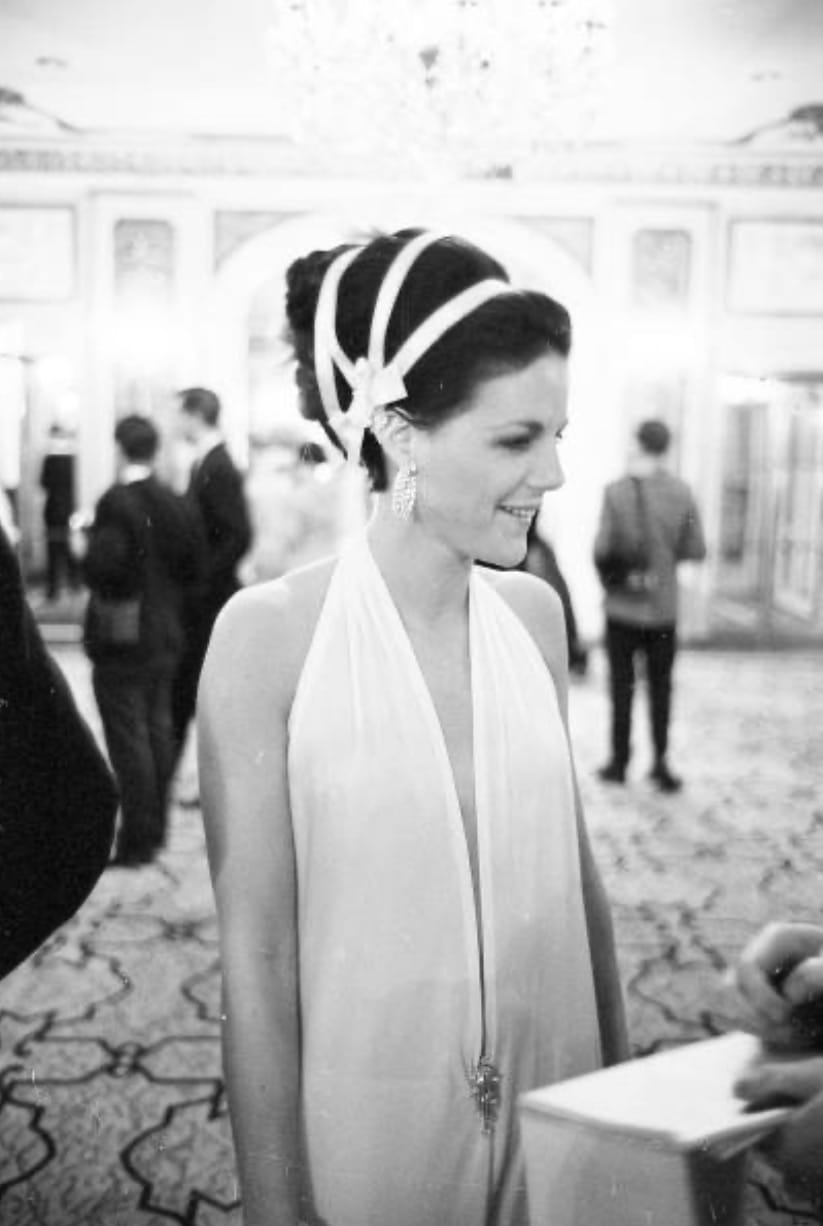
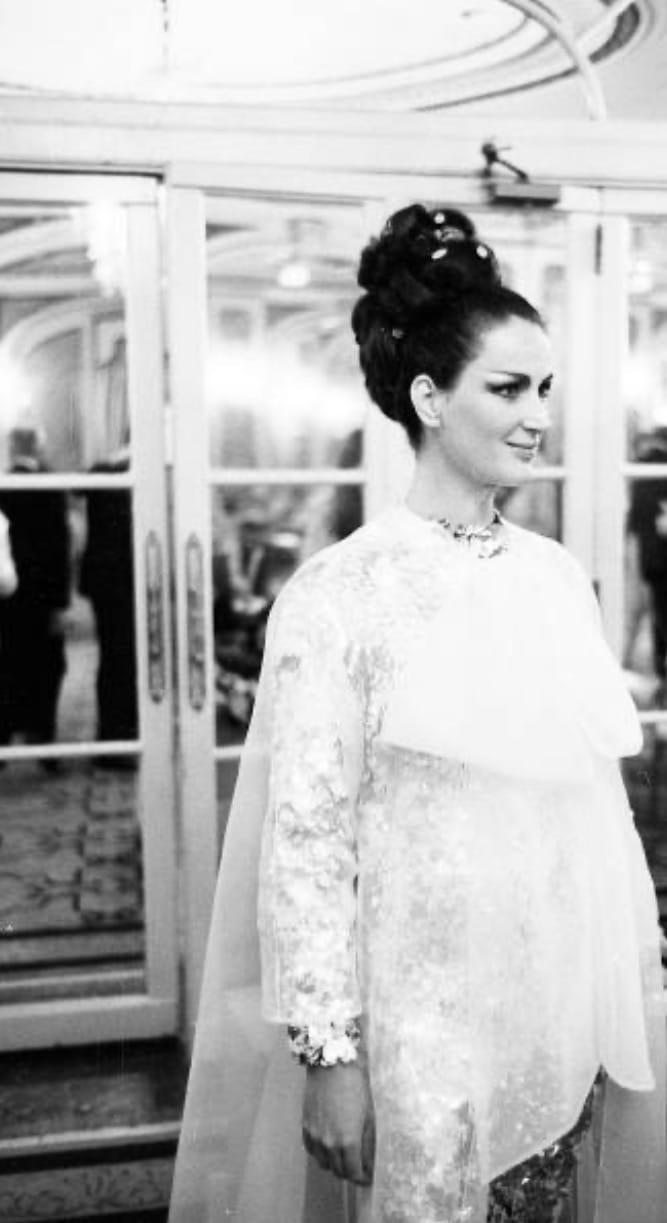
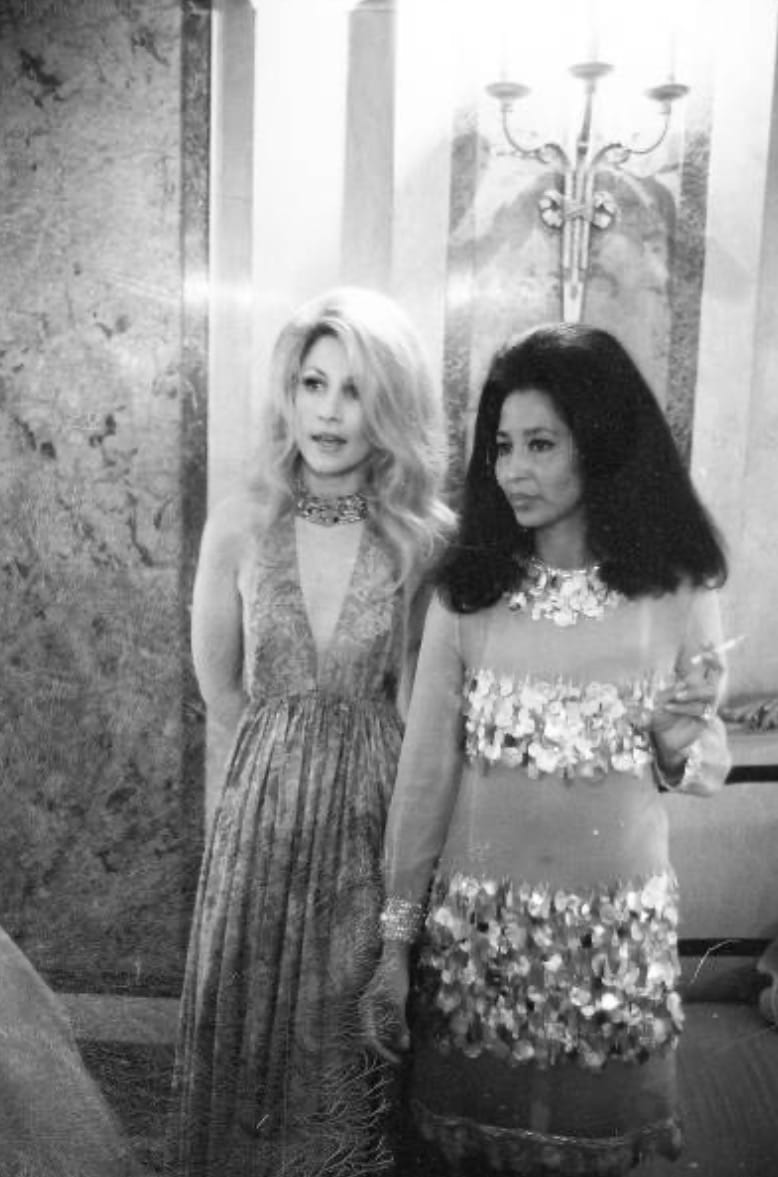
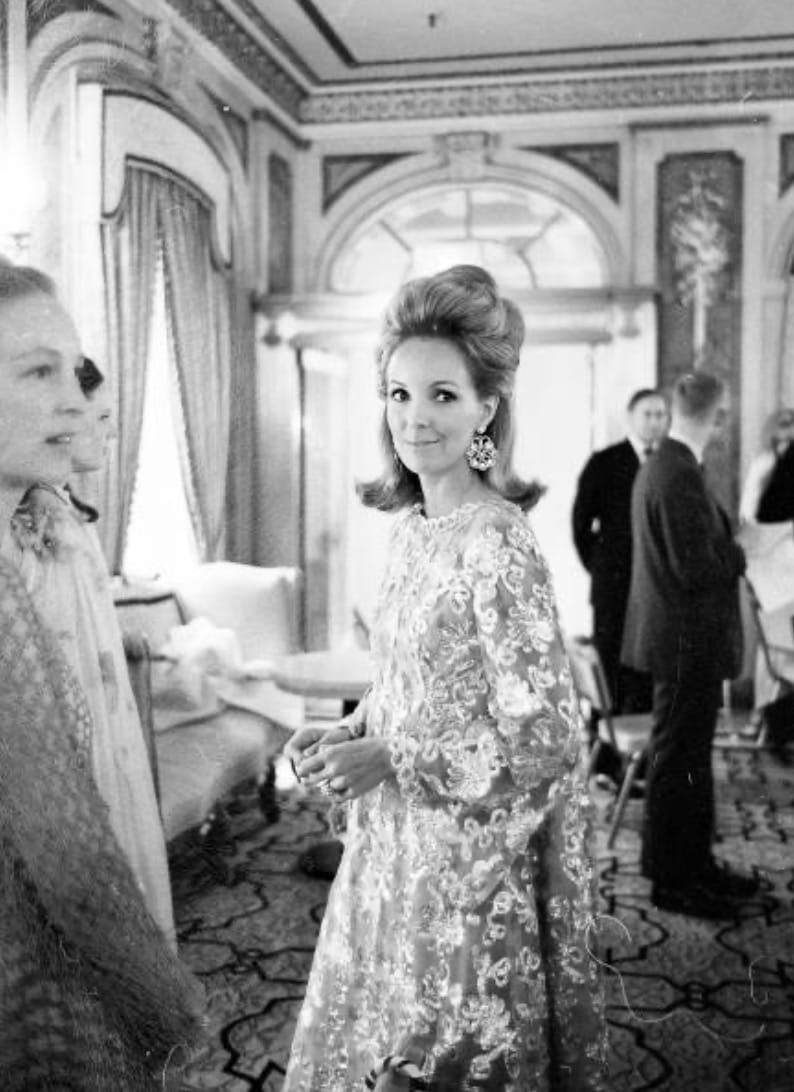
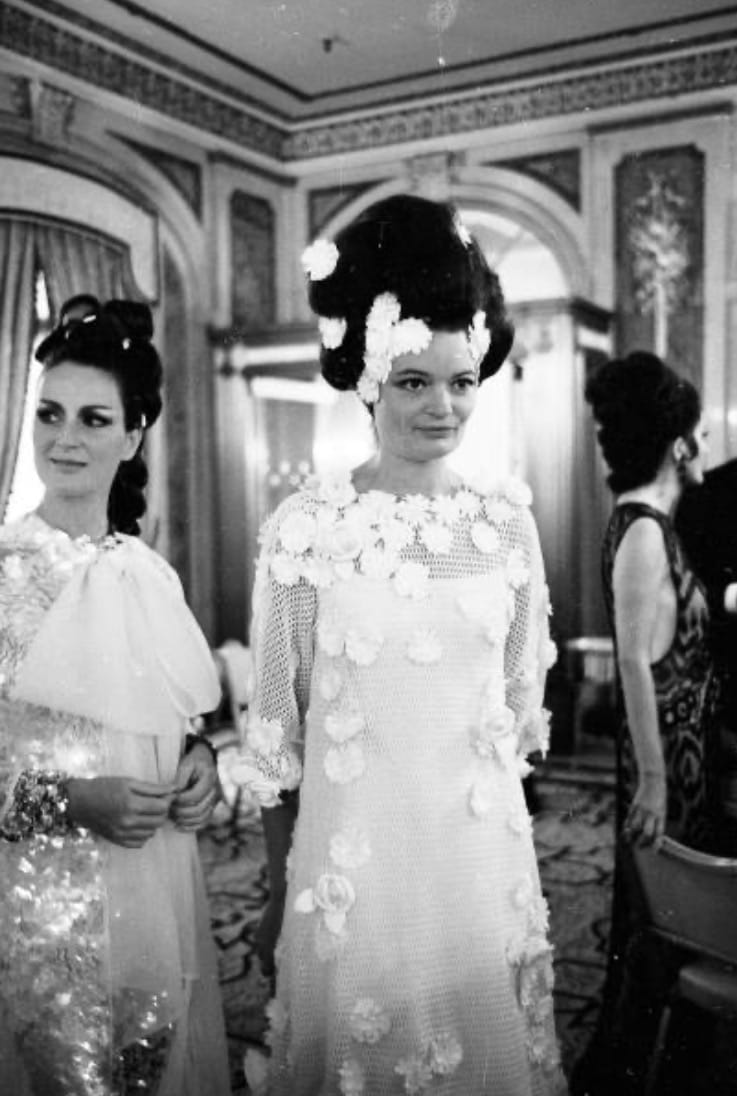
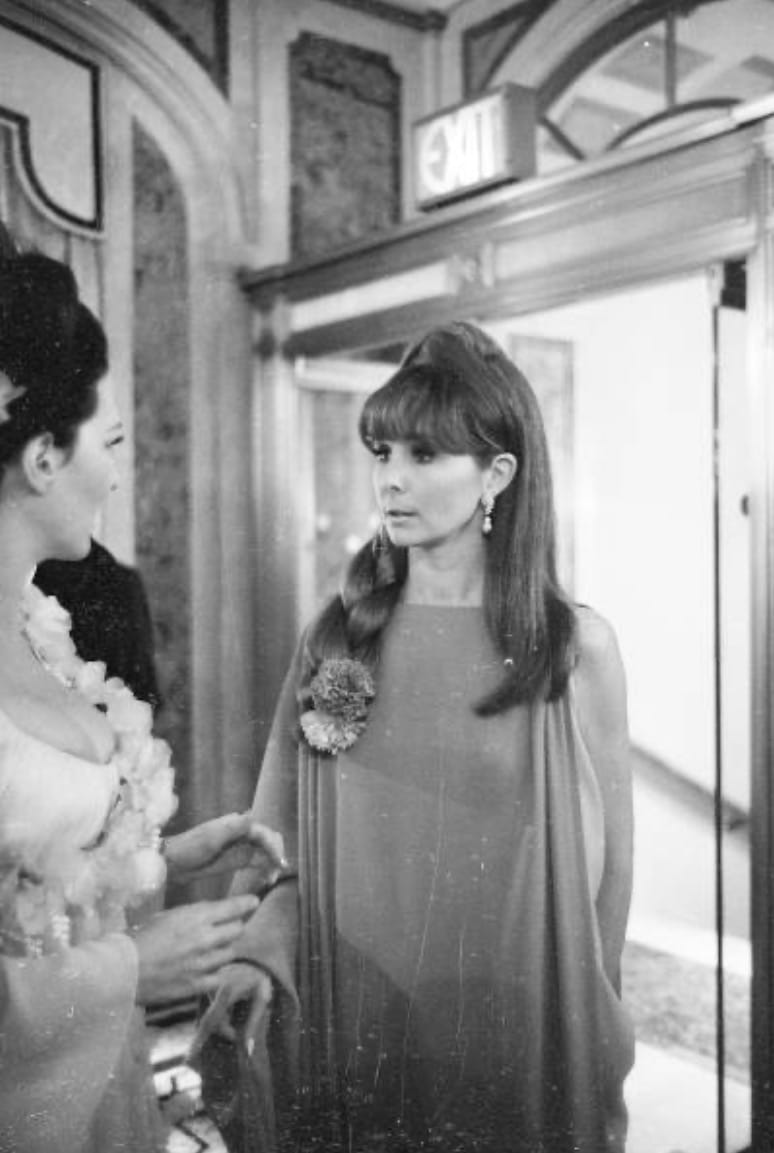
hint: she’s Cleopatra and Yves Saint Laurent designed her dress. When asked what she was wearing underneath, “just me”
I bet some of you can actually call-out the characters. I only know the shows I have worked on, so, I’m way out of my depth…oooo…maybe some of you can call out the designers, too!
In order, from left to right and top to bottom:
- Contessa Christina Paolozzi Bellin as Doll Tearsheet from Henry IV, Part 2 designed by John Kloss
- Robin Butler as Helen of Troy in Troilus and Cressida designed by Christian Dior
- Ellin Sadowsky as Octavia in Antony and Cleopatra designed by Shannon Rodgers
- Mrs Montague Hackett as Hermione from A Winter’s Tale designed by Pucci
- Mrs Harry Theodorocopoulos as Puck from Midsummer Nights Dream designed by John Moore
- Baby Jane Jolzer as Ariel from The Tempest designed by Simonetta, and China Machado as Cleopatra designed by Bill Blass
- Baroness Gottfried von Meyern-Hohenberg, as Katherine of France, Henry V by designed by Chester Weinberg
- Chessy Raynor as Titania from Midsummer Nights Dream designed by Bill Blass
- Finally, Shirlee Fonda as Virgilia from Coriolanus by Frederic Fourquet…yeesh! did anyone get any part of that one?
Can you guess which one of the below is Kate from Taming of the Shrew?
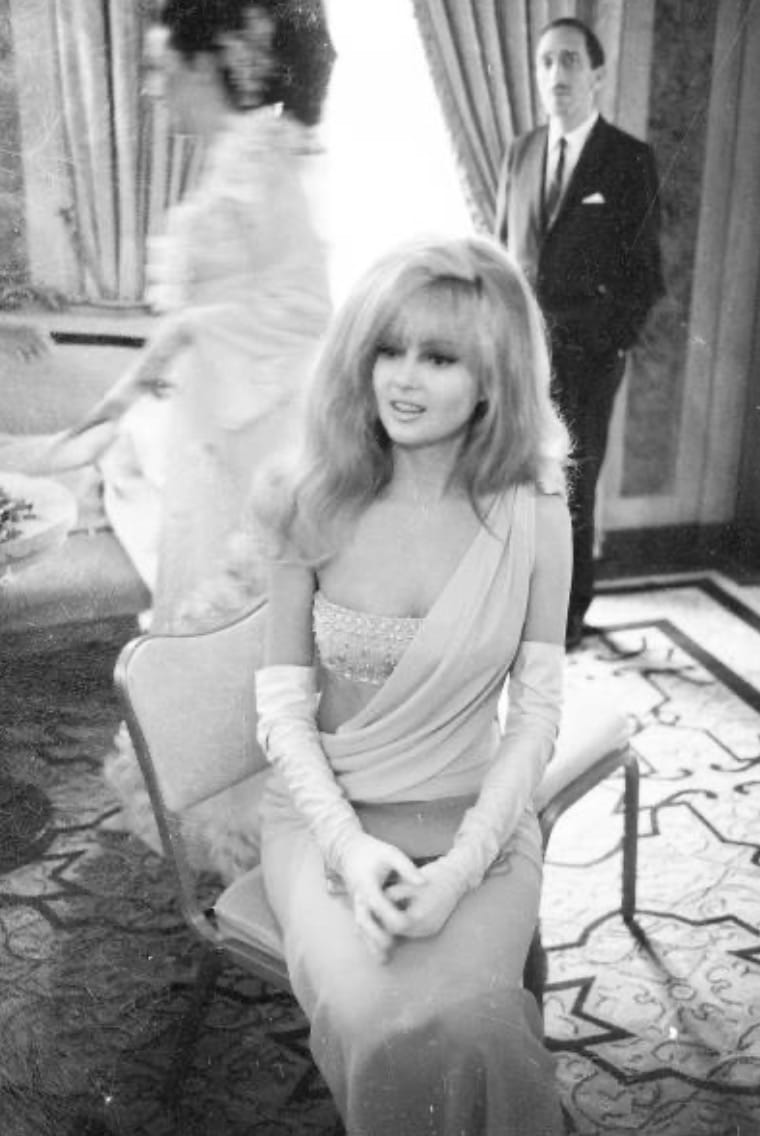
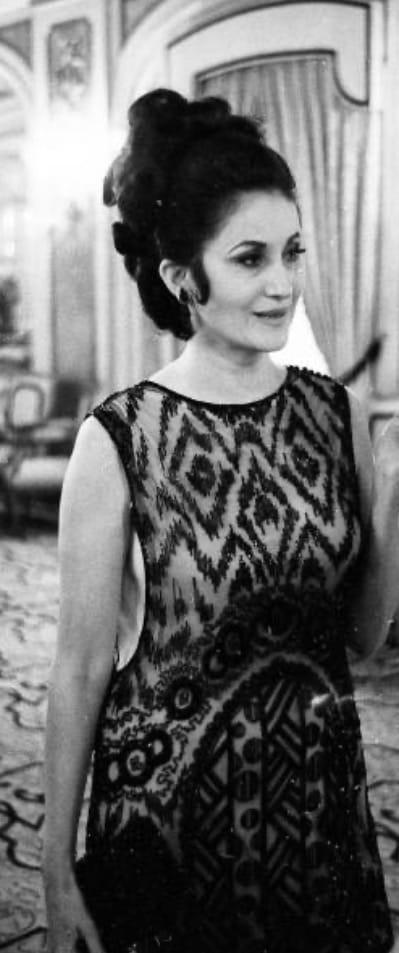
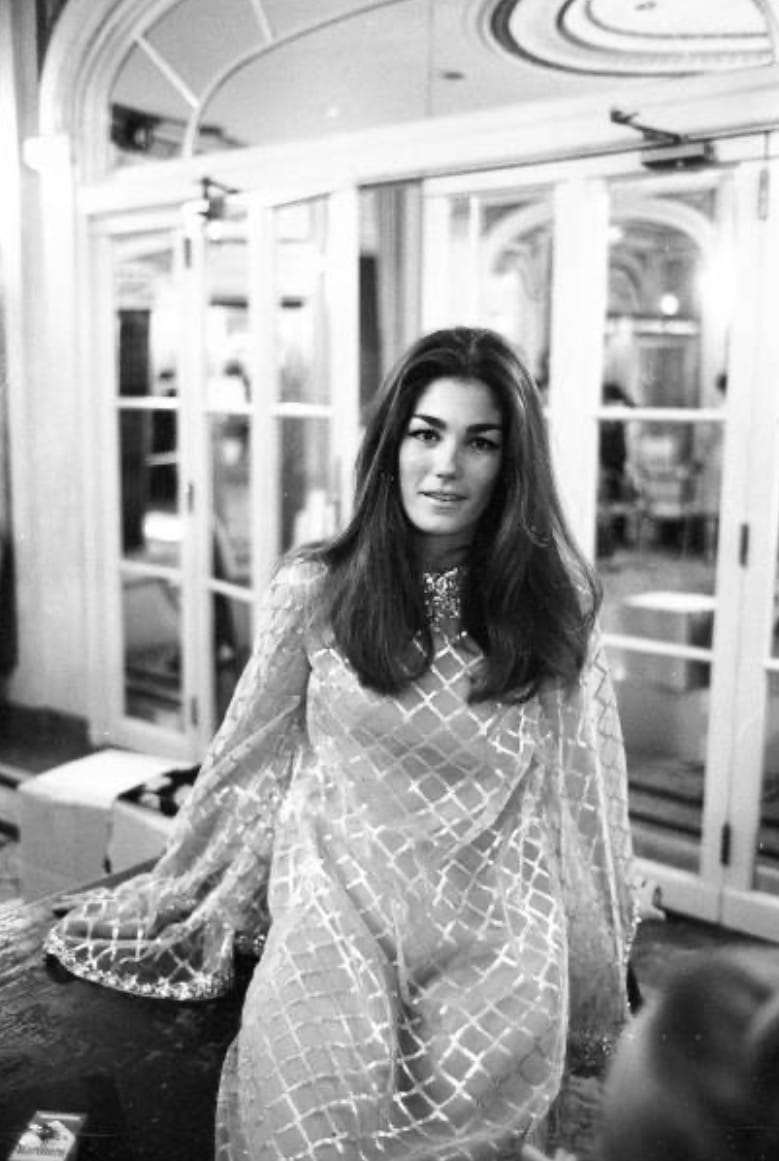
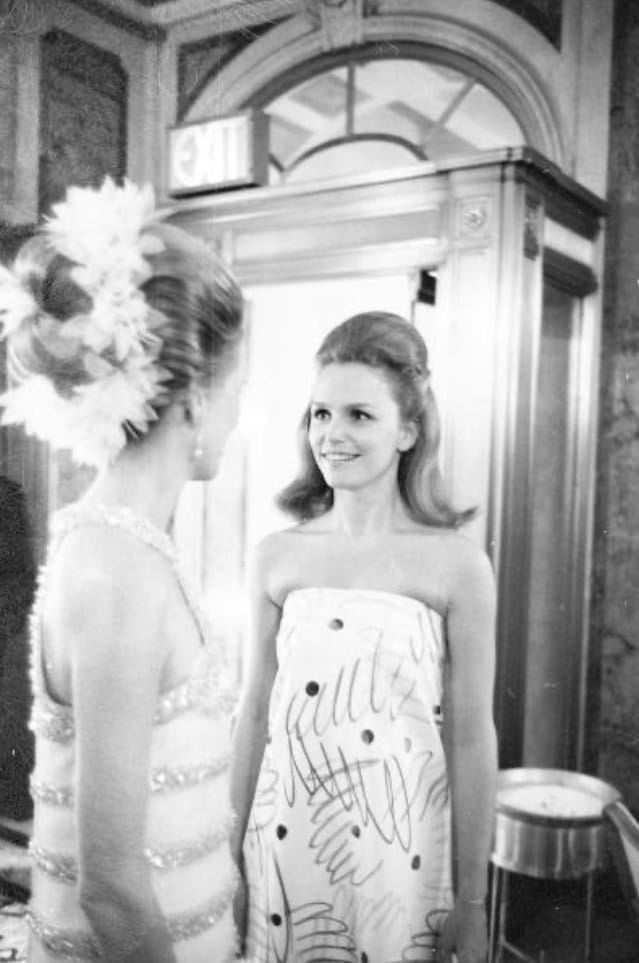
- Pamela Tiffin as Kate from Taming of the Shrew designed by Tiziani
- Katherine Balfour as Calpurnia designed by Pauline Trigere…who was pissed that she wore a hacked up nightgown instead of a body stocking
- Minnie Cushing as Desdemona from Othello designed by Oscar De La Renta
- Lee Remick as Hippolyta in Midsummer designed by Rouben Ter-Arutunian
Pamela Tiffin, the Kate is a good friend of Steinem’s. She is married to Steinem’s coworker/boss, the owner/editor of New York magazine, Clay Felker.
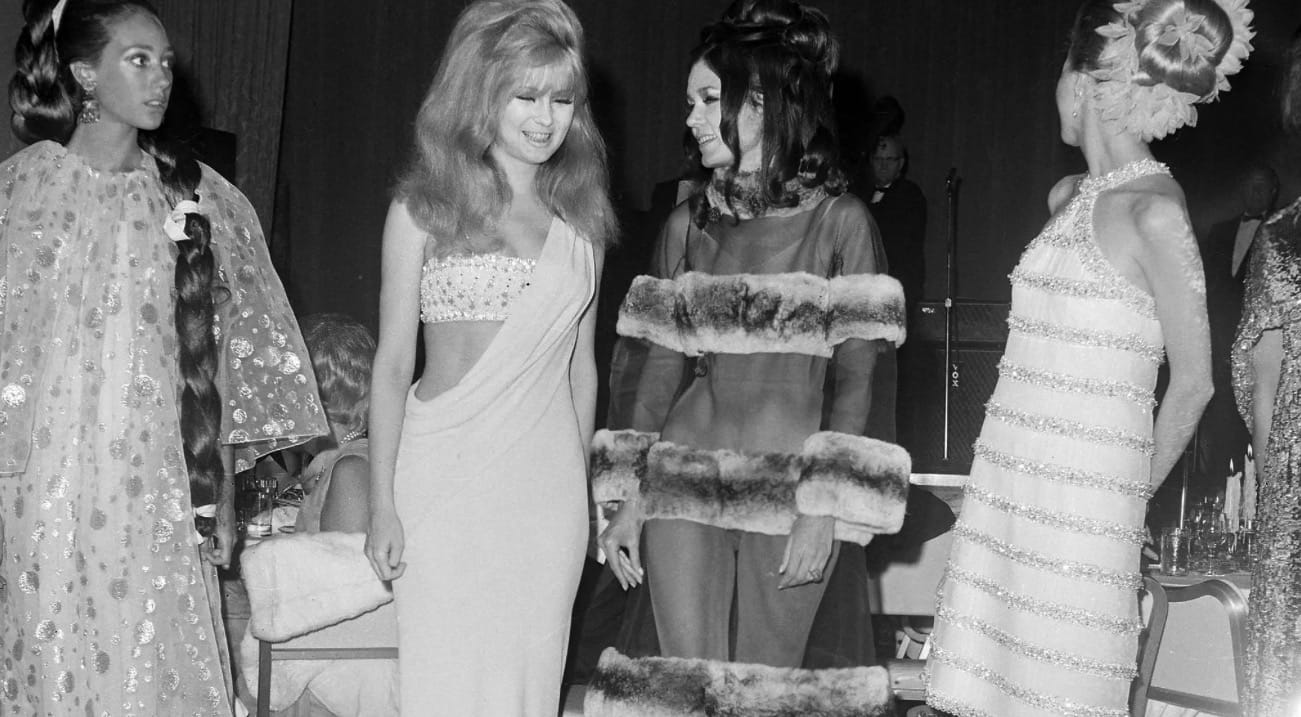
Pamela Tiffin is an actress and China Machado, the one with the bellybutton above is a model and fashion editor of Glamour. Ms.Machado wins the most naked award, but if Gloria Steinem had drawn a dot on her outer-most body stocking, she would have won, black net doesn’t bounce any light like white does— a window without curtains, if you will. Two of the few career women in the room were the only ones on theme. The only other writer in the room is the woman that wore what she wanted under the gown; she also felt no need to maintain a super-slim figure the way all those socialites seem to. Mixing these writers, actors, models and designers in with the socialites was not the usual for these galas. That was the work of the organizer, who selects the invitees to her parties ”according to personality”.
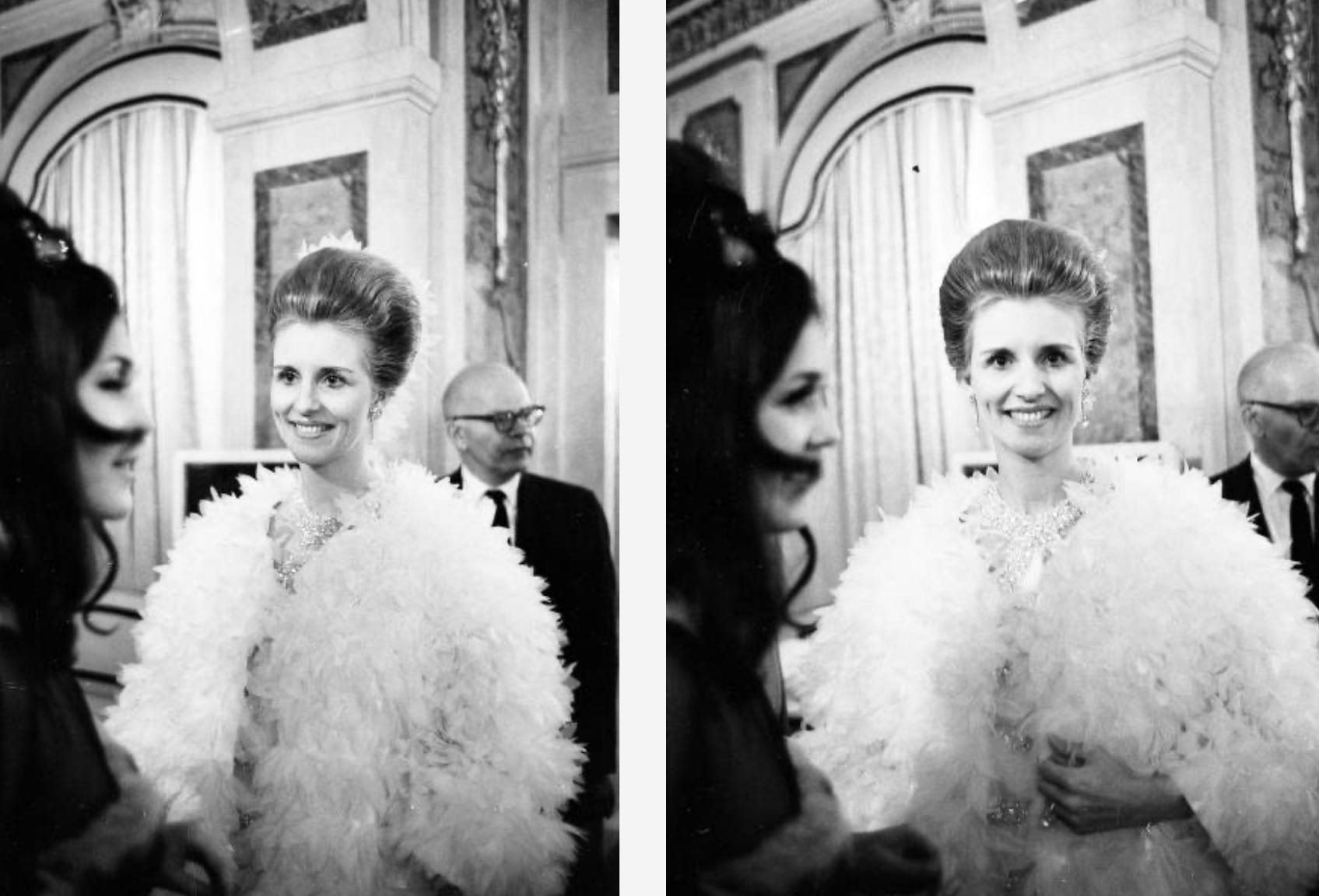
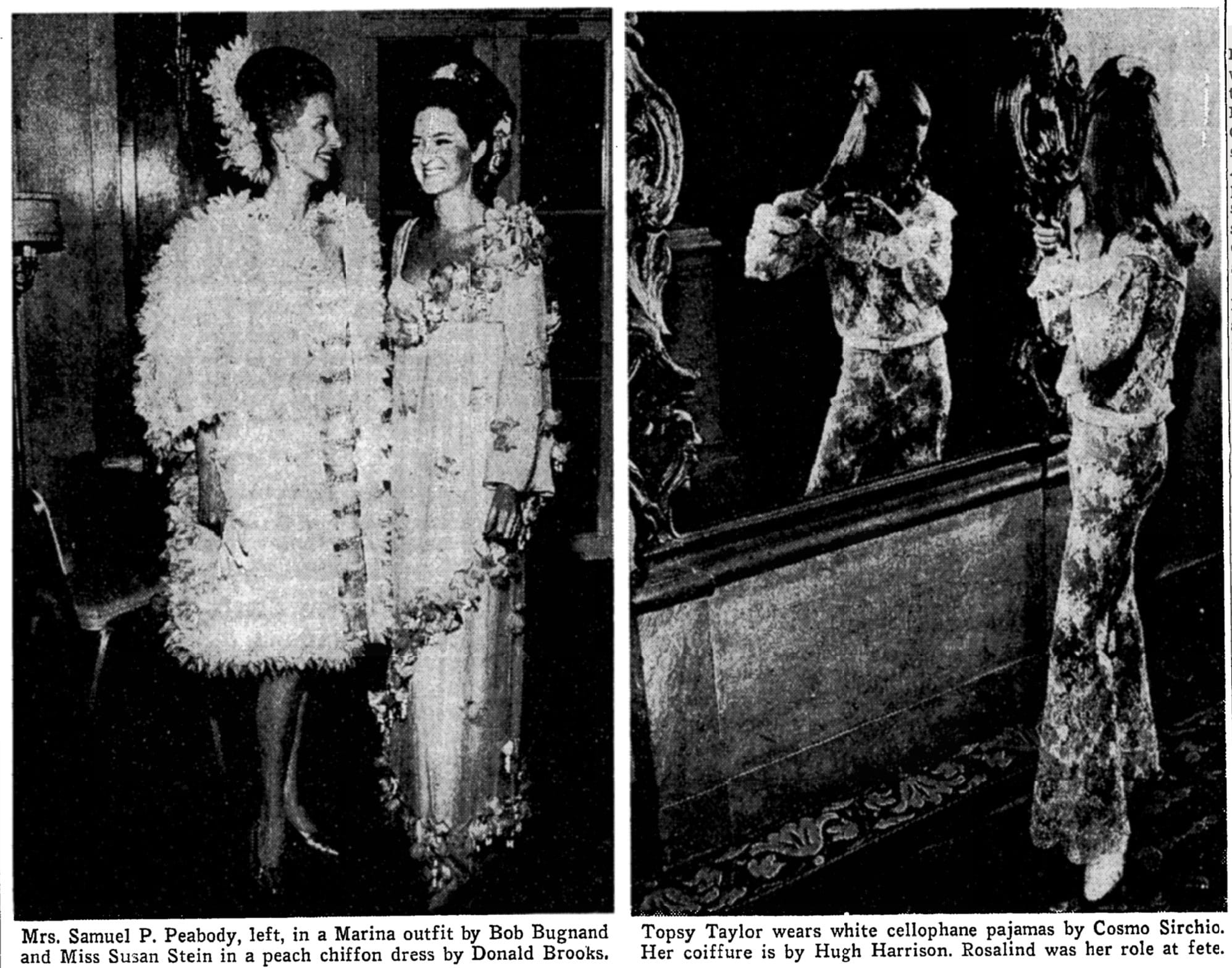
this is mrs. Samuel peabody, the head of the party, talking to Gloria. She recruited the young socialites to dream up something this wild.
One of the young planners was only 22, already married, and well-known as the female half of the most popular pair of jet-set “beautiful people”.
Amanda Burden, co-chairman or not, finally decided to take no chances—perhaps in honor of the fact that she has been named the Best Dressed Woman in America. "I do love the new things, but I think my husband might object," she said. So she picked out a real Shakespearean number with long sleeves, high lace collar and floor-length hoop skirt from the festival's storage shop.
So, the best dressed woman in America wore the weirdest worst outfit at the behest of her husband? She wears the opposite of what she and her co-conspirator dreamed up? Not even a nightgown under a sheer sheath for her?
This is actually very very similar to Taming of the Shrew. Her husband denies her designer clothing, claiming it is not good enough for her. He calls it “lewd and filthy” among other things and asks for a bigger one. Katherine responds that
“I’ll have no bigger. These doth fit the time.
Gentlewomen wear such caps as these.”
He rips it to shreds and does the same to a dress that he ordered be “of the fashion and the time” but rages that he did not ask for the tailor to “mar it to the time”. Katherine says,
I never saw a better fashioned gown,
More quaint, more pleasing, nor
More commendable.
Belike you to make a puppet of me?
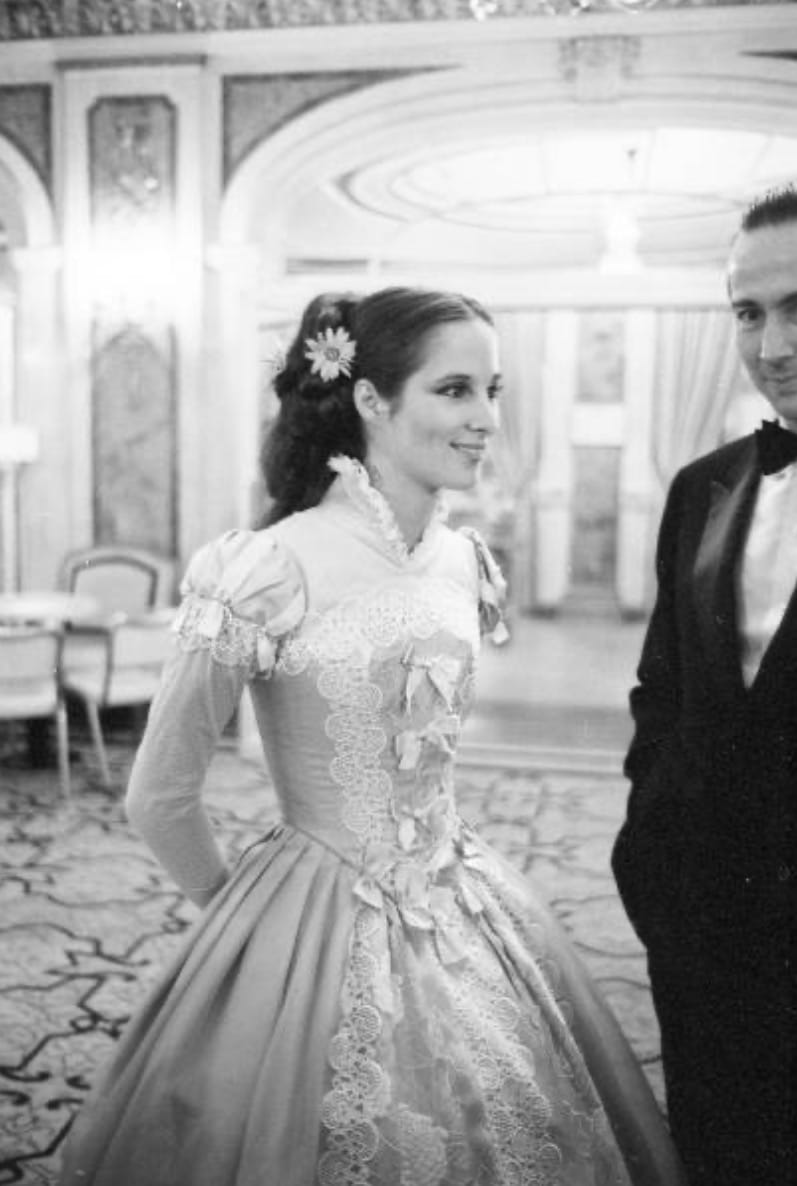
Sure, the rest of the women, especially Steinem, look tacky and wacky and “marred to the time”. But, the one who wore what her husband wanted her to really does look like a puppet.
Kate throws off her hat because her husband says, “it becomes you not”. And then, she, the chief objector to the patriarchal state, gives that heartfelt lecture on why objecting makes women unattractive and then lists merits of obedience.
What did Mrs. Anspacher, the socialite who saved Shakespeare in the Park, think of this first-of-its-kind society gala? She was 80 at the time, and attended on the arm of the founder and head of Shakespeare in the Park and the Public Theater, Joe Papp. Five years earlier the Parks Commissioner, Robert Moses, demanded that Shakespeare in the Park charge admission (I wonder why…I will resist reading that kajillion page book about him to find out). She donated the money to appease/pay-off Moses and the Parks Department and keep it free.
Her late husband was a poet and a playwright who shows up in the Times speaking powerfully for suffrage. He saw “man on the bumptious pinnacle of his own self-esteem” and questioned the sincerity of the anti-suffrage woman with a “Mona Lisa Sphinx-like smile when she calls herself the weaker sex”. “We increase sex antagonism by keeping the franchise from women…the control of women by men is bad for both. The control of men by women is wrong.” He explained that poverty is the real problem, and that “exploitation of defenseless women for the means industrialization does more damage to the home than the vote ever could” but, that in every segment of society suffrage is good for marriage, good for homelife.
I would have loved to hear her take on this party…mostly because that 20 year old party-thrower in the petticoat and high collar was the only woman in the room dressed like the most bad-ass feminist in Mrs. Anspacher’s life, her mom.
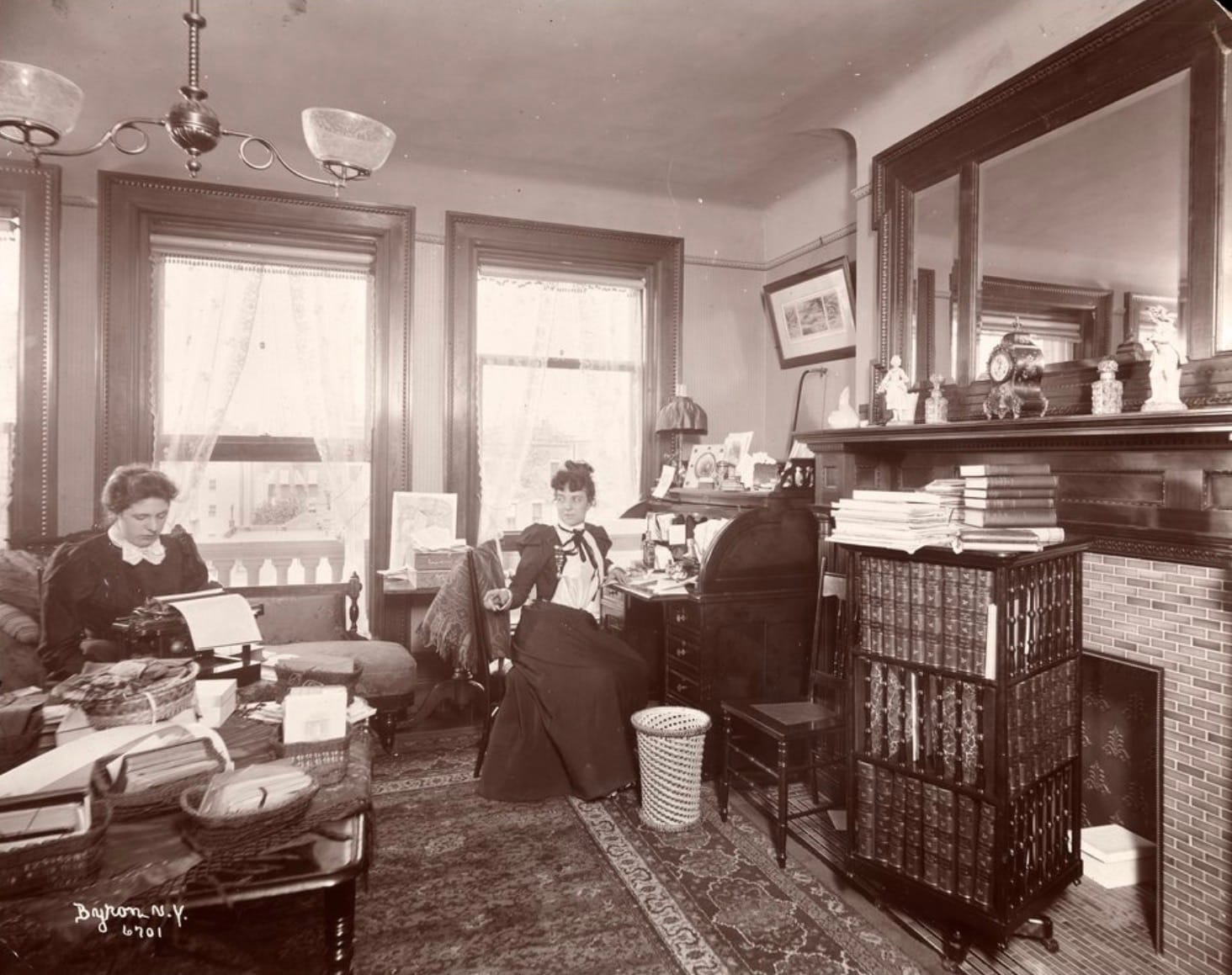
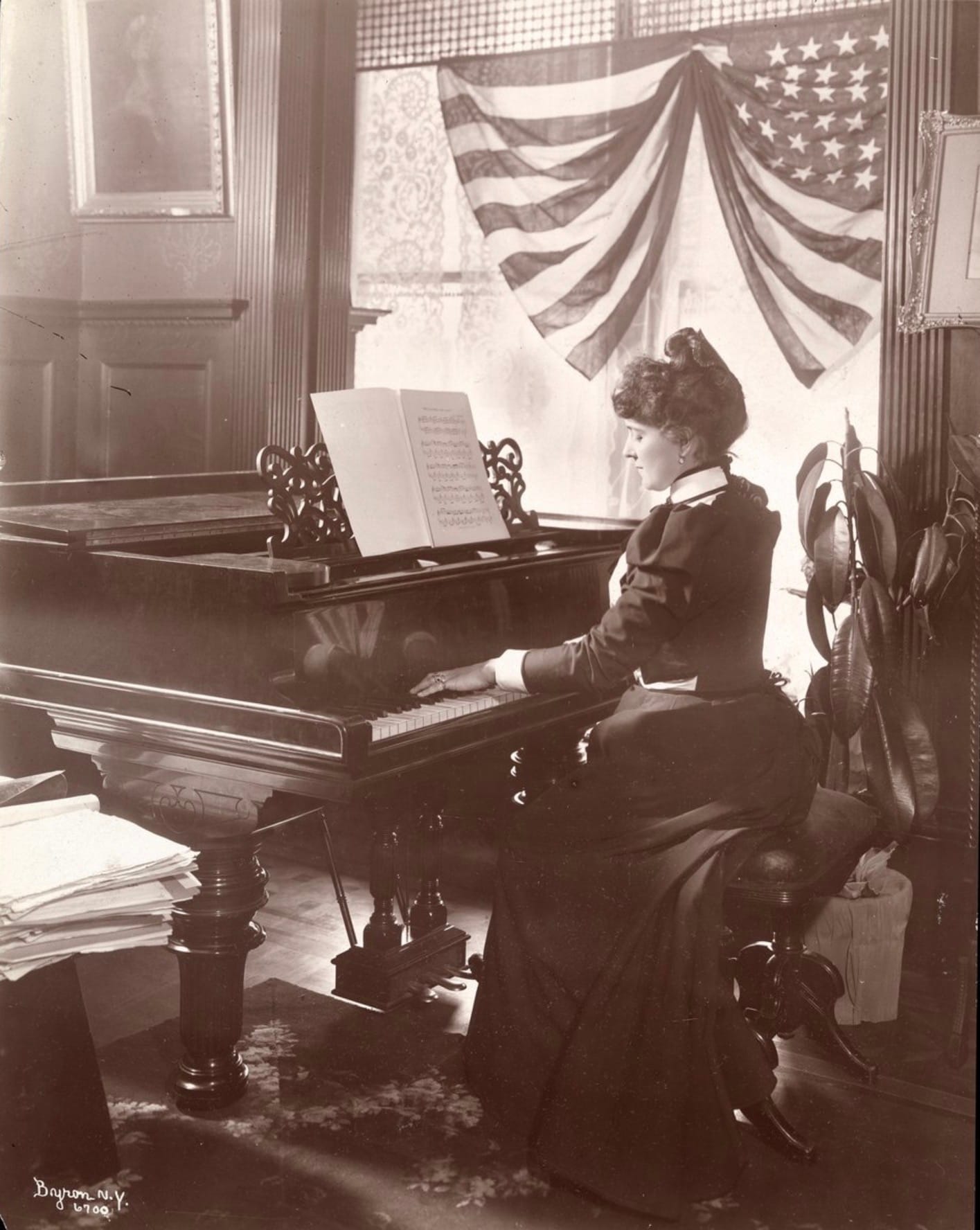
She went to law school, at the behest of her husband!, and was a world-class musician. A suffragist, like her son-in-law, who said, “you either believe in democracy or you don’t”. Bad ass patriot.
Florence Sutro was valedictorian at Hunter College. She followed that with a law degree that she used to get women’s music programs started, open up masters degrees to women, get phD programs instated, female composers produced, employment discrimination against female musicians recognized, and on and on. Great societies need great art; restricting the talent pool is self-sabotage.
Freedom looks different in different contexts…but, bare bodkin bodysuits and high collars look and feel the same on the woman that wears them. I think the message is similar, if not the same, even when you change person and period.
Five years after that party, the high-neck wearing young party planner had divorced her husband. She was clear that she was “not a feminist”. Truman Capote summed it up for Time, “I wouldn't exactly call Amanda a walking example of Women's Liberation, but I think she wanted to establish some identity for herself.” By then, her friend Gloria Steinem was the walking example of Women’s Liberation…
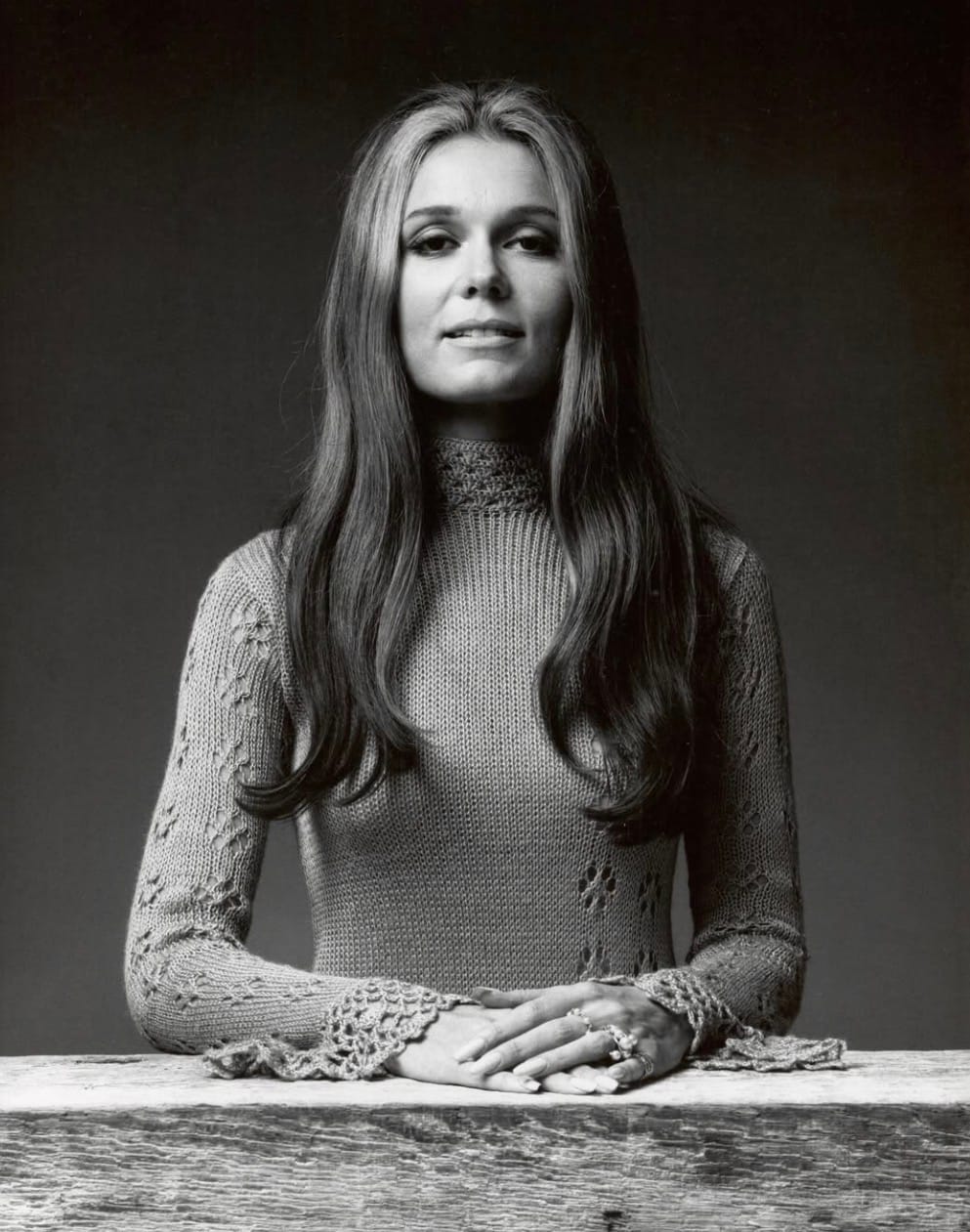
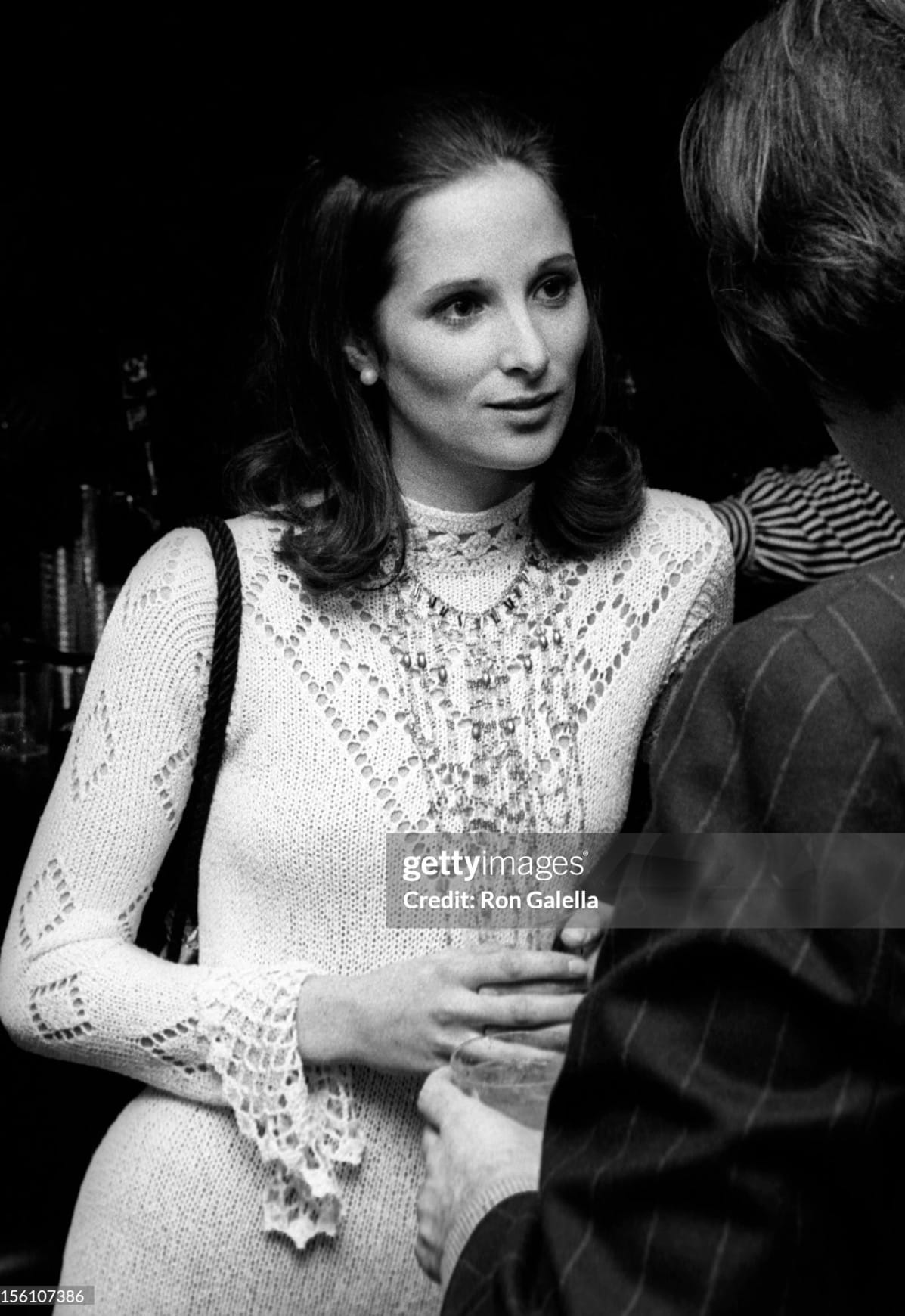
…in 1971, apex-feminists and not-feminists both wear high necks with peep holes to the their bare bodkins.